

Ep. 851 Fiona Beckett | Wine, Food & Travel With Marc Millon
Wine, Food & Travel with Marc Millon
Episode Summary
Content Analysis Key Themes and Main Ideas 1. The philosophy and accessibility of matching food and wine. 2. The distinct Italian approach to food and wine pairing, rooted in regionality. 3. Exploring diverse Italian culinary traditions and their accompanying local wines. 4. Practical advice for confident and unintimidated food and wine experimentation. 5. Highlighting specific Italian grape varieties and classic food pairings. Summary In this episode of the Italian Wine Podcast, host Mark Millen interviews Fiona Beckett, a renowned food and wine writer. They discuss the often-perceived mystery of food and wine pairing, with Fiona advocating for an accessible, experimental approach akin to cooking. The conversation delves into the unique Italian tradition of pairing local wines with local foods, noting that wine is almost exclusively enjoyed with meals in Italy. They explore various classic Italian combinations, such as Verdicchio with fish soup and Sangiovese with Bistecca alla Fiorentina, emphasizing the importance of considering how a dish is cooked. Fiona shares her favorite Italian grape varieties like Vermentino and Nero d'Avola, and offers insights on pairing wine with pizza and using wine in cooking. The discussion concludes by encouraging listeners to approach wine and food pairing with playfulness and confidence, seeing it as a way to enhance enjoyment and life. Takeaways * Food and wine pairing should be accessible and fun, not intimidating or overly complex. * The cooking method of a dish is as important as the main ingredient when considering wine pairings. * Italian wine culture is deeply integrated with food, focusing on regional pairings and communal enjoyment. * Many Italian white wines, while seemingly ""neutral"" on their own, ""burst into life"" when paired with food. * Discovering lesser-known native Italian grape varieties can lead to exciting and surprising pairings. * For long-cooked dishes, expensive wine is not necessary for cooking; a dash of the wine you're drinking can be added at the end for flavor uplift. * Confidence and experimentation are key to enjoying food and wine together, rather than adhering to rigid rules. Notable Quotes * ""It's the last thing I would ever want is for people to think, oh, this is something else I have to learn about wine and wine's complicated enough already."
About This Episode
The Italian wine podcast is holding its 50th edition in the 50th edition of V-add Italian wine and spirits exhibition, where guests are joined by guest Fiona Beckett, the author of several books on wine, food, and nonalcoholic drinks. Speakers discuss the importance of matching food and wine, using the cook's hat, and understanding the way the foods are cooked. They also discuss the popularity of Spain's Pappas culture, the excitement of Italian wine podcasts, and the importance of trusting the buyer and local food and wine experiences. They stress the need for more enjoyable experiences in relationships and emphasize the importance of learning and exploring wine in both food and wine experiences.
Transcript
Welcome to the Italian wine podcast. This episode is brought to you by Vinitally international wine and spirits exhibition, the fifty fourth edition of Vinitally will be held from the tenth to the thirteenth of April right here in verona to discover more about Vinitally and get your tickets. Visitvenitally dot com. This year, the Italian wine podcast will be live and in person in Pavilion six. Stand a seven. So come on down and say hello. Welcome to wine food and travel. With me, Mark Binon, on Italian wine podcast. Listen in as we journey to some of Italy's most beautiful places in the company of those who know them best. The families who grow grapes and make fabulous wines. Through their stories, we will learn not just about their wines. But also about their ways of life. The local and regional foods and specialities that pair naturally with their wines and the most beautiful places to visit. We have a wonderful journey of discovery ahead of us, and I hope you will join me. Welcome to wine food and travel with me, Mark Minen, on Italian wine podcast. Today, I'm meeting up with my guest, Fiona Beckett. Who's in London at the moment, Food, wine, writer, author of numerous highly acclaimed books, and one of the world's leading experts on matching wine and food. Feona has created possibly the most comprehensive and best website on this complex subject, w w w dot matching food and wine dot com. We're close friends, so I'm delighted to meet up with you again here for How are you today? I'm good. Thank you. Yeah. The sun is shining in London. So, Now, Fe, you are the guardian wine writer. You contribute regularly to Decantor and other publications, and you're the author of at least twenty five books on wine, food, beer, and even non alcoholic drinks. Some of your many titles include wine lovers kitchen, how to match food and wine, eating and drinking, and ate as that of great food and drink combinations, as well as food books such as fiona Beckett's cheese course. The frugal cook and the ultimate student cookbook, as which as you know, it's a book I know and love well for various reasons. And you even have your own podcast with Liam Stevens in Mw, called Batonage, which explores this complex subject of matching wine and food. You judge in wine competitions and food awards I saw last week or so, you were up north, judging marmalades So you're incredibly busy. How do you manage to do it all? Well, I mean, that is stretching over a number of years, not all at the same time, but the marmalade surgeons were super fun. I've never judged marmalade before, and I learned so much I mean, I thought I was a pretty good mamelade maker. And, you know, that my mamelade recipe was, you know, just as good as it got. But actually, I've learnt, I've learnt masses about different mamelade. It looked like you were tasting loads and loads of marmalade. I loved your marmalade colored coat as well. I know. I picked that up from a charity shop. Wow. What a find. Yeah. It was a really good find. Great. Well, Phoe, let's talk about matching food and wine. A lot of people think that there's a huge mystery surrounding this complicated subject. Is there? There shouldn't be. And I certainly it's the last thing I would ever want is for people to think, oh, this is something else I have to learn about wine and wine's complicated enough already. I think it makes the whole subject of wine easier and more accessible. And I think the advice I sometimes give is you know, put your cook's hat on. Think when when you you're in the kitchen, you're cooking, you often think, oh, that would be nice with that, or that needs a squeeze of lemon or, or a bit of pepper on that. And what you're trying to do with wine is just make it work with the dish just like that. So it and there's no one final answer just as there is no final one recipe, you know, you just experiment and try things. Sure. Actually, that's very interesting coming at that from a Cook's point of view. Are there some basic important principles that that you can give to our listeners that would be a useful guide? I would say the most useful thing is, don't think solely about the basic ingredient, think about the way it's cooked. You know, for example, let's take chicken. You know, how many ways are there cooking chicken? I mean, just an enormous number you know, roast chicken on the one hand, something like coq au vin, on another, a Thai green chicken curry, you know, all of those need different wines. And so think, you know, is it You know, are we talking about something that's lightly cooked or raw? Are we talking about something that's heavily charred? What is, if any is the source on it? What is it served with? What kind of food tradition, does it come from, which is where Italian food might come in. So, you know, put it in context. Yeah. I think that's a really good advice. You know, people sort of think fish, white wine, and but as you say, if the it all depends on how the fish is cooked. I'm thinking of a of a rare tuna steak grilled in Sicily perhaps with with tomatoes and capers and and lots of garlic. And, you know, that's that could stand up well to a nice Cicilian red. Yeah. I'm thinking, oh, I was just thinking as you were talking there. I was thinking Froparto might be rather nice with that. Yeah. Yeah. Certainly. Well, that's since we are on the Italian wine podcast, let's think about Italian wine and food. I think the Italians probably make much less of a fuss about this than we do. And normally, in Italy, the wines that accompany the local foods are precisely the wines that are made in that same locality. It usually works pretty well. Wouldn't you agree? Totally. I mean, you know, it's just, it's like breathing, isn't it? It's just like that is the one that is the one you drink because that is the one you make. And I also think Italians have much a much cleaner taste register than than perhaps we do. We don't they don't I mean, most Italians, I find love Italian food, and right, they might be occasionally persuaded to eat something else. I'm more than happy with it. And so an Italian food is not heavily spiced as it is. It's it's often quite simple relying on great ingredients. And the wines are relatively modest in alcohol for the most part, certainly the more traditional styles, and they're dry. And so they kind of go they just go really easily and seamlessly with the food. Yeah. So I think I think that's a really good point. And also I think you're right that our palettes are really shaped by this vast just as we have a huge range and choice of wines from all over the world. So we have that choice with all of the different cuisines of the world that we enjoy in our lives at various times. Whereas Italians, as you say, they tend to enjoy Italian food and Italian wine, but even going much more specifically than that, their own regional foods and wines, and even more specifically than that, you know, I'm thinking about some of the differences in, the foods and wines from somewhere as close as Alba and Asti and how the barbera dalba can vary from Barbera Dasti is almost a completely different drink that goes, more closely with the foods from that nearby locality. So we're really talking about a pretty precise local tastes and flavors that people don't like to stray too far from as a general rule. I think so. I mean, I can remember being in in, Tuscany on a Kianchi trip. And the meal would certainly in the past have started with red wine as well as finished with red wine. And so you get a red wine a light key ant is served with something like a a chickpea and rosemary soup, whereas, you know, we might think, oh, well, white wine would be better with that. And I mean, there are more white wines there now, but, you know, it's certainly, you know, red red wine, you know, sort of starts. The cotton kicks still kicks off the meal. And, know, we wouldn't think that way. That that's true. And, actually, another interesting point, I think, is that, you know, we'll often have, a glass of wine. Maybe not even with anything to eat as an evening is kicking off whatever time of day. But in Italy, it's very rare for a glass of wine or a bottle of wine to be enjoyed without food. Even if you are meeting friends in a bar, there will always be some sort of aperitivo offered, often quite, you know, extensive. So wine is something that's very much enjoyed at the table rather than as a drink outside. I would say as a general rule. It's so utterly linked to food that's almost impossible to separate. Totally. Yeah. I agree. And those lovely bars with all those snacks lined up on the top. Just go in there and, you know, just order one or two. I love that. Yeah. That's right. You know, we think of, Spain with its wonderful tradition of Pappas, is, you know, great for that sort of grazing and drinking, but Italy really has that as well. And much more so, I found in, the recent years and certainly going back, you know, to the more distant past when we were traveling around here to the, I don't know, twenty years ago. That's a that's become a much more common and generous feature along those bar tops. It's something I really love. But there are some just absolutely classic food and wine combinations that just work You know, I I think we were considering some of these, like the Adriatic Broadetto, this wonderful festival from the sea. This fish soup made with often with the blue fish, you know, the oily fish. Quite different from from, fish soupy stews from elsewhere. Never had that. So, yeah. I'm when you mentioned that, I'd like to think, oh, I'd love to try that. Oh, yes. It's it really is a real treat. In Ancona. Of course, every town will have its own variation. And the white wines from Le Marque do go so well with it, particularly the more structured verdicchio. Wines, from Castele Diadesi, but also from Natanaka. I really love fadigio. I think it's a I mean, those Italian white wines that kind of if you chase them on their own, they're just not much. I mean, pina brescia included, but, you know, the dicky of a nacho, ovieto. And, you know, you just they're kind of like really neutral, and then you have them with food. They burst into life, you know, but they're they're just so perfect. Yes. I think you're right. You know, they they don't have really obvious and and pronounced aromatic qualities often, which is sometimes what we're looking for. We're trying to identify sense and flavors. But as you say, when you then enjoy them with the local foods or with any food, Verdicchio, I think it's just such a great food wine. It is one of my favorite Italian wines. One of the interesting things though is is, of course, how Italy has so many native grape varieties that one is still discovering. Last night, for example, Kim and I opened a bottle of, a wine made from a grape I'd never encountered before, never heard of, Have you come across that? No. From a brussel. It was, relatively light, I think about twelve percent in alcohol, but very zesty, very citrus, grapefruit, really, not highly aromatic, but it was just a beautiful light zesty mind to enjoy with some local scallops that we had that I just quickly seared. I don't know where I picked it up. I think probably because I hadn't heard of it before, and that's what I always do suggest to people that if you've looking at an Italian wine list or an Italian wine in a shop, to choose something you've never heard of for because it can often be so surprising. Yeah. I mean, actually, that's good wine list advice generally because that is a way to learn about wine. You know, you get the opportunity to to try something you don't know often by the glass. And the rest of Don will have put it on was, you know, the the owner or the sommelier is really excited about this wine. And even though they think nobody will know it or recognize it, they like it so much, and they don't overprice it. It's it's always a good buy. Yes. Yes. I think that's right. And as you say, you've gotta trust, trust the Sommelier, trust the wine buyer because if it is an unknown name, it's not going to be easy to sell. Yeah. And so they must have chosen it because there's something to that line. There's so many of these wonderful, you know, food and wine combinations that you just think of is absolutely classic. I mean, one of the most obvious would be the famous Pisteca a la fiorentina. Why does that go so well with the local wines of Tuscany? I I think because it often has a squeeze of lemon, doesn't it? Or maybe it always has a squeeze of lemon, and I mean, you know, red, red meat, and red wine is a is a bit of a no brain, you know, it generally works, but there's something about that cut and the way it served with the lemon on the side, and the fact that the acidity in San Giovanni. That makes it just sing, doesn't it? It's it's a brilliant combination. Alright. Thank you, right. I think it's that acidity that, the, best wines from Canti Classico, Brunoo, Vino nobility multiple channel. Has underlying, a structure which is never overly heavy. But as you say, there's so many so many red wines. I'm sure you have written extensively about the best wines with steak And there would be many arguments for this or that. But I certainly, with a beef steak, I think it's it's, one of the great combinations. We also, you know, we think about Italian food as if it was a single cuisine. But, of course, there's so many different cuisines across this lengthy country, you know, thinking of the northeast, Frioli Venezia, Julia, for example, where you have influences of Austria, Slovenia, Croatia, Venice, all overlaid in the foods with with, you know, completely different food profiles and say, in the deep south and or indeed in Sicily. So it's it's hard to really, you know, generalize about Italian food. But that's why it's so fascinating as well. And I think, you know, it's worth remembering a sparkling wine too in terms of Italy. I mean, I the second is so ubiquitous now. And we kind of like we all tend to be, you know, a bit sniffy about it, I think, in the wine trade. But, you know, in a nice day, you know, in Venice, Little little restaurant, Canal side restaurant cafe, Plato Frito Misto, model of prossecco. That's just a great combination, isn't it? It is. You're absolutely right. And there's so many good sparkling wines now being made everywhere in the country, you know, I think wine technology is allowing, you know, great, great sparkling wines to be made from the north of Italy right down to, to Sicily where I've had some interesting sparkling wines from Caricante grapes grown on Aetna. Oh, I love Karicante. That's a that's a lovely grape variety, isn't it to look out for? I mean, it's great with the seafood, aunt Sessly. Oh, it is. And it's also one of those white wines that has a and few in Italy that has a tremendous capacity to evolve with age in a way that say a riesling can. So it's a it's a stunning grape. I hope we'll see more of it. What are some of your other grape for Italian grape varieties that are both personal favorites and also which, you think, are particularly great with food. Oh my goodness. It's such a big question. I love Vermentino. I once I've only once been to Sardinia, but, fell in love with it, and also the Valentino's there, and I love them with seafood again. I really like that. I love now Davala. I think that's a great red wine variety, and it's brilliant with aubergines, those sort of aubergine Pamiziana. For the pasta alanorma, this famous dish of Catania. So I like that. I was thinking, you know, a to z, I I always love Zabi Bill because it's just it's just such a brilliant name, isn't it for a group? It is. It's such a fabulous name. It makes really charming wines, you know, sort of rather kind of light and aromatic and romantic. And, and, you know, I I think great actually for those sort of nibbles we were talking about you know, just kind of you're sitting and snacking and having, you know, preferably gotta see again. Yes. That's right. Yeah. And, you know, I let's just think about some I'm sure a question you've covered before it's interesting to I was listening to your podcast about wines with curry and how you actually reach conclusions of wines that work well when you're actually tasting foods and wines together. What about pizza? Pizza must be a subject you're covered. I was interested to watch a podcast that Stevie Kim did on, actually on her YouTube channels, and it is on Italian wine podcast on pizza and Naples. And in one of the famous pizza places, I can't remember which one. They said that the traditional wine to drink with pizza in Naples is Marcella. Really? Yeah. Marcella. But nowadays, people were going for bubbles, Bolicine, sparkling wines, but that the old way, the old school wine in Naples was Marcela. What what do you think about pizza and wine? Well, my I suspect, and you'll you'll put me right on this if I'm wrong, that actually most most Italians will go for beer with a pizza. You know, quite be far from a go to pizza place in Italy and you see young Italians, you know, with you know, something like a pepperoni. And, you know, it's like, it's I just think anything light and drinkable and gulpable. You know, I mean, I'm I probably myself would go for a light red. But, you know, if you've got a seafood pizza or some kind, you know, an easy drinking white, but, you know, not strong, not strong in personality, Galpable, what the French call a van der Swath. Yes. Yes. Yes. I guess that's why a wine like, A simple, multiple China dobrutso is often popular in such places. Not the more serious heavyweights, but, the simpler examples. And I think also that there's, I mean, it's quite a sort of strong natural wine movement now coming through in, Italy. Isn't that? And Oh, yes. There is. Well, for a lot of those, you know, very light, unfiltered reds, are absolutely delicious of pizza? Yes. Yes. Definitely. Now just a final question on cooking with wine. A lot of Italy's famous dishes, have wine in the cooking pot. I'm thinking of Rosato alvarolo, for example, or risotto a la Marone or Straccoto a chianti wines where where the wine is is important ingredient as, with anything else in the dish. What do you think about cooking with prestigious and expensive wines. Is it worth it? It depends how long the wine is going to be in the dish, my view. So if it's a long, braise, then there really is no point in putting a, you know, a very expensive wine in because actually it just all kind of breaks down. As you know, the only thing I would always do, with the end of that cooking process, is that a dash of better wine, you know, probably the wine you're going to drink just to kind of lift the flavors, and it just brings the wineiness with that. But if you're making something very simple, you know, some, chicken with a white wine sauce, and, mushrooms or something like that. It's worth using a slightly better wine and maybe the wine you're going to drink because actually you drink, if if you make it with a really good chardonnay, for example, you do get the benefit of that. But it's, you know, it's all a question of how long is that wine going to be cooked for? Short time, after quality, longer, you know, something clean and drinkable, but I don't think it has to be special myself. Yes. I think I'd agree with you. I mean, at times, I've enjoyed something like Brazato al Barolo. I've been in the home of a Barolo producer, and it was quite easy to go down in the cellar and and and pull out a a jug of wine from the vat. To bring it up to put in the cooking pot. Not so easy for most of us when, you know, it's such a costly wine that has been aged for upwards of years to do that. It's it's quite difficult to open the court and begin pouring it into the pot. Yeah. I think so, you know. But it's I mean, it depends how many of you are. There are two. I mean, there are two of you, and you're making, you know, a quick saute of something, and you're drinking a rather special wine with it. And then go for it, put you know, put half glass into the or glass into the dish. Yeah. Yeah. I would agree with that. Well, we've we've covered a lot of ground this morning fee. But we've only just touched the surface of, really vast and and fun subject. And I think that's what I like about your approach to matching food and wine. There are no dogmatic rules that you make or, you know, strictures on what can and what you shouldn't do or what you should do. But really, I think what you give is people the playfulness, you know, the confidence to explore, to taste, to have fun with wine. And in that sense, matching food and wine is really about enhancing the enjoyment of a of both the wine and the food, and indeed the whole social experience. So that's what I hope people will take from this podcast, the confidence to really play and have fun. Yes. Definitely. I still find it sad that a lot of people still feel intimidated by wine that that that it's a subject they feel they ought to know more about, and it should just be something to in to enjoy and experiment with. You're not gonna know everything. You know, we don't know everything. And so, you know, just keep trying things as you said, you were, you know, a different wine last night. Just constantly take the opportunity to try and try with food preferably. Yes. Yes, enjoying with food. And I think that's the Italian lesson as well that food and wine are part of life, and, they're to be enjoyed together. And, and, and, together, they make our lives better. More enjoyable. So with that fee, I think we'll close our podcast. It's been a real pleasure meeting up with you again today here, and I'm really looking forward to seeing you soon. Thank you very much. Thank you. Thanks, Phoey. See you soon. Thanks for listening to this episode of the Italian wine podcast brought to you by Vignitally international wine and spirits exhibition, the biggest drinks trade fair in the world. For more information about VINitelian tickets, visit VINitelie dot com, and remember to subscribe to Italian wine podcast and catch us on SoundCloud, Spotify, and wherever you get your pods. You can also find us at Italian wine podcast dot com. Hi guys. I'm Joy Livingston, and I am the producer of the Italian wine podcast. Thank you for listening. We are the only wine podcast that has been doing a daily show since the pandemic began. This is a labor of love and we are committed to bringing you free content every day. Of course, this takes time and effort not to mention the cost of equipment, production, and editing. We would be grateful for your donations, suggestions, requests, and ideas. For more information on how to get in touch, go to Italian wine podcast dot com.
Episode Details
Keywords
Related Episodes

Ep. 2791 Italian Wine in a Changing Climate: PIWI, Terroir & Tradition with Nicola Biasi | Wine, Food & Travel with Marc Millon
Episode 2791

Ep. 2784 The Other Side of Valpolicella: Volcanic Soils & Sparkling Wines with Francesca Marcato of Talestri Winery | Wine, Food & Travel with Marc Millon
Episode 2784

Ep. 2778 Bread of the Sea: The Story of the Anchovy with Sudi Pigott | Wine, Food & Travel with Marc Millon
Episode 2778

Ep. 2773 Trento DOC: one of Italy’s finest sparkling wines with Alessandra Caroni of Maso Martis | Wine, Food & Travel with Marc Millon
Episode 2773
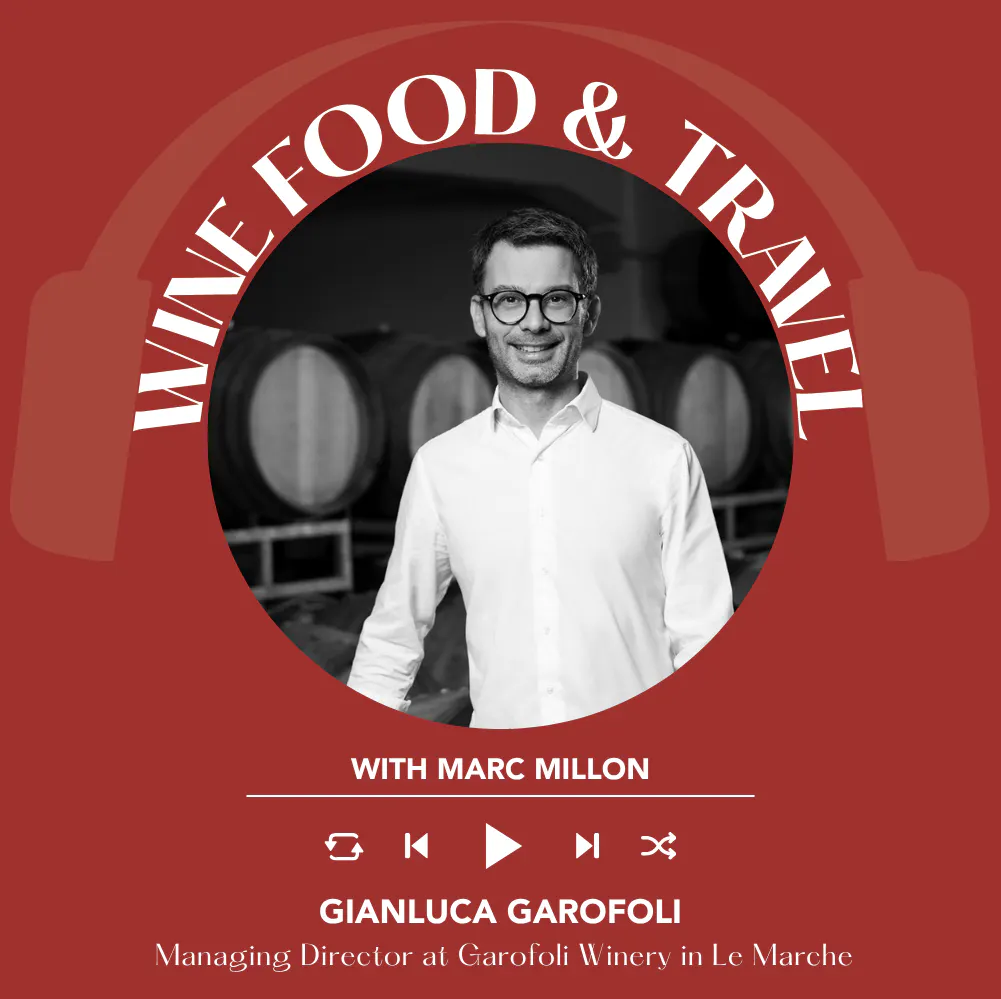
Ep. 2767 Le Marche: Verdicchio and the Wines that Shape the Region with Gianluca Garofoli of Garofoli Vini | Wine, Food & Travel with Marc Millon
Episode 2767
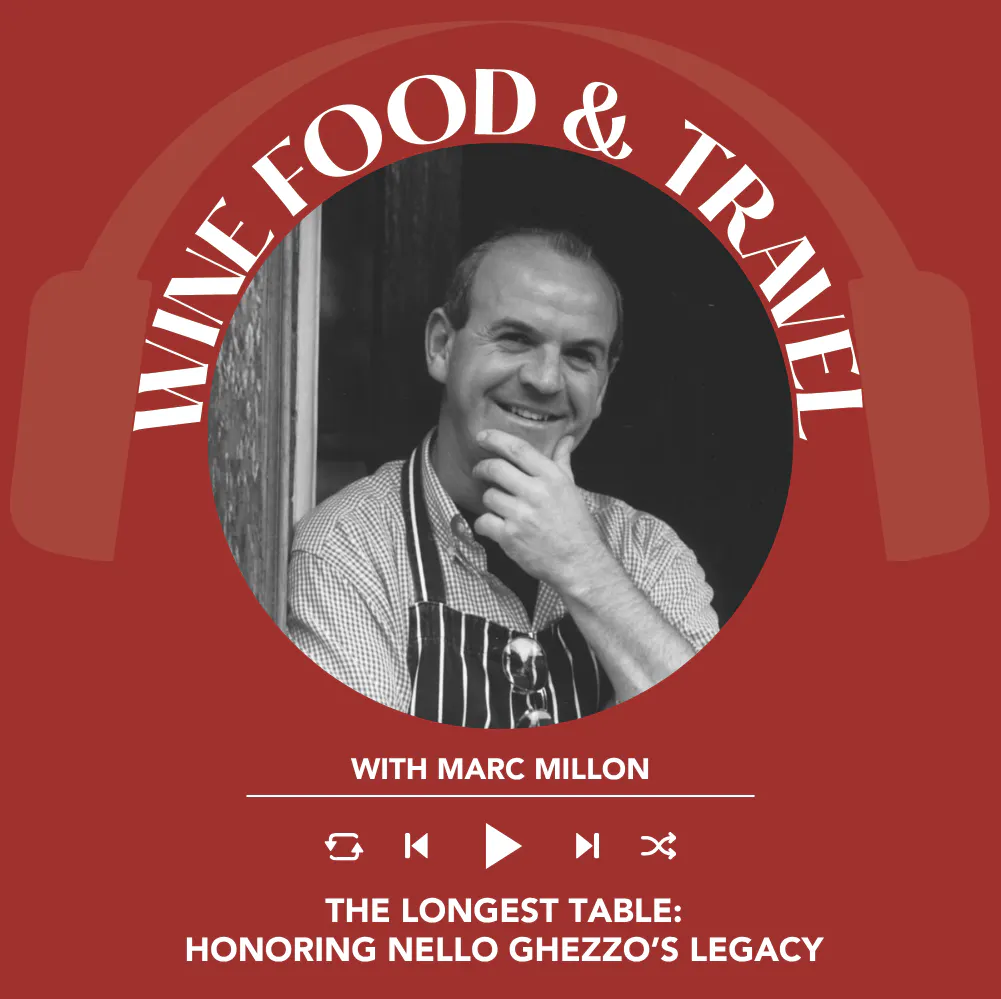
Ep. 2755 The Longest Table: Honoring Nello Ghezzo’s legacy | Wine, Food & Travel with Marc Millon
Episode 2755