
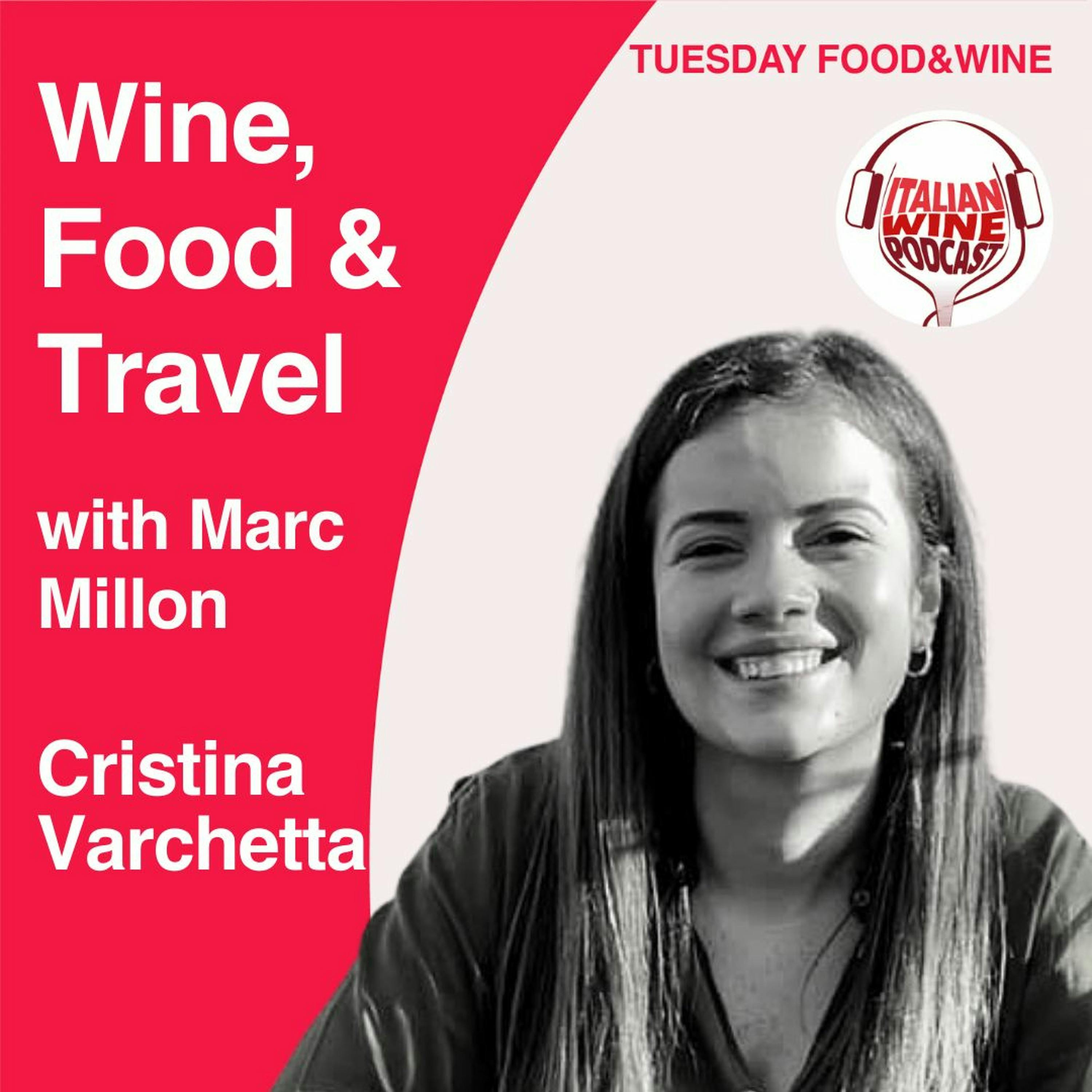
Ep. 1298 Cristina Varchetta | Wine, Food & Travel With Marc Millon
Wine, Food & Travel
Episode Summary
Content Analysis Key Themes and Main Ideas 1. The unique volcanic geology and ancient history of the Flagrayan Fields (Campi Flegrei) as a wine region. 2. Cantina Astroni's family legacy and commitment to producing modern wines from native, ungrafted grape varieties. 3. The distinct characteristics and versatility of Falangina wines from Campi Flegrei, particularly their salinity and freshness. 4. The rediscovery and increasing popularity of Piedirosso as a ""modern"" and lighter red wine from Naples. 5. The integral connection between the local Neapolitan gastronomy and the wines produced in Campi Flegrei. 6. The importance of immersive wine tourism experiences that connect visitors with the territory's history, geology, and winemaking. Summary This episode of the Italian Wine Podcast features host Mark Millen interviewing Christina Varceta of Cantina Astroni, located in the ancient and volcanically active Flagrayan Fields (Campi Flegrei) west of Naples. Christina vividly describes the unique landscape, comparing it to Yellowstone National Park, highlighting its ""burning fields"" origin and rich history dating back to Greek settlements. She details how her family, with a long history of viticulture, established Cantina Astroni in 2000 to produce wines from native, ungrafted grape varieties, specifically Falangina and Piedirosso. Christina emphasizes how the volcanic soil and proximity to the sea impart a distinct salinity and freshness to their wines. She discusses the diverse range of Falangina styles produced, from sparkling to traditional skin-contact, and introduces Piedirosso as a modern, ""light red wine"" perfect for Neapolitan cuisine. Varceta also underscores the ""gastronomic"" nature of their wines, ideal for pairing with local dishes like seafood, pizza, and spaghetti with clams. The interview concludes with an invitation to visit Cantina Astroni for a comprehensive wine tourism experience that explores the vineyards within the Astroni crater, the cellars, and the region's rich history. Takeaways - The Flagrayan Fields (Campi Flegrei) is a historically rich and geologically unique volcanic wine region near Naples. - Cantina Astroni specializes in producing wines from ancient, ungrafted Falangina and Piedirosso vines, possible due to the volcanic soil preventing phylloxera. - Wines from Campi Flegrei are characterized by minerality and distinct salinity, influenced by the volcanic soil and proximity to the sea. - Falangina is a versatile white grape, and Piedirosso showcases a lighter, modern red wine style, both well-suited for diverse food pairings. - There's a strong emphasis on the ""gastronomic"" quality of these wines, making them ideal companions for traditional Neapolitan dishes. - Cantina Astroni offers comprehensive wine tourism experiences, connecting visitors with the territory's history, geology, and winemaking process. Notable Quotes - ""The burn in fields... is a volcanic area located in the North west of Naples."
About This Episode
The Italian wine industry is a passionate group of individuals dedicated to creating new wines. They discuss the history of the Italian wine industry, including the transformation of the Italian wine industry and the creation of a new project to produce new wines. They also discuss the characteristics of the Varcata family, including their grand children and grandchildren, and their love for wine. They visit the Grapes, where they discuss the ag expression for them of the Fllegrain fields and the importance of salinity in the taste. They also visit the Varc odd vines of Fllegrayan fields and discuss their favorite wines and foods. They visit the Grapes, where they experience the importance of the Red and White Wines, and their love for the wine of Naples. They also visit the campy flagre and discuss their favorite wines and foods. They thank their audience and remind them to like, share, and subscribe.
Transcript
By now, you've all heard of Italian wine Unplugged two point o. The latest book published by Mamma jumbo shrimp. It's more than just another wine book. Fully updated second edition was inspired by students of the Vin Italy International Academy and painstakingly reviewed and revised by an expert panel of certified Italian wine ambassadors from across the globe. The book also includes an addition by professor Atilio Shenza. Italy's leading vine geneticist. The benchmark producers feature is a particularly important aspect of this revised edition. The selection makes it easier for our readers to get their hands on a bottle of wine that truly represents a particular grape or region to pick up a copy, just head to Amazon dot com, or visit us at mama jumbo shrimp dot com. Welcome to wine food and travel with me, Mark Miller on Italian wine podcast. Listen in as we journey to some of Italy's most beautiful places in the company of those who know them best. The families who grow grapes and make fabulous wines. Through their stories, we will learn not just about their wines, but also so about their ways of life, the local and regional foods and specialities that pair naturally with their wines and the most beautiful places to visit. We have a wonderful journey of discovery ahead of us, and I hope you will join me. Welcome to wine food and travel with me, Mark Millen, on Italian wine podcast. Today, we travel to an ancient and magical land. The flagrayan fields, or Campi flagrée west of Naples. To meet my guest, Christina Varceta of Cantina Astroni. Chow Christina, thank you so much for being my guest today. How are you and Is it a beautiful day and it can't be for the gray? Hi, Mark. Thank you for your invitation for the podcast. Today, the weather is not enough good. There is a lot of wind, but is a winter. It's a it's perfect now. No. Not at all. Thank you for being with me. Christina, the Campe filigre, the flagrayan fields. This is a, an, volcanic land this burning land of volcanic origin. Can you describe it for us so our listeners can get a a real image in their minds of this very special place where Cantini Astrone is located. High the flagrant fields in Italian is a campy flagray. Campy flagray from Greek languages is a flago, which means burn, burn in fields. The burn in fields, sir, is a volcanic area located in the North west of Naples. Naples have a two system of volcano, Visuvio, and, and the phlegram fields, burning fields. Visuvio is a very normal volcano similar to the antenna. Birmingham fields, is very similar to the Yellowstone in the USA. The little difference, in the flagrant field, we leave one million of people about in the, Yellowstone in the USA is a natural result. That's, is, is a dangerous, area. And, this area is a caldera. It's a system of a volcano. And, this area included the the islands of Prochida and the ischia. This caldera is very young because they take only fifty thousand of years. This soil is a white soil, more rich of potassium, and this characteristic transforming wines in the salinity because the first adjective to describe the wines of flagrant fields is salinity. And the other important characteristic, the binards of the flagrant field stay very near to the sea. And, the my consideration, the wine's burning in the vinyl suspended between, to the sea and fire. Okay. That's a really, really great explanation, Christina. To compare the Fligrain fields to Yellowstone National Park because you have thermal lakes. You have the, the fumar rolls with geysers that spout out. And all around this unstable land of volcanic origin. It's a land that was famous in antiquity. The Greeks made one of their first settlements at Kumar. Didn't they? And the mystic Sibbel had your cave. And I think the Lake Averna was considered the gateway to the underworld. It was from there that Aeneas, according to Virgil, descended into Hades to to seek his father So it's a very ancient land settled for thousands of years. Yeah. The flagram fields is the land of reach, of domination. The very first on domination is the Greek and the Romans. But the breaker is very important because, the Greek population decided to create the new city in the, Mediterranean area in this area, in the flagrant fields, specifically on the Kuma. Why do you choose the, to the Kuma? Because Kuma stayed near to the side on the land there is, the forest. And for this reason, there wasn't a problem for the for the war. Or other other problem. But, the for the, very important consideration with the the Greek population, enter in the Mediterranean area, the vine. And, for this reason, in this area, produce the wine is very, very old. Okay, Christina. That's really, really fascinating to consider that the vines have been planted in the Fligrain fields for more than two thousand years. Nearly three thousand years. In fact, But what's particularly interesting, I think, Christina, said it's only in the last twenty five years or so that the flagrayan fields, the campy flagrae, have been rediscovered as a serious wine region producing wonderful wines that people not only just from Naples, but now across all of Italy and internationally are beginning to discover and enjoy. Can you tell us about your family story? And how the Varcata family created Cantina Astroni and began to make modern wines in the campy flagre. My family, this history of my family started in a eighteen ninety one with the migrate to grandfather, Vinchenzo and my her son, my grandfather, Giovanni. For this work, they call me passion, and we decided to transform this passion in a training activity. But in first part only send by wine or sell by grapes. But, my grandfather, Giovanni, won't come back to second world war, decide to continue this activity. But, during in this year, we decided to marry my my grandmother, Louisa, and do grandchildren. My family is a very big family. And, with her, her sons, decides to continue this activity. But, in a rounded, in nineteen ninety, decided to, create a new project, decide to to build things a binary in the this area. But, only in two thousand starts with the project of the Cantina Stroni. The project of the Cantina Stroni is to produce the typical grapes of this area, farangina, and Pedro. So the important characteristic of this, these varieties is the ungrafted because it's a volcanic soil and in this area, not to ride the the Phillips. K. So that's a really, really interesting story, Christina, that your great grandfather, that your family, the Varcatta family goes back generations of cultivating vines, cultivating olives, But only since two thousand was Cantina Astroni started to take that patrimony of old vines, pre philosopher vines that are typical of the Fllegrayan fields, a campy flagrée to begin producing a range of wines. Now pre philosopher of vines, this is because of the volcanic soil, the nature of the the volcanic sand and soil that the aphid, the philosopher cannot penetrate, Is that why they're ungrafted? Yeah. These grapes is, is ungrafted. And, these grapes, is the, the words of the flagrant fields is a perfect to produce this this type of wine because the first is a native grapes. And, other important characteristics is the terroir because, before I explain the soil, volcanic soil, say the soil, white said soil, more reach of potassium very near to the seaside. This is the characteristic of the wilds of the flagrant fields. When I describe the the wines of the flagrant fields, I validated, these terms of, freshness, minerality, salinity. This is the words that, I do explain other people to understand the wines of the grand fields. Okay. That's very, very helpful. And let's to talk about these two grape varieties, in particular, starting with the Falangina. Again, an ancient grape probably cultivated in the time of the Romans. But, grape that's able to express itself in the Fllegrain fields with great character producing a range of wines from sparkling to a much richer fuller style. Can you tell us something about your Valentina wines. Italian wine podcast. If you think you love wine as much as we do, then give us a like and a follow anywhere you get your pods. For me, before to explain, there's a label of the produced this wine for me, an important consideration for the grapes. Felangina is very famous white grapes are in the Campania region. These grapes produce on, not only in the Campania region, but other region, for example, or basilicata, the region of Italy. But, for me, it's an important consideration to explain, other important aspect. Falangina, existing in all this part. But, in the company region, exist two different archetypes. View types in the province of Benavento, other province of an, of the Campania region, and the view types of, flagrant fields. These varieties take a very different, on the plants, on the taste. For example, Faranina, Falangina grapes. The grapes is a more, is a small, smaller to the falangina of province of Benavento, and, other important characteristic of falangina grapes is a salinity. And, we decided to produce, now I think that the produce six type, of different soul of falangina. You know, we start to, for a calling territory check, calling for me is a deduct wine because you understand what do you found the the wines, the flagrant fields, freshness salinity, is characteristic. The second label is being a throne. This is astronomy is the project of a single vineer, the crew. And in this case, we found the old aspect of the volcanic soil, the ag expression for me of the flagrant field. Other label is a striion. It's a other project of, of a single vineyard. But, in this case, is a is a traditional Falangina, because this project start with the migrate grandfather. And, in the past, the white wines, the beautification is, is with, with the skin. And for this reason, streone is, the the beautification is maturation with the skin. The sparkling wine. We decided to the sparkling wine. I think that's the date is, two thousand five boughs. And, we decided in this date, but we, all the protests, we don't do in, in my winery. We prepared the base of wine, and we went, the base on the the zone of the Valdo Bialane because in two thousand and five in the company region, it's not very famous for the production of sparkling wines. And for this reason, we decided in the first part, to, to take the base wine and went to in the zone of the, prosaico de Valle. Until two thousand and, twelve, I think, we decide to invest in new machine in the winery. And, for this reason, that before two thousand and eleven, with us stroke. Our sparkling vine is made in Naples or made in flagrant fields. The last project of my family is, Temutayosa, is other, single vineyard. In this case, we decided to to easily say on the label, the the domination, camp, a flagram feels white. Why? Because for us during about twenty five years, we decided to talking, the importance to talking to explain the territory. And the for us, we drink, we, we taste the campy flagway, not farangina, but you taste the campy flagway. In this case, it and for your size, an experiment, in amphora, and, and produce very small quantities of, of bottle. Oh, that's fascinating range. And interesting as well to go back to the fermentation in amphora, again, that link with antiquity with the past. I had a chance to taste some of your Valentino wines when I was in Banoli, and I was very impressed with them, impressed with the range of styles from that beautiful fresh sparkling wine to the richer style of wine that really expresses the campy Figres. Now you also produce a red wine from a again, a native grape variety that grows elsewhere in Campania on Vesuvio, for example, but is really expresses its character and personality well in Campi Figre. Tell us about Pedro sure. Katie also is, is anmopolitan grapes because, because we produce, in all the d o c of the, of the Naples. For example, do you see a peninsula, Argentina, do you see of the flagrant fields? You also decided to grow in this area because the period also love the sounds, love the soil, the volcanic soil, soil. And for this reason, this area is the best part for the produce, the period also. You're also in a a local language, in a political language, say the in translating English is a, pigeon fruit. Why? Because, if you do talk with the farm, local farmer, during the maturation, the grapes are of the PDeros. So the steam take the color of the pigeon food. And for this reason, the local name of the Theodore also, is a Peripaluma. And, pedro soft for me is a a modern wine because, don't take more structure, more tan in, for me, it's very beautiful the color of pedro soft because it's, a ruby and, transparent. For me, it's a careful red wine. And, Pedro also take, now take the second life because before, we also take more problem on the binaard, on the seller, is opposite to Falangina because Falangina don't take the problem on the Viner, on the seller. Pedro, so take this problem. But now take the second life because the new generation of my winemaker, for example, Michael in Durado but the this is the winemaker of my of, of the winery, studied the PDro. So the problem of a pedro. So, and now, pedro, so don't take this problem. And for me, if do you drink the, the bottle of a pedro. So it's a very good day. Okay. Yes. It's a wonderful, wonderful red wine that really is the wine of Naples. Would you say? Yes. The pedroso is normally the wines of the flagrant fields is a very gastronomic wines. Okay? For me, it's good with the with the sand dish of Naples, for example. For example, it also is good for old dish with the with the take of the tomato. It's very good for the pizza for the, for the fish, for example. Fish, in nipples exist at the typical grapes, typical dish, with the octopus, with the tomato. For example, it's very, very good. But for me, it also is good only for aperitif. The same is, for me, it's for Falangina. Falangina is a gastronomical white wine. It's good for the blue fish for example, alice, typical typical fishes, you know, mediterranean area. But, other other other dish that, that is the best food pairing is a spaghetti with the clams, for example. And, for me, these wines, the characteristic of these wines, Palangino and Pedro is a gastronomic wine and the is, because in the last years, the, the gastronomy, is a change. And, you you don't eating the, more meat, the dish more structure. And for this reason, for me, this wine is modern or contemporary wine for different apps so a little bit fresher and lighter than in style than say, heavier red from from, Alianiko, for example. Yeah. It's it's a opposite to the following, to to the yaniko. Is yaniko is the grapes are to be ready for the production of a Tarazi. Pedro, it's not a Tarazi, and the Tarazi, no, sir, is pedro. So pedro also is more similar to the, to the typical Italian grapes, for example, in a French region, for example, the zone of the take this characteristic, pedirosa. Okay. Much nighter. And and that freshness And that freshness that you talk about for the farangina as well, that salinity that makes it so good with a dish of spaghetti, for example. Yeah. Yeah. Yes. Yes. The spaghetti with the with the clamps, it's perfect, for for for the pairing. But for me, this wines is perfect only for aperitivo, and, and we don't take the problem for the for the pairing. Are there any dishes or foods, of the campy flagre. That any visitor should make sure they try when they visit the campy flagre. The the typical dish in this area, there is a lot. But the typical dish in this area is a a colgate to the fish food. And, for example, blue fish or uh-uh clamps or shellfish in general pizza. This is the typical dish that we found in this area of of of of this. Okay. Then they all sound delicious and wonderful with your wines. Christina, can you tell me a little bit about wine tourism and hospitality at Cantina strongly? What do you offer? And if our listeners traveling to the area can visit you? For me, for me, it's very important to visit the flagrion fields because, flagrion fields take not only the winery, but to take more monuments, for example, why why my winery stayed around, rounded of the crater of astronomy. Now crater of astronomy is a natural reserve, but that WF, italia, Italy. But before in the past, is a hunting area for the king of Burboni. Cantina Stroni, when when we decided to build into Cantina Stroni, we're thinking to open the door, the, our winery. And, for us, it's very important now to talking, the territory, the, the history of a family. Because now when you decide to produce the, you know, or we choose the, the single label. It's, old wine is, is good. And for me, the difference is on the history of the territory and the history of the label. For me, it's the, the very important factor is the human factor. Or for explaining the wines, and for me today is very important. We opened the the the the door of the the winery for Monday to the Saturday all day. And, we, we're talking with the people the all aspect of wine, all aspect of the wine. For example, we start on the vineyard, on the cellar, both the linga and after we explain the wines of filbron fields. Is, the complete experience. Okay. That sounds really wonderful. An opportunity for visitors to learn about to taste the wines of Cantina Storoni, but much broader than that too, an opportunity to really experience what seems to be a really magical and special place, unlike anywhere else in Italy. Yeah. It's the for me, it's very important to visit flagrant fields. And if you decide to visit flagrant fields, I, I'm waiting in my room. Well, thank you, Christina. I do plan to visit the Fllegrain field, so I hope that I can meet you very soon. I'd like to thank you very much for being my guest today. It's been a real pleasure meeting you, learning about the Varketa family story, learning a little bit about the history, the geology of the Fllegrain fields. And as I said, I'm hoping to come out and visit for myself very soon. So I look forward to meeting you then and to tasting your wines. But in the meantime, thank you so much for being my guest. Thank you so much. Have a nice day. Thank you, Christina. We hope you enjoyed today's episode of wine, food, and travel with me, Mark Millen, on Italian wine podcast. Please remember to like, share, and subscribe. Right here or wherever you get your pods. Likewise, you can visit us at Italian wine podcast dot com. Until next time.
Episode Details
Keywords
Related Episodes

Ep. 2791 Italian Wine in a Changing Climate: PIWI, Terroir & Tradition with Nicola Biasi | Wine, Food & Travel with Marc Millon
Episode 2791
Ep. 2767 Le Marche: Verdicchio and the Wines that Shape the Region with Gianluca Garofoli of Garofoli Vini | Wine, Food & Travel with Marc Millon
Episode 2767
Ep. 2755 The Longest Table: Honoring Nello Ghezzo’s legacy | Wine, Food & Travel with Marc Millon
Episode 2755

Ep. 2712 Exploring Brda: Exceptional Wines and Slovenia's Culinary Traditions with Lan Kristančič of Movia | Wine, Food & Travel with Marc Millon
Episode 2712

Ep. 2700 Sardinia Beyond the Coast: Agripunica, Basso Sulcis & the Legacy of Giacomo Tachis with Salvatore Santus | Wine, Food & Travel with Marc Millon
Episode 2700

Ep. 2681 Giro d’Italia 2026 Special Episode 1: From Bulgaria to the Mezzogiorno in search of wine and cheese | Wine, Food & Travel with Marc Millon
Episode 2681