
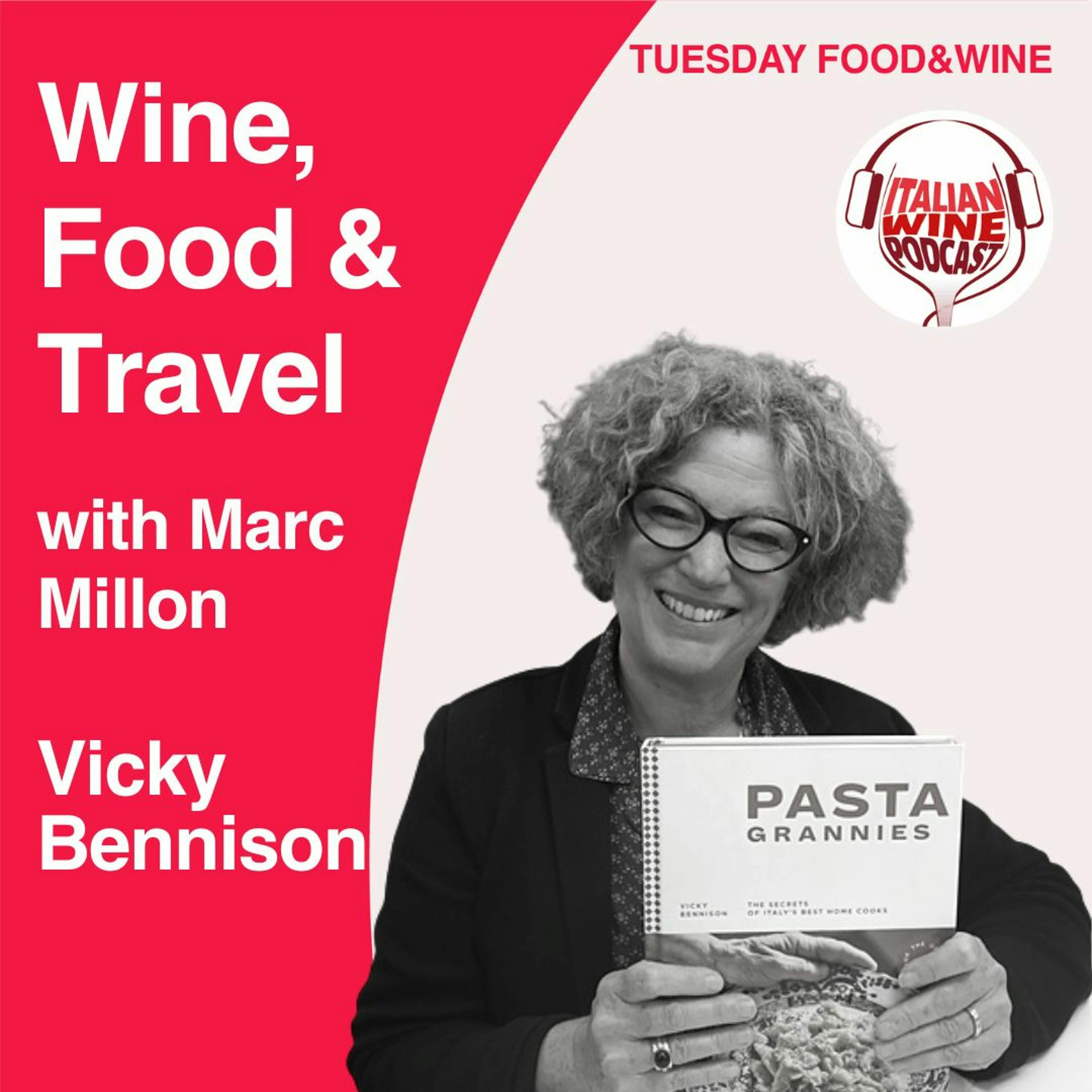
Ep. 1352 Vicky Bennison | Wine, Food & Travel With Marc Millon
Wine, Food & Travel
Episode Summary
Content Analysis Key Themes and Main Ideas 1. The origin and evolution of Pasta Grannies as a YouTube sensation. 2. The importance of documenting traditional Italian pasta-making skills by older generations. 3. The cultural and historical significance of local and regional Italian food traditions. 4. The social aspect and personal stories of the ""nonnas"" (grannies) who share their craft. 5. The role of digital media (YouTube) in preserving and sharing cultural heritage globally. Summary In this episode of the Italian Wine Podcast, Mark Millen interviews Vicky Benson, creator of the immensely popular YouTube channel ""Pasta Grannies."" Benson recounts how the idea for Pasta Grannies emerged in 2014 from her observation that only older Italian women were making pasta by hand daily. Initially a slow burner, the channel went viral in 2018, showcasing the physical art of pasta making through video. She explains the significant regional differences in pasta, particularly between the egg-rich soft wheat pastas of the North and the durum wheat-based, eggless pastas of the South. Benson emphasizes that the project is not just about recipes but also about documenting the women's lives, their pride, and their role as custodians of social history, bringing their authentic personalities to the screen. With over 400 videos made, Pasta Grannies continues its mission to preserve these disappearing skills, especially focusing on centenarians, acknowledging the changes in lifestyle that affect traditional practices. Takeaways - ""Pasta Grannies"" is a successful YouTube channel documenting elderly Italian women making traditional pasta by hand. - The project started in 2014 out of a desire to record a potentially disappearing culinary tradition. - It highlights the distinct regional variations in Italian pasta-making techniques and ingredients (e.g., North vs. South). - The videos serve as an important social and cultural historical record, showcasing the grannies' lives, homes, and dialects. - Despite documenting an older tradition, the audience is surprisingly young (50% between 25-45 years old). - The ""grannies"" are incredibly proud of their skills and eager to share them, often making food for the crew. - The project emphasizes the ""Mediterranean lifestyle"" of frugality, movement, and strong social connections, rather than just diet. - There's a sense of urgency to document these skills, especially from very elderly individuals, like those in Sardinia's ""Blue Zones."
About This Episode
The speakers discuss the importance of Italian wine and its cultural significance, with past tours and experiences helping them to learn about the food culture. They also discuss the rise of video and the importance of documenting older subjects, including filming women and creating unique and delicious pastas. They stress the need for professional recognition and the importance of documenting past and social experiences to create social history. The speakers also discuss the importance of finding the right person to cover a recipe and finding the right person to cover a recipe. They encourage listeners to visit the Italian wine podcast website and purchase the pasta granny's book.
Transcript
By now, you've all heard of Italian wine Unplugged two point o. The latest book published by Mamma jumbo shrimp. It's more than just another wine book. Fully updated second edition was inspired by students of the Vin Italy International Academy and painstakingly reviewed and revised by an expert panel of certified Italian wine ambassadors from across the globe. The book also includes an addition by professor Atilio Shenza. Italy's leading vine geneticist. The benchmark producers feature is a particularly important aspect of this revised edition. The selection makes it easier for our readers to get their hands on a bottle of wine that truly represents a particular grape or region to pick up a copy, just head to Amazon dot com, or visit us at mama jumbo shrimp dot com. Welcome to wine food and travel with me, Mark Binon on Italian wine pod us. Listen in as we journey to some of Italy's most beautiful places in the company of those who know them best. The families who grow grapes and make fabulous wines. Through their stories, we all learn not just about their wines, but also about their ways of life. The local and regional foods and specialities that pair naturally with their wines and the most beautiful places to visit. We have a wonderful journey of discovery ahead of us, and I hope you will join me. Welcome to wine food and travel with me, Mark Millen, on Italian wine podcast. Today is my great pleasure to meet my guest, Vicky Benson, who has created something really special in which I love. Past degrannies. Video's on YouTube of Italian None, Grannies, sharing how they make pasta in their particular corner of Italy, wherever that may be. It is a delightful and wonderful insight into Italy and it's rich and varied food culture. An important one too, as it documents foods still created by an older generation that could be at risk of being lost. Welcome, Vicky. Thank you so much for being my guest today. Thank you for inviting me. And where are you today, Vicky? In Rainey London, in Rainy London. Well, I'm in Rainy Devon. I was imagining you in the beautiful sunshine somewhere in Italy going around with your team, but I know mainly that is what you do. You said to me that you're Semprre in Jiro, you're always traveling around. It must be a wonderful life. I enjoy it. I always say I have the best job in the world. So in fact, two weeks ago, I was in, Catania with the team, and it was twenty seven degrees. Wonderful. And that was when it was freezing here in England. That's right. Yep. Vicky Pastogranis has been an internet sensation. Tell us how the idea came about. Well, you know, I was looking at the dates, and in fact, Pastogranis has been going, since two thousand and fourteen. So it's it's nearly ten years. My goodness. Wow. Yeah. I mean, for the first three years, it was like, you know, sixty three subscribers, and one of them was my mother. And I always noticed if someone sort of stopped being a subscriber and and by two thousand and seventeen, it was five thousand. And then in two thousand and eighteen, it went viral. But the motivation to start off with was, we have a home as you've mentioned in Marquay. And I just noticed that it was only older women who were making pasta by hand on a daily basis. So I thought, oh, you know, someone should make a record of them. And I initially thought it would be photography, but in fact, the the physicality of of pasta making is such that it needed video. And there was this fairly new thing called YouTube, where we which is the obvious place to put videos. And that's how past it granny started. It was a word-of-mouth, you know, finding granny's occasionally and sort of posting every few weeks, and then the algorithm sucks you in, and you have to do it regularly and take it seriously. So that's how it started. My goodness. That's, that's such a brilliant idea. And it's also interesting to hear that you were really at the forefront of of of this sort of YouTube revolution and and the ability to to film and document things, and share them with the world. So technologically, it's an interesting story as well as from what you're doing from a from a social history. YouTube always, they I'm referred to as a geriatric influencer because I'm one of the oldest creators on the internet. Well, that's amazing. And actually, even even better because you're you're documenting older subjects. So and and and I'm sure you have a lot of younger viewers who are really loving it. Well, funnily enough, it's mostly younger viewers who enjoy it. So, so, you know, the stats tell me that fifty percent of the audience is between twenty five and forty five. Wow. That's fabulous. It's mostly twenty five to thirty five. That's the most popular age range. Yep. Is telling stories through films something you've always done? Not at all. No. I mean, I used to be, a management consultant used to do international developments. And I think that kinda gives you a a gung ho attitude as I'll try anything once because, you know, I've had sort of several years of working abroad in far flung places. Yeah. So for example, I lived in South Africa for two years. So I think, you know, alongside that was always a love of food and wine and always writing stories about it, and I'd started writing books alongside my day job. You know, you you need to think when storytelling, you have to think about, you know, what's right medium for that story. I mean, it can lend itself to sort of various modes, but, certainly, pasta making was something that I think needed to be recorded visually. So that's how I kind of had to go. You can see at the very start of the YouTube channel. It's me with a camera, and I don't know what I'm doing and it shows. Well, it's actually very professional now the way you do it. Now I'm I'm aware of Vicky that some of our listeners on Italian in podcast, maybe have not seen past the grannies. So why don't you just describe or tell us in a few words what past the grannies is, what peoples are seeing on on the videos? Okay. So Pastor Grannies is primarily a YouTube channel, although you can also find us on Facebook and Instagram. What I do is I film Grannies who make Pastor by hand. I go run Italy These days, I have a team, small team, you know, a cameraman, and Libya, my granny finder because nowadays, I have someone who has to manage all that word-of-mouth, networking that has to happen behind the scenes. That was one of my questions finding the grannies. That must be a an important task. Yes, it is. Yeah. So, and so the output from that is that that we upload a video every Friday on YouTube. And they're usually around sort of between seven and ten minutes long. And it covers there's usually a little bit of a story about where the grannies are. They live, and and then it's they take us through their recipe. So it's quite a simple format. You know, it's, this week, it's actually someone from Marquay called Maria, and she does a Tayatelli, but, you know, there's always minor differences with, these things. It's like, for example, she's using ducks eggs in her in her dough. But so there's always something different about the videos. And coming back to Libya, my granny finder is, to find these women, involves networking through all the sort of organizations and local governments, to find find women, occasionally people write in, but mostly it's through chatting to people. That's incredible. And these grannies, they all are so incredibly proud of skills that they have probably learned since they were children and have done all their lives. They seem very eager to share to the world. You know, something that to them is really part of who they are. Suddenly, for this generation, we film mostly sort of over eighty. You know, obviously, there's a variety of of of women that we filmed. And occasionally, there's a there's a man as well. But for them, it was a life skill, to make pasta. These days, it's a it's a choice for everyone, but for them, you know, to put food on the table, involve making it. So it's kind of part of them, and also it's like, you know, so normal that they're always amazed when we ask to film it. They're thrilled and delighted because, you know, it's everybody takes it for granted in their home and and things. So And and I think also their self selecting is that, you know, it's it takes courage, to invite strangers into your kitchen. And those that don't want to, I mean, you know, there's no pressure. It's it's only those that actually want to share their experience that we film. And we always work with the families. We don't kind of hijack ladies on the street or anything. You know, everybody has to be happy with the with what we're doing. Yes. Yeah. And and that comes through. And, actually, the the women that you do film are often quite characters. They're really, their personality comes through and their pride and their happiness at at sharing something wonderful that, you know, they've been proud and happy to put on a table for their families. Very much so. It it's partly a thing of for me, it's it's about celebrating their experience. You know, it's and and one of the interesting things is, you know, Italian gastronomy is kind of worldwide And, the cornerstone of that is is nona cooking. But, you know, you don't really see the nonnas. You don't you don't, it's always chefs who always kind of be the ambassadors of Italian cooking. So I wanted to put these women center stage and see, you know, cooking as it really is, if you like. Yes. I think that's really important. And, and it's also important because, these skills, as I said, are in danger of being lost. And, you know, the They they won't carry on. And it it's great to document that. Yes. I think, the the change is that it's becoming professionalized. So this was a domestic skill, you know, granny's taught granddaughters. And now, you know, people think of of, as it a as a career if they want to. Otherwise, they go out and buy it. Yeah. Sure. Much more of a a sort of, you know, if you've got the disposable income, you you don't make pasta. Yeah. A question I've always wondered, Vicky, is after watching these wonderful women creating unique and delicious dishes often pastas that none of us would have ever heard of. Do you and the team sit down and eat them with them? Of course. But that's a big part of it too, then not just sharing the They're not making it for the global audience. They're making it for us. You know, so that's the that's a absolute sort of we we have to. Wonderful. That's that's terrific. That must be one of the most enjoyable parts for you and your lucky camera person. Fortunately, we all have huge appetites because sometimes we've got several pastors to eat today. Well, I guess you would if you're, you you're actually now putting out one a week. That's right. So we go away for a week, for example, and we'll film one or two a day. Sometimes it's three if they're all very close by. That's a lot of pasta to eat. Yes. You know, so so, yes, we we take it in turn sometimes. Now, of course, one of the most interesting things about Italian cuisine is its is how incredibly not just regional, but local it is, how dishes, or even within the locality will differ from family to family. And what I love about the the videos is that you're really seeing personal ways that people do them. Personal often handmade utensils that are used to shape the pasta. Yes. So, you know, I think my hypothesis is that pasta making was often a group activity. You know, it was an opportunity for women to get together. And, so that needs consensus. So as long as you've got consensus amongst one group, it doesn't matter what the other group is doing. So hence, variations sprung up within a very small area. And so, you know, it'll have a different name. It'll have a slightly different shape, whatever. You know, that's how all the diversity, you know, because Italy isn't unique with its noodles or pasta, but it is unique in its diversity of of pasta shapes and names. Italian wine podcast. If you think you love wine as much as we do, then give us a like and a follow anywhere you get your pods. Yes. That's certainly true. And of course, there is a great divide between Pasta in the north of Italy and pasta in the south. Can you explain a little bit about that? Yeah. There is sometimes a bit of a muddle when people do things like oh, well, first of all, let me explain that the, in the north, they use a soft wheat flour, and that means eggs to give it body. The dough that you get from using soft wheat flour is more stretchy, and it but it doesn't have much body, hence the addition of eggs, which actually is a more recent thing. You only put eggs in if you can afford to do so. Down south, they're using deer and wheat flour. So they call it similar or similar rematching also when it's more finely ground. And so you don't that's got much more body, and it's plastic, but not elastic, and it makes great shapes. And you don't need eggs with it. So that's the sort of broad brush difference between the two zones. And then sometimes in the middle, there's a bit of an overlap, and you'll get people adding eggs to their Durham wheat pasta, which makes a very firm dough. And these days, of course, because of, you know, distribution and and things. People will often mix the two to get a kind of consistency that they like. Yeah. That's that's really interesting. It is a a big divide. And we think of the fresh pasta, Vamilia Romagna with the Swolia the hand rolled sheets. It's still done by past the grannies today as shown on the videos. You know, such a magical experience to see, pile of flower, as as you say, often there's no measuring whatsoever. Just a fistful of flour for every egg, and they will know exactly those measurements just by touch and feel. And then to see that transformed into the folia, this large sheet, and and and and and cut into myriad shapes so much that can be done by from such simple ingredients. I think that's the beauty of pasta. Yes. It's very mesmerizing and soothing, I think, to watch. That whole process. I never get tired of watching it. And also the feel of it, it's like linen. You can sort of feel you can as you watch it, you can imagine the sort of lovely heavy, but not sticky, feel to to the dough. It's it's a a lovely experience. Yes. That silkiness that comes as the as as it's worked with the long, maturale, that long rolling pin. Yes. But, is is such an essential tool. Very much so. I mean, so people who take it seriously have different lengths. Because you got your the Swaddler, your pasta sheet can't be, longer, larger than your the length of your Matarello, your rolling pin. So if you can make a, you know, so a three egg dough is more or less about a meter of Matarello. Wow. Gosh. So if you're gonna get bit, you know, then you get bigger, and then you start having to make it oval because your arms aren't wide enough. Yes. And the reason for not going beyond the length of your Matarello, so you then get ridges and you want that the the whole aim is to make an even thickness, of your of your pasta sheet. Mhmm. Yeah. Yes. It is a magical process. And equally magical are the past day coming from from the south from Pulia, from from Campania Calabria, basilicat, and and, of course, Sicily, of these past is made from the Durham wheat shaped again in such imaginative ways often using homemade tools. It might be a bit of I think I've seen a bit of, coat hanger in some of the videos and or just by hand. Oh, that too is magical, isn't it? Oh, yes. And tricky. So there's, for example, in, Sardinia, they have a lot of unusual pastors often made in just one village, and one of those is called andorinos. And that uses, the the the bottom glass plate of refrigerators. Oh my. That's special ridging. Obviously, you can find it elsewhere, you know, like gnocchi boards and and things, but that's what the that's their favorite tech structure. And you have to kind of roll it around and along this ridged, piece of glass, to make something that looks like a fusili. My word is is a tricky thing to do. Yeah. Tricky is is a is a good word. You know, we've watched, the videos, and we also have the book. And I do recommend the book past the grannies by Vicky, which tells the stories of of of some of the people that you've encountered, but also gives the precise recipes, precise recipes that I'm sure you've had to work out because as I say, none of these grannies are really measuring as we know the term. They're doing it by feel. But so much of, you know, making or reciente, for example, is, you know, it looks easy enough on the videos, but it's very difficult to try to replicate that if you don't do it every day. Oh, yes. I mean, you know, and and the past, the police won't come knocking if you go and buy a packet. No. But but many of the past is, and you do make that clear one can buy the pack. Yes. Many of these pastors, you're not gonna ever find them. No. I mean, Orecchiette is a is a good example of, actually, that takes practice. But then if you go to Cabatelli, for example, which is a very similar shape, couldn't make that with your thumb. And that's much easier. Absolutely. I'll try that next time. Yeah. I mean, so so the taste will be the same. I'm a I'm a pragmatist, you know. As long as you're making something from scratch, that's all that matters and and start with something simple. Yes. And as long as and and it will be delicious. Vicky, your pasta granny videos are also documenting social history. You're speaking with people in their seventies or eighties. Often, they're nineties. You're making permanent a moment, this moment in history through food. Taking us inside their houses. We see how they live. We see the utensils they use. We see their kitchens and and the aprons that they're wearing. And we hear their voices, their accents, their dialects, their languages, It is an important documentation that you're doing. Did was that an intention when you set out? No. I just didn't because I was interested. The whole thing has evolved. So I wanted to document, the women. That was that was, ah, yes, I knew that. In, you know, the way that it's kind of blossomed into something that's a social history record. You know, it's it was not something that I that I had in my head at the very start. It was just like, oh, this is interesting. Let me find out more. And so it's a sort of it's a process. So I mean, I hate to use the word journey, but, I mean, that's what it's been. It's a kind of progress where initially it was all about documenting, past the shapes, and that's still the case. But it's also about documenting the women's experience. So that is as important for us as it is. You know, I think for the audience, I always say that people come for the pasta, but stay for the grannies. People enjoy meeting them, and it brings back happy memories for them as well, I think, often. Yeah. They they are so leasing so direct and innocent and and honest in how they're sharing their lives. And as I've said already, proud. That comes through is their pride. Yes. I mean, and and rightly so. So I'm you know, it's it's great to give people that opportunity as well. You know, and it's always very humbling. You know, we we arrive and, and they welcome us. You know, we're strangers. And we we stay in touch with our grandmothers as well. You know, we've got We've got one lovely lady, Marietta, who's going to be a hundred next week. Oh my goodness. Wow. So she's still going strong. I mean, when we first met her a couple of years ago, she was, you know, she had to be hauled in from chopping wood. Incredible. Vicky, have you been to each of Italy's twenty regions to to make videos? We we haven't been to Mollize. Hey, Mollize. Mollize is easy to leave out. Yeah. It's the easy one to kind of get miss as you kind of go from a Britzo de Poulia. So we we will get to Malize. So, you know, before everybody from Malize writes in indignantly, it's a question of, you know, if you've got If you know someone, please let us know. And it's not like we kind of, you know, we could say, oh, we've done Tuscany, but actually, you know, we we would love to go back to the Marima and, and that kind of thing. So we, you know, we do different little bits of the regions So we're sort of looking at Pulia, but, you know, we maybe we'll try and get to the fodge area, for example, the next visit. So we're it's like, you would say twenty regions, but actually, it's all the little localities within those re regions that we are also interested in. Yes. Of course. And would you repeat the same shape for pasta if it was done with another personality in its Yes. Unique way? Because yes. I mean, I've I've never think I would tell you again, because you know, there there will always be differences. And even if the difference is the woman involved, I I don't think we'll kinda reach the end of the line. You know, obviously, you know, we're still increasing. We're we're as a as a You know, our numbers, our subscribers are still going up. They're not in the way that they did in two thousand and eighteen, but, you know, people are still finding them interesting. So inevitably, I think what we did two years ago isn't looked at as often as what was looked at, you know, last week. So there is scope for repeating if you like, a a recipe because the woman will be different. Yes. Of course. Yeah. And as you say, they are really the main subject as much as the the pasta itself. Yeah. Pastagranny videos are in English. I bet Italians love them too. Do you have the the sort of data that shows whether Italians are watching them? They are watching. Yes. So, in terms of sheer numbers, it's Americans who account for about thirty percent. Of the audience, and that's because America's huge. It's very popular in Germany as well, and then it's the Italians. You know, we allow our ladies to do as much talking as possible without it getting difficult for the readers of the subtitles. You know, we have we subtitle them rather than dub them. Right. Yep. You know, but that can get a bit tiring. So you we have to sort of try and figure out what bits are the most interesting. And, you know, to keep the story kind of clipping along if you like. So part of the editing process. Yes. I would imagine that when Italians watch the videos, rather like when Pellegrino Artuzzi brought out his science in the kitchen and the art of eating well, the readers immediately began saying, oh, yes. But you've forgotten this recipe or you've forgotten that. Do you get Italians and saying you must meet my granny? My come and meet my non I do get Italians writing to, yes, that that that's the that spanner's kinda once a week email that I get. Often they've forgotten to ask the granny. So it's, you know, they're they're so keen on their beloved, you know, Ziah you know, appearing that they've forgotten to mention it to her. And she's the zia says no. So so I always have to write back and ask them that. I think Italians are very, proud in general of their recipe. So, I mean, I often get things like you can't say that much, like, I'm not the one saying it, you know. Yes. There are variations. There's no right and wrong about about this. So Yes. Of course. How many videos have you made now? About four hundred. Four hundred. That's incredible. Do you have a a sort of a sense of urgency to document as much of of this as you can while there's still an older generation that can share their secrets, your skills, their Yeah. Absolutely. So, you know, if we hear of a, you know, a hundred year old, we're kind of there. We jump in our car and drive. You know, we're going back to Sardinia in in May, mostly because you know, there's this generation, that are still around over a hundred. So, you know, last year, we filmed Anunciata, who's, I think, a hundred and one now. Yes. I think I saw that one. And she's still making Frigler. And Fregal is this lovely kind of cusco type pasta. And and she's marvelous, beautiful woman. And, you know, we think, oh, let's go back and see her again. And her, you know, her compatriots, there are sort of lots of people And it's like, oh, we we can't say, oh, let's leave that till next year. We think, no. We gotta do that this year. Yes. Of course. And Sardinia is supposed to be one of the longest, to have the longest longevity for in the world, I think. It's it's one of the blue zones. Yeah. So the blue zones are sort of areas of longevity. And there's a lot of older people as a percentage of the population. So but you can find sort of very elderly people all over it. Like Pollio and even in Marquay. You know, it's I think they won't live as long because their lifestyles have changed. You know, one shouldn't romanticize poverty, but this is a generation that, ate frugally, kept moving, and it's also very social. I mean, you know, when people talk about the mediterranean diet, actually, it's the Mediterranean lifestyle. So, and, you know, ingredients aren't off limits, but They're not eating, you know, in an in in an indulgent way. So, you know, people don't drink too much wine, for example. It's there always, but Of course. And as you say, it it is a lifestyle. Older people are still at the center of family knife, not sent off to, care homes. Yeah. That's by and large true. Yes. I think it, you know, it's only when the family breaks down that that happens. So people want to keep there. You know, their parents close to them. And, but also the the center of, you know, they're very involved with their church or their community as well. So the the there's the kind of the tight relationships and also the loose ones. You know, people drop by and say hi. And that kind of thing. Often when we're filming, you know, there's half the village behind, behind the cameras. And often there's an assistant eager to help. That's right. Well, Vicky, I think you created something really special. I urge our listeners if they don't already know about it. To find the pasta granny's website, to purchase the pasta granny's book, and above all, to watch these wonderful pasta granny's videos on YouTube. It's been a real pleasure speaking with you this morning. Vicky, thanks so much for being my guest. And and I'm sure you're going to soon be back on your travels again. So I'm glad we managed to catch up with you. Thank you very much. It's been an absolute pleasure, Mark. Thank you. Thanks. Bye bye. Listen to the Italian wine podcast wherever you get your podcasts. We're on SoundCloud, Apple Podcasts, Spotify, EmailIFM, and more. Don't forget to subscribe and rate the show. If you enjoy listening, please consider donating through Italian wine podcast dot com. Any amount helps cover equipment, production, and publication costs. Until next time, Teaching.
Episode Details
Keywords
Related Episodes

Ep. 2791 Italian Wine in a Changing Climate: PIWI, Terroir & Tradition with Nicola Biasi | Wine, Food & Travel with Marc Millon
Episode 2791
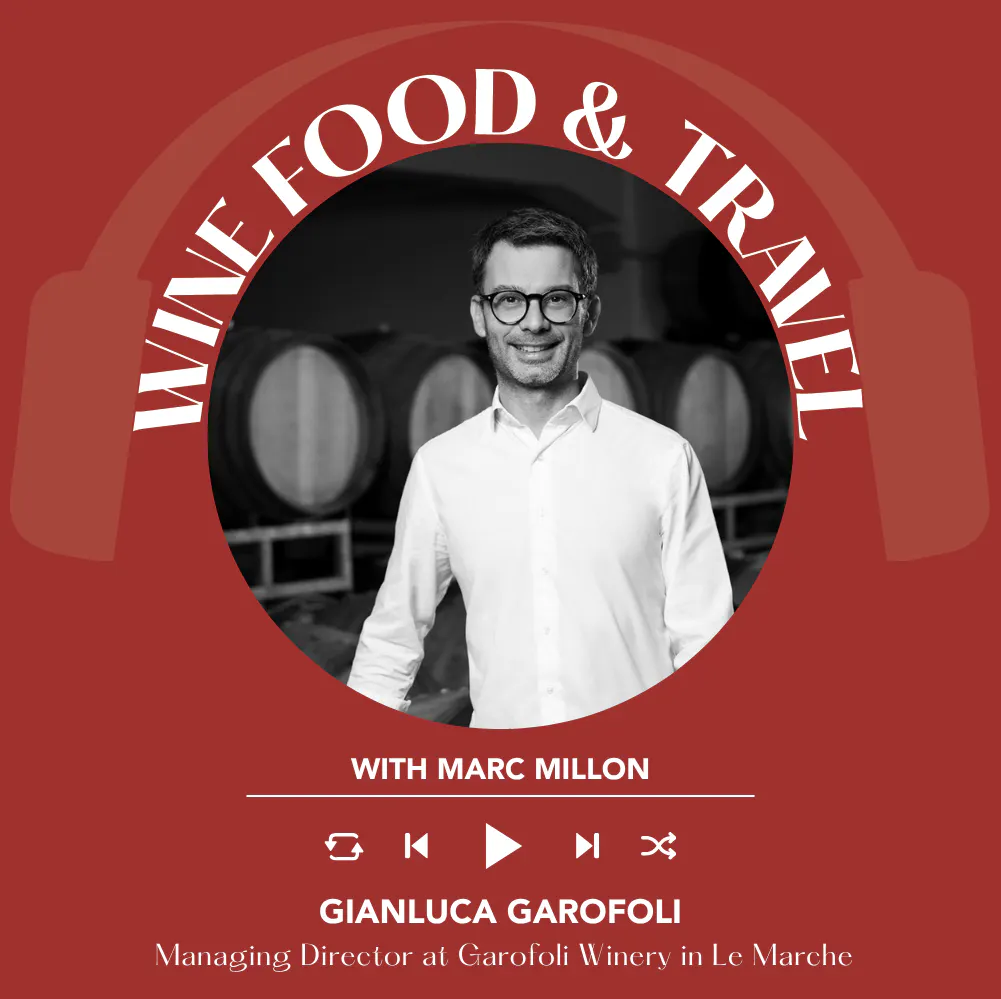
Ep. 2767 Le Marche: Verdicchio and the Wines that Shape the Region with Gianluca Garofoli of Garofoli Vini | Wine, Food & Travel with Marc Millon
Episode 2767
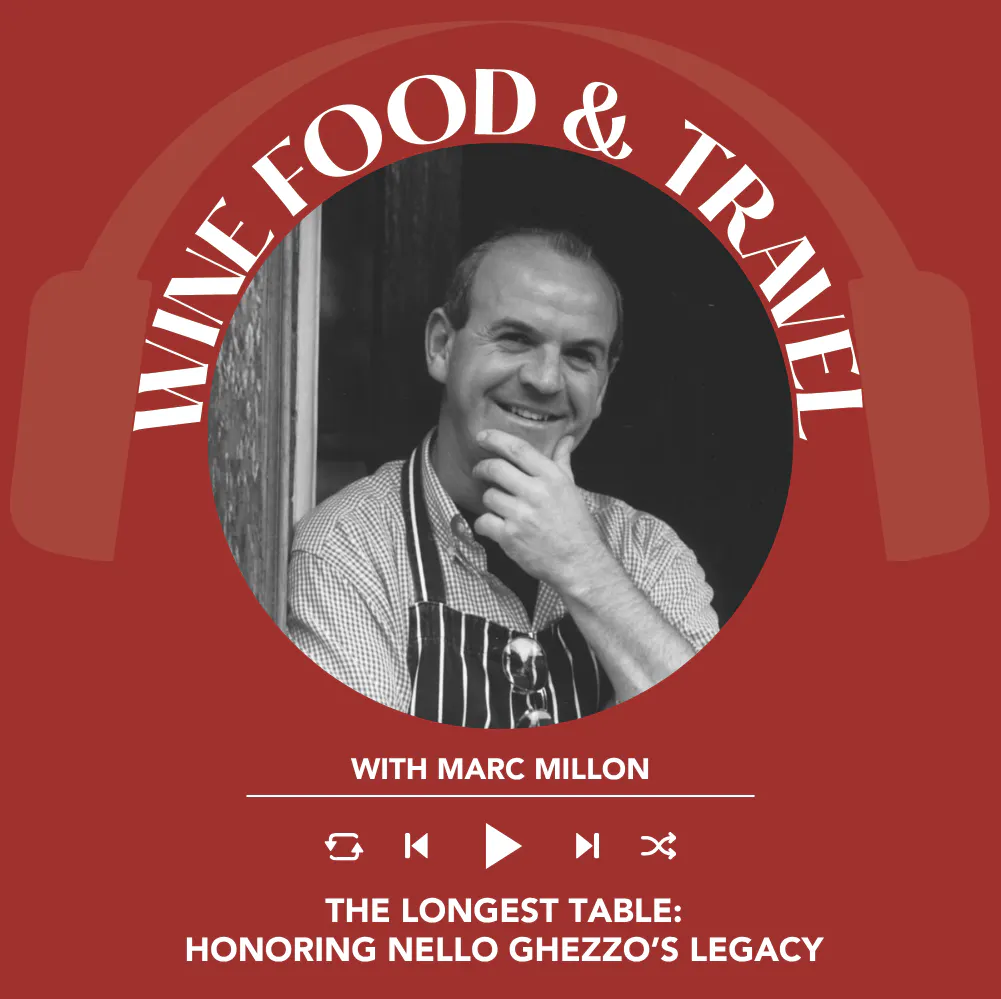
Ep. 2755 The Longest Table: Honoring Nello Ghezzo’s legacy | Wine, Food & Travel with Marc Millon
Episode 2755

Ep. 2712 Exploring Brda: Exceptional Wines and Slovenia's Culinary Traditions with Lan Kristančič of Movia | Wine, Food & Travel with Marc Millon
Episode 2712

Ep. 2700 Sardinia Beyond the Coast: Agripunica, Basso Sulcis & the Legacy of Giacomo Tachis with Salvatore Santus | Wine, Food & Travel with Marc Millon
Episode 2700

Ep. 2681 Giro d’Italia 2026 Special Episode 1: From Bulgaria to the Mezzogiorno in search of wine and cheese | Wine, Food & Travel with Marc Millon
Episode 2681