
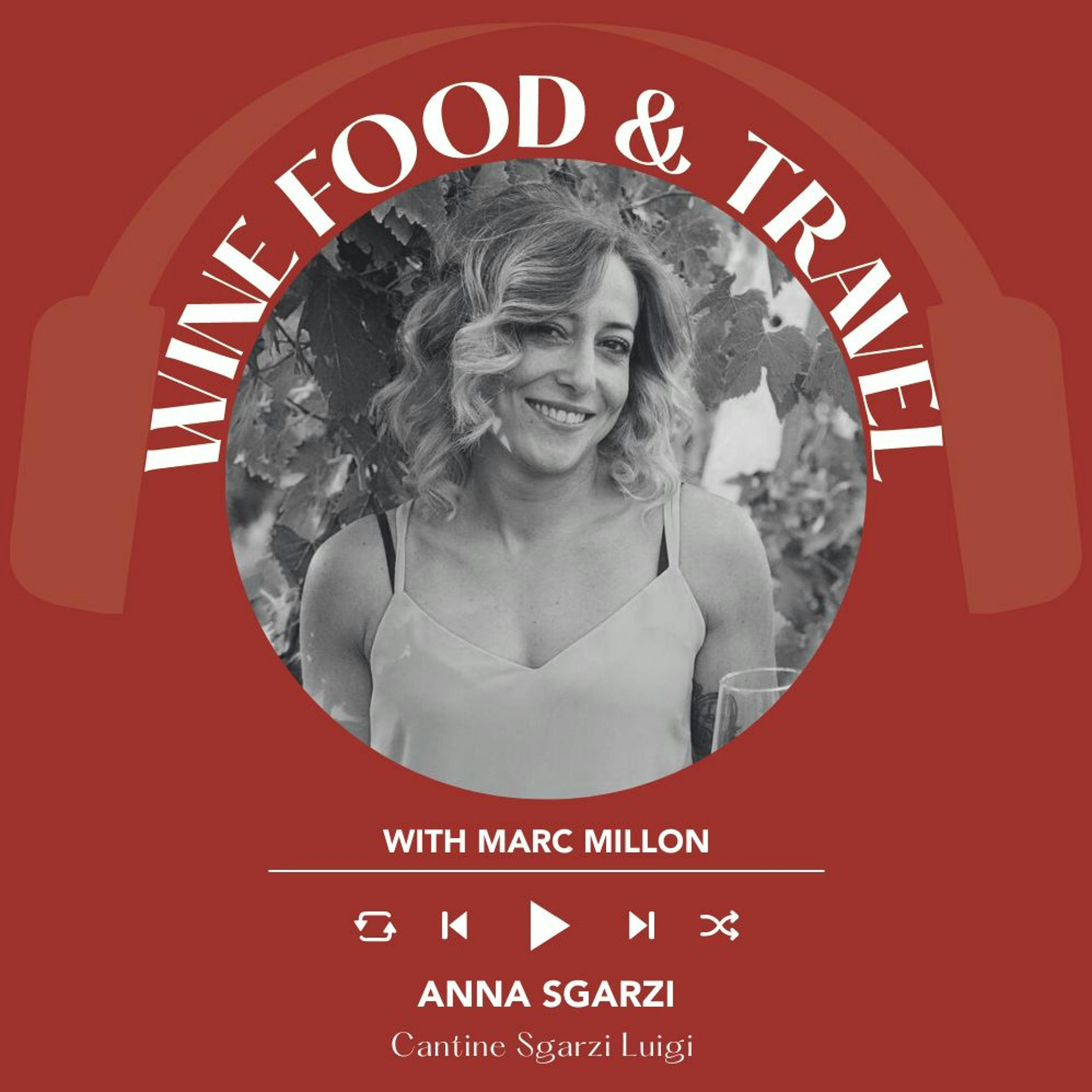
Ep. 1635 Anna Sgarzi | Wine, Food & Travel With Marc Millon
Wine, Food & Travel
Episode Summary
Content Analysis Key Themes and Main Ideas 1. The historical evolution and growth of Cantina Scarti Luigi, from a local family vineyard to an international wine business. 2. The strategic importance of sourcing wines from diverse Italian regions to meet market demand. 3. The emergence and significance of alternative wine packaging (Tetra Pak, bag-in-box, cans) for sustainability, convenience, and market appeal. 4. The role of innovative packaging in demystifying wine and attracting younger generations. 5. The versatility of alternative packaging for different consumption occasions, culinary pairings, and travel. 6. The connection between wine, food, and local culture, particularly in the Emilia-Romagna region around Castel San Pietro Terme. Summary This episode of the Italian Wine Podcast features host Mark Millen interviewing Anna Garcia of Cantina Scarti Luigi, located in Castel San Pietro Terme, Emilia-Romagna. Anna shares the rich history of her family's winery, tracing its roots back to her great-grandfather, Luigi. She explains how her parents transformed the business from selling bulk wine to an international operation focused on bottled wines, and how they strategically source diverse wines from across Italy to complement their own vineyard production. A significant portion of the discussion is dedicated to the growing trend of alternative wine packaging, such as Tetra Pak, bag-in-box, and cans. Anna highlights the environmental benefits, convenience, and market appeal of these formats, particularly in reaching younger consumers who might find traditional wine intimidating. She details the technical advancements that have made canning wine viable and discusses how alternative packaging broadens the consumption possibilities, suiting various occasions, travel, and pairings with diverse cuisines like street food. The interview concludes with an invitation to visit the winery and explore the gastronomic delights of the region. Takeaways - Cantina Scarti Luigi has a multi-generational history, evolving from a small local vineyard to an international wine supplier. - The winery owns 104 hectares of vineyards in Castel San Pietro Terme, Emilia-Romagna. - The business successfully expanded from bulk wine sales to international export of bottled wines, driven by the foresight of Anna's parents. - Strategic sourcing of wines from various Italian regions allows the company to offer a wide range of popular varieties. - Alternative packaging (bag-in-box, Tetra Pak, cans) is a key focus for the winery, driven by sustainability, convenience, and attracting new consumers. - Technical advancements have significantly improved the quality and viability of wine in cans. - Alternative packaging aims to make wine consumption more approachable and less intimidating for younger generations. - Canned wines are presented as ideal for diverse occasions, including outdoor activities, travel, and pairing with global street food or spicy cuisines. - The region of Castel San Pietro Terme is highlighted as a beautiful destination for wine and food tourism. Notable Quotes - ""This is actually a story that I'm very proud to tell because, it's a story of a couple, which is my dad and my mom, there were just two, three of them producing wine."
About This Episode
The speakers discuss the Italian wine industry and its challenges, including the importance of learning about one's family and knowing the market and demand. They also discuss the use of aluminum packaging for beer, the benefits of using alternative packaging for wine, and the use of alternative packaging for alcoholic beverages and street food. They emphasize the importance of sustainability and the environment in the industry and encourage visitors to visit their website.
Transcript
Since two thousand and seventeen, the Italian wine podcast has exploded. Recently hitting six million listens support us by buying a copy of Italian wine unplugged two point o or making a small donation. In return, we'll give you the chance to nominate a guest and even win lunch with Steve Kim and professor Atilio Shenza. Find out more at Italian One podcast dot com. Welcome to wine food and travel. With me, Mark Millen, on Italian wine podcast, listen in as we journey to some of Italy's most beautiful places in the company of those who know them best. The families who grow grapes and make fabulous wines. Through their stories, we'll learn not just about their wines, but also about their ways of life, the local and regional foods and specialties that pair naturally with their wines, and the most beautiful places to visit. We have a wonderful journey of discovery ahead of us. And I hope you will join me. Welcome to wine food and travel with me, Mark Millen, on Italian wine podcast. Today, we travel to the wine hills of Bologna, to meet Anna Garcia of Cantina Zgarci Luigi in Castel San Pedro Terme. Ciao Anna. Thanks so much for being my guest today. How are you? Hi, Mark. I'm very good today. Thanks for asking, and very pleased to be here with you with this chat. Great. Good. Well, I'm looking forward to our chat too. And, first of all, tell us where you are. Tell us what the countryside is like. You're in Romania, and Castel San Pedro Terume sounds like a beautiful beautiful little Borgo. It is. It is. Actually, we are, in the middle of, where the Emilia, becomes Romania, because, we are close to the the river, which is called, which is geographical division from Amelia to Romania, even for what is also the the regulation concerning wine. So we can do some I I GT wines that are proper from Romania or even from India because we are in this, in this, in this area. Casa San Pietro has ears as you told at the beginning from the East of Bologna, but the winery is in the plane. So we are lucky to see is from our window, every day. Casa San Pietro is, yes, it's a town of about, twenty thousand inhabitants. And, my family, all of them. So my, both my father and my mother, they're born here. So Scotty, the, which is our our surname is a typical surname from this, from this area, which is also the name of the the company. Antina's cat. Well, Donna's the story of the company. Donna's the story of your family winery. Well, yeah, with pleasure. This is a actually a story that I'm very proud to tell because, it's a story of a couple, which is my dad and my mom, there were just two, three of them producing wine. And, today, after forty years, we could say we are a we are a proper identity in the wine sector, not just a little winery anymore. The the fields, the vineyards, the area where the where the winery has been built. They were owned by my grand grandfather, Luigi, the name of the one. Of course, it's Kathy Luigi, and then, also my brother gets the name of Luigi for tradition. And then, yeah, my father, he starts working in in the in this company, which is the beginning and we'll just, they used to produce also buying wines, but, the way to sell it would just, to well, just a way to sell in in bulk. So, with strikes, all all around Italy. Then, with the help of my mother, that she was speaking good English and a good, a good German. They start to explore, the the the outside of the of of Italy with the with the sense of wine. And, at the beginning with Europe and then, with the other countries all around the world that they start this intense export activity and, before with the, we also always with the basket, but, in the last twenty years with the bottles and, other type of packaging. Well, that's a really, really interesting story, Anna. So we're really going back to your great grandfather, Luigi. Who, like other small wine growers in the wine hills of bologna, but also all across Italy, was producing wines from his own grapes. Is that right? Presumably, maybe San Jose, Alban the typical grapes of bologna, the colognese. But then do your father, the business has grown, and you're now working with wine producers from all over Italy to have an extensive range of wines. How does that work? The buying of wine is one of, I think, the most difficult things to learn. I don't even know if it's possible to learn how to select a proper good supplier that can can be honest and provide you always a good quality wine before everything. It's the the the view that you have of what is gonna be. So the future, the nearly future. So even at this time of the year, it's always because we just have the picking of the grapes, it's always important to not just to read, like, analytics number, forecasting, but you must have, like, sensitivity of what's gonna be is going to happen on the market. So this is a particular, actually, characteristic that, my father, he has in his blood, actually. It's, it's one, I believe, not just because it's my father, it really knows, the market, the market of buying, actually. And the market of selling as well, because he must be like looking into a crystal ball and thinking, well, I'm going to be able to sell wines of this style in these different market. Well, the selling, it's more a matter of, up here, really well walked customer or people you have in front of the the wants to because we actually we always believe that the, the wine exhibition, trade fair, there were always a good place where to meet, not just the new accounts, so not just for find a new new new customers, but also to to understand what what it was going on on the market at that in that moment and what were they the requests from the market. So And this way to understand, to observe buyers, general accounts, speaking or asking about wines is one of the best indicator to understand what you can supply. Okay. So the family still have your own vineyards. Is that right? In the vineyards around Castel San Pietro? Yes. We own one hundred four chapters of minutes. Okay. So an important amount. And is that still the forming an important core of the business? Yes. Absolutely. We always, to remember that wine is always coming from grapes. So we absolutely need and we we if we have the possibility and the chance to to increase the the the the vineyards, we are welcome to do that. Do you know that, vineyards in Italy and all over the world are regulated. You cannot, plant new vineyards like this. There's a quote that's a one hundred, quote of vineyards of, Sanjay, let's say, and, you cannot create new ones. So it's not a free market. Okay. Yeah. I understand that. So so the wines from your own grapes, would that be the sparkling pinolato and Malvasia Mhmm. As well as the San gerviano And the chardonnay? A little bit of merlot also. A little bit of merlot. Okay. So that's really an important core of the business, typical wines from your area. And you also have this incredible range of wines from all across Italy, from Pulia, from Veneto, from Piamonte, from Abruzzo. In fact, almost from everywhere, are you working in partnership with the same producers year in and year out? Yes. If that's the chance to do that, yes, if there's a particular situation through what maybe someone cannot supply because they had problems, or they don't have enough quantity to supply, we have to change it, but we always try to look in the same area or for us, to to keep up with the same standards is important. So we try to get a long term relationship instead to get one and then to another one Yeah. Sure. To jump to to one supplier to another, document traceability, guarantee of qualities that not, so easy to find everywhere. We were first to forced to, open a work portfolio, not just to the Romanians, I mean, Romanians wines, but also to other region of Italy because, you know, the international overview of Italy is not focus on, you know, and so this is why that I always keep in asking about, most, let's say, famous, varieties of other regions, like Primitivo from Apulia or, like, County, from to Ghana. Yep. Of course. Of course. Now I'm I'm interested too in how your company focuses on the marketing, the sale of wines. You sell in bottle. You still sell in bulk, but you also offer a really interesting variety of alternative packagings from Tetra Brick, bag and box. As well as wine in cans. Do you think this is something that consumers are increasingly aware of? And will this grow in importance as sustainability and becoming more environmentally responsible as ever more important to consumers as well as to producers. Yes. It's like this. Those kind of packaging exist on a lot of years. It's not born just, like in the last but we are, it's what we are get. We we we get in touch with this, with the with this word, no, sustainability that nowadays is very common. Probably, in my opinion, just speaking, like, person on Escarty, sustainability and the environment have been considered many, many here before than today. Because today, we are talking about this because we are forced, due to the climate crisis that we are serving today. And, for example, begging box, something that, from the North of Europe has always been requested, and it was look as a way to drink the wine that was, easier because they were had sex to, a big quantity of wine, like three or five liters, and they were able to serve the own glass of wine without using, open a glass bottle and even reducing the the the waste of glass. And, the same, come out a little bit, for all the other kind of packaging like the tetra pack that was at the beginning, really common for a Jewish and, soft a beverage such as milk or, fruit juice. Now or the the cans, yes, it's another very common packaging. Come on, let's say, we we we heard a lot to talk about, aluminum cancer always for the concept of the the the recycle of the aluminum that it's, is a recyclable, is one hundred percent recyclable. And today, we can say that the seventy percent of the containers of aluminum. We use it. It's made by the cycle, aluminum. Also, continuous garden. Our winery actually, we we start to use and, at the same time, studying the the wine the cancer as a container for wines, not just wines, but also for, wine beverages. Twenty years ago, Probably the results was not really good, really satisfying because, even the the the the container itself, it wasn't ready for the contact with the wine. The wine, I have to say something that which is really difficult to store because the acidity of the wine doesn't go goes really well with the with the aluminum. So in all those years, we try to improve the liquid and work, together with the canned suppliers to understand which was the best way to preserve the wine from the oxidation and the contact with the aluminum. And now we can say that, absolutely for some types of wine, not all all of them, drink a glass of wine from a can or drink the wine straight from the can. You have the same sensation like, open a bottle. Like, I'm speaking about, like, a Frigante, a rosette, something which is have to be fresh and easy. I'm not to pretend to compare with a with a with a with a can. But, for some everyday wines, some beverages such as like spirits, today, we have a very, very, very good results. And, a consumer can be more attractive from this type of packaging. Yes. Because, they have, less, waste at home, like, in a bar. The new generation is more, is putting a lot of attention in reducing the waste and using, alternative packaging because they could be the cycle or or even even even the reducing the volume of the waste. I believe it's really important such as the the the weight of the packaging to transport it. Wind wine business forum. Everything you need to get ahead in the world of wine, supersize your business network. Share business ideas with the biggest voices in the industry. Join us in Verona on November thirteen to fourteen twenty twenty three. Tickets available now at point wine dot net. Also, Anna, I think looking at the range of canned wines that you do, you have colorful fun labels. So It's really approaching wine in a very different way from a traditional bottle with the traditional label. As you say, do you think that will make wine drinking in alternative packaging more appealing to a younger generation of wine drinkers. And is that your target market? It is. I mean, I'm not attending to get the youngers. Wine drinkers, but to reduce the distance that, today we have built between a young and the wine. When I go around and, like, for example, especially in the summer and you see a lot of young people, that, at the restaurant, they set off asking for a bottle of wine or a good glass of wine. They drink Coca Cola or or just or spritz, talking about, alcoholic beverages. I'm, I'm a little bit sad because, I believe we have worked too much on the seriousness of wine and, new generation find difficult to to approach to it. And they don't want to appear like ignorance even when they ask about wine, you know, to to a restaurant. So, to avoid this situation, they prefer to not asking, actually, sometime for wines And I believe that can, for the packaging, for the design that you use for the packaging, for the way of drinking it. So just open, you know, the sound that you that make they can make when you open it. It's something that could be for them easier. Yeah. I can really see that. That's really interesting that it takes some of the mystique out of wine and perhaps wine in a serious heavy bottle that has to be opened with a cork groom is intimidating to younger people. I'm thinking as well, Anna, that perhaps wine in alternative packaging certainly in cans presents opportunities to drink wines in different situations, perhaps more easily on a picnic or even traveling on a train. Different occasions from sitting around a table enjoying a meal together. Maybe also with different cuisines experimenting. What are your thoughts on food paired with wine served in some of the alternative forms of packaging? Do you think that again broadens the appeal? Well, this is something that I was, observing, like, abroad, like, in, in place, such like, Latin America like Mexico, where, we try, of course, to sell one, even over there. And, when you want to approach to something, like, so, far from your traditional way even to eat and and drink because we all know that they are consumer of, spirits instead of wine, most of the time. And, with the can can, even, yes, approach to this, type of, food that is also most of the time, like, street food. And, you can also give a lot of choice of what you want to drink and we always actually we get in this type of approach to like Asian cuisine or spicy cuisine from the Latin America using, not very dry wines, but, most of time they have a little bit of, residual sugar to help the pairing, with the, with this type of food. Sure. Well, that's really interesting too. How the packaging as well makes it more approachable to enjoy with with different cuisines or indeed, as you say, with with street food. I'm imagining, I've traveled a lot in Mexico. I was actually born in Mexico. So it's a cuisine that I really love. And Me too. I can see that in in certain situations that this would be a good, easy, and enjoyable way to enjoy wine with meals, because as you say in Mexico, it might be more normally a beer with food because there isn't such a culture of wine drinking. Yeah. Even for the weather, like, for example, like it's very hot and warm. Again, it's easier to store and refresh. So it's possible to serve it, in different places because you can, cool it like in a smoke fridge instead to refrigerate the bottle. It takes you more time. And, require you, like, a proper place or a safe place where to keep it, while the can, it's easier to store in place because you can put one can over the other one, whatever. The candidates, very sensible to humidity. It can be damaged. It it it's not unbreakable, but it's even in any way, it's easy to to move her cans instead of bottles especially in place where it's not so easy to get like even a energy to to to to for the cooler. So, you know, all the those those type of cooler that they use to it's a it's a good that you know Mexico very well. So especially when they go around when they sell you like, something that is refreshing sometimes. They most of the time, they use this type of cooler with eyes in side note. Yep. Sure. New tense on that. It's very it's very useful. Also, I think the quantity. I think traditional wine drinkers are used to wine coming in a seventy five centiliter bottle. And, you know, a lot of people don't necessarily want to drink a whole bottle is sitting. And in that respect, alternative forms of packaging can also make it easier to enjoy maybe a glass or, you know, a can with a couple of glasses shared between a few people. It's very interesting to think about wine outside the bottle as it were, not something that I encounter in my work a great deal, but you've already given me food for thought on this. Anna, is Cantina Scartsy open to visitors? Can people visit you? Yes. Of course. We are open, from Monday to Friday, from nine to six PM. We ask if it's possible to, give us a call or an email before, but we are always open. And then we could be open even the weekend, but we ask for, booking before because we have just to organize our work. Okay. And of course, Castel San Pietro Terme is a beautiful place to visit in its own right for anybody perhaps. Visiting Bologna who wants to get out into the countryside. It's a beautiful place to visit. Yes. Thanks for saying that. And even for eating, don't forget, but and so. Absolutely. It's one of the great cuisines of Italy. Anna, thank you so much for sharing your family's story, of how this important business has evolved from a small family vineyard to now a business that's supplying wines from all over Italy and indeed selling wine all over the world. You've really made me give thought to the benefits of alternative packaging and how they can be appealing to, new wine consumers, younger wine consumers, and also to anybody who likes a glass of wine but needs it in a more convenient form. I really enjoyed our discussion And so thank you so much for being my guest today. Thanks to you, Mark, and, everybody is listening. Okay. Thank you. Bye bye for now. Bye. We hope you enjoyed today's episode of wine, food, and travel. With me, Mark Millen, on Italian wine podcast. Please remember to like, share, and subscribe right here, or wherever you get your pods. Likewise, you can visit us at Italian podcast dot com. Until next time.
Episode Details
Keywords
Related Episodes

Ep. 2791 Italian Wine in a Changing Climate: PIWI, Terroir & Tradition with Nicola Biasi | Wine, Food & Travel with Marc Millon
Episode 2791
Ep. 2767 Le Marche: Verdicchio and the Wines that Shape the Region with Gianluca Garofoli of Garofoli Vini | Wine, Food & Travel with Marc Millon
Episode 2767
Ep. 2755 The Longest Table: Honoring Nello Ghezzo’s legacy | Wine, Food & Travel with Marc Millon
Episode 2755

Ep. 2712 Exploring Brda: Exceptional Wines and Slovenia's Culinary Traditions with Lan Kristančič of Movia | Wine, Food & Travel with Marc Millon
Episode 2712

Ep. 2700 Sardinia Beyond the Coast: Agripunica, Basso Sulcis & the Legacy of Giacomo Tachis with Salvatore Santus | Wine, Food & Travel with Marc Millon
Episode 2700

Ep. 2681 Giro d’Italia 2026 Special Episode 1: From Bulgaria to the Mezzogiorno in search of wine and cheese | Wine, Food & Travel with Marc Millon
Episode 2681