
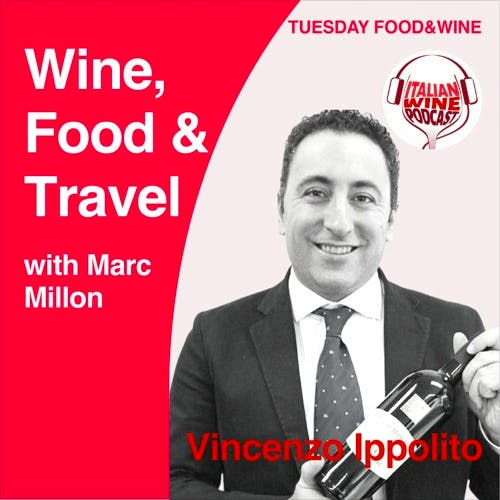
Ep. 685 Vincenzo Ippolito | Wine, Food & Travel With Marc Millon
Wine, Food & Travel
Episode Summary
Content Analysis Key Themes and Main Ideas 1. The historical legacy and multi-generational tradition of Ippolito 1845, the oldest winery in Calabria. 2. The unique terroir and ancient viticultural history of the Calabrian region, particularly Chiro. 3. The dedication to indigenous Calabrian grape varieties like Gaglioppo and Greco Bianco, and the philosophy of resisting international trends. 4. The distinctiveness of Calabrian cuisine, its local specialties, and its natural pairings with regional wines. 5. The pivotal decision to bottle wine in Calabria post-WWII and its impact on regional wine recognition. 6. Promoting Calabria as an emerging wine and food tourism destination, inviting visitors to explore its unique culture. Summary In this episode of ""Wine, Food, and Travel"" on the Italian Wine Podcast, host Mark Millen interviews Vincenzo Ippolito, a representative of Ippolito 1845, the oldest winery in Calabria. Vincenzo recounts the winery's long and storied history, dating back to 1845, and highlights his grandfather's crucial post-WWII decision to bottle wine, a rarity and pioneering move in the region at the time. The discussion covers Calabria's unique terroir, shaped by the Sila Mountains and Ionian Sea, fostering ideal conditions for grape cultivation that dates back to ancient Greek colonization. Vincenzo emphasizes the winery's commitment to indigenous grape varieties such as Gaglioppo and Greco Bianco, explaining how their family resisted the trend of planting international varietals to preserve their regional identity. The conversation also delves into Calabrian gastronomy, famed for its spicy dishes and unique local delicacies like Sardella and 'Nduja, with Vincenzo suggesting authentic food and wine pairings. The episode concludes with an invitation to explore Calabria, underscoring its rich history, distinct wines, and vibrant culinary scene. Takeaways * Ippolito 1845, established in 1845, is the oldest winery in Calabria, Italy. * The winery's modern success began with a revolutionary decision to bottle wine after WWII, contrasting with common bulk sales. * Calabria's terroir is ideal for winemaking, influenced by mountains and the Ionian Sea, contributing to significant temperature excursions. * The winery is dedicated to preserving and promoting indigenous Calabrian grape varieties like Gaglioppo and Greco Bianco, resisting international trends. * Calabrian cuisine is distinct, known for its spicy elements (pepperoncino) and specialties such as Sardella (fish paste) and 'Nduja (spreadable salami). * The history of winemaking in Calabria dates back to ancient Greek colonization, with legendary ties to the Olympic Games. * The region offers unique wine and food tourism experiences. Notable Quotes * ""The present and the future for the wine was to bottle the wine in a regular glass bottle, and this choice would have made a big difference in the wine trade."
About This Episode
The speakers discuss the history and culture of a family wine estate in Italy, including their philosophy of promoting indigenous varieties and maintaining local culture. They also talk about the importance of growing grapes in the area and the unique and beautiful nature of their wines. They mention their partnership with other wineries and their upcoming edition of their wine. They also discuss the excitement of their upcoming edition of their wine and their favorite restaurants in the area.
Transcript
Welcome to wine food and travel with me, Mark Miller on Italian wine podcast. Listen in as we journey to some of Italy's most beautiful places in the company of those who know them best. The families who grow grapes and make fabulous wines. Through their stories, we'll learn not just about their wines, but also about their ways of life, the local and regional foods and specialities that pair naturally with their wines. And the most beautiful places to visit. We have a wonderful journey of discovery ahead of us, and I hope you will join me. This episode is proudly sponsored by Vivino, the world's largest online wine marketplace. The Vivino app makes it easy to choose wine. Enjoy expert team support door to door delivery and honest wine reviews to help you choose the perfect wine for every occasion. Vivino. Download the app on Apple or Android and discover an easier way to choose wine. Welcome to wine, food, and travel with me, Mark Millen, on Italian wine podcast. In recent episodes, we've been exploring the far north of the country, Jesparo, the Alps in German speaking Suttjirol or Alto Adije. Today, we're traveling to Italy's deepest south to the glistening white beaches of the ionian Sea and up into the rugged wine hills of Chiro to meet our guest in Shenzhou Ipolito on his historic family wine estate, Ipolito, eighteen forty five, the oldest winery in Calabrio. Thank you so much for joining us, Vincenzo. How are you today? Good morning, Mark. Thanks for the invitation. I'm very good. Finally, our harvest is over. It was a very good harvest, and now we are very excited to taste the new, the new vintages. Was it a good harvest? What did things go according to how you had hoped or was it a difficult? Yeah. Well, no. It was it was quite good because of the, I mean, the, the climate has been quite stable with not so much rain during the harvest. The summer was, pretty hot. But in the end, we picked up good fruit at a quite good level of quantity. So, I mean, you know, we got both targets, which is a decent quantity and high quality grapes. Oh, excellent. That's great to hear. Now your family, has a long history of producing wines in Chittel going back to eighteen forty five. That's even before the Italian nation had been created. So the all of south of Italy was under the Spanish, under the Spanish bourbons at that time. It's amazing history. So can you tell us a little bit about about your family and how you've been making wines over this long period? Yes. For sure. Thanks for the question. So the company is called, in Porto eighteen forty five, because, in an old building in our farm, we found, this big stone on the wall with this date printed on one eight four five v dot I dot. So vincenzo ipolido. That vincenzo ipolido, of course, it's not me, It's not even my grandfather. He was the grandfather of my grandfather. You know, here in the south, we have the tradition to call, the first, son with the same name, of, our father. So we still keep this name in our family. At that time, the, it was not really, wine production in bottles. It was, mainly production of grapes and wine in bulk. Mainly sold the surrounded area in the local area, not outside the region. The economy was not just wine, but it was mainly based on agriculture. So olive oil, grapes, wine, vegetables, fruit, citrus, and so on. Then we have to wait until the second world war to have, a real focus, a real focus on with the culture. It was, my grandfather, Vinchen, so he was a quite, brave and ambitious person with the study in agriculture. He had already a small car, a small fiat. And he was very curious. So he went to the north of Italy to region like Tasal Piedmont and they realized that the the present and the future for the wine was to bottle the wine in a regular glass bottle, and this choice would have, made a big difference in, in the wine trade. So he came back to its hometown, Chiro Marina, and then, he had this great and revolutionary idea to model the wine, in a zero point seven five liter bottle putting the label on the on the on the glass and printing its name on the bottle. So, we start to sell, our bottles with our brand at the time it was only continue vincenzo Paulito, just his name. Then, in the end of the sixties and the seventies, my father and my uncle decided to put the, the, the foundation dates on the label just to make to make the brand more recognizable and even stronger. After my grandfather, it's my father, my uncle, who still run into the same business, but investing much more both in the vineyards and in the winery, but still with the same philosophy. The philosophy is, giving value to our indigenous varieties, especially Galiapo and Grego Bianco, and try to promote this very unique grapes and this very unique wines, not just in Italy, but even, all around the world. So in the sixties, so in the end of the sixties, we started the first export. To United States and Germany. I mean, it was easier in these countries because there there was already a big presence of the Calabrio people immigrants from Calabrio who moved there and they set up the first restaurants and the food and wine distribution. So we went from regional sales to national and international sales. Then in the two thousand, we have a a new generational step in our, in our family history. The, it's me together with, my brother, Jaluca, and my cousin Paulo, to manage the winery. And our philosophy, our idea was, to keep and to preserve the same values of our fathers, but trying me to do things better and better and the first, target, the first mission was, to rediscover other indigenous civil rights, quite unknown and neglected in the area. And, trying to do good quality wines from, not just the Gallopon reco bianco, but also other Calabrio variety, like pecorllo, Gregonero, Calabresse, and so on. So, yeah, right now, the the company is a medium sized company. We produce around six hundred thousand balls a year. And we sell our production in Italy and in about to thirty countries, around the world. Wow. It's, it's a fascinating story starting from the beginning, those early days, but particularly from, the post war period, when your grandfather who began to bottle the wine after the war. At a time when, I guess, most of the south was, perhaps, as you say, selling wine only locally or perhaps selling wine swooze or a swimming wine in bulk, to go up to the north or to other places and to actually value what was being produced and to have that faith, that that your family could produce wines that would put Calabrio on the wine map of Italy was very brave and courageous, and, it must have been difficult. But what a wonderful thing to have done because now, you know, this is, so important. Yes. Now I want our listeners to really gain a vivid picture of where you are. I visited your your wine estate with your father, more than thirty years ago. I think it was Vincenzo. So a long time ago, but I remember the beauty of the Ionian sea, with the rugged, very rugged landscape rising from the sea, Chiro marina, and then Chiro, the old town up the hill. Can you, can you tell us a little bit about, your opinions on three different estates and the terroir and where we are so that our listeners can gain a picture? For sure, Mark, first of all, I'm very glad about what you say to me a few minutes ago during our introduction conversation that you met my father, a little time ago when he was, still, still alive. And, it's, it's it was, quite emotional for me. So it's, it's a very nice thing. And, the good thing is that, not so much is changed in our territory. Since your last visit. I mean, we are very, very lucky to live in a very, very unique and beautiful place. It's, the the main towns are two are Chiro marina and the Chiro also called the Chiro Superriore. They are two small towns on the, ionian coast. Aionian coast is the east side of Calabrio. And the, precisely, we are located on a tip called Puntalice. Puntalice is the is the most point of Calabia. Actually, it's the starting point of, Tarrantogalff. And, it's not a coincidence that, just there, just here in Churomarina, we have, a special condition for growing grapes. The special condition are given from its position because, for two reasons, mainly. On our shoulder, we have, the beautiful mountains of, a sila chain from which we get the, the cold wind. And then in the front of the East part, we have the, the beautiful ioniancy, from which we get, the warmer breeds. So shadow area becomes the meeting point, meeting place between, cold and, heat. So we have a a very nice, very nice, temperature excursion between, day and night. And then it's, the perfect condition for growing the grapes. When the Greek colonies came to our territory, about three thousand years ago. They found a great place with the presence of vines already. And, the, the ground of the soil was, very fertile so that they called our area in atria. In atria in Recamines, wineland, then this, this world was extended to the whole country. So, I mean, our area is very unique for growing the grapes, and we have been growing grapes for a very, very, very long time. And it's, so nice that we still, we still grow grapes in this area. And actually it's the main economy, the main business in the area. That's a really fascinating story. Going back to the ancient Greeks who settled in I love that on your website, one of your slogans is the, the gods of Olympus are our old clients. Tell us a little bit about this exciting link with the Olympic games, the ancient games, indeed the present games. Yes. Right. So, well, it's, it's a story, between legend and the real story of the course. They say that, in the past, when, the players, went to offense for the Olympic game, and then after the games, they came back to their land here, you know, in Calabia, they used to celebrate their victories, drinking, our cremesa wine, cremesa is the old name for Chiro So they were, they were drinking Chiro wine for thanking the gods, but I think it was, just a way to have fun and and celebrate, their their gates. So it's a, it's a, I mean, it's a good story. It's a part of our storytelling. We, we like it a lot in the, in the nineteen sixty eight during the Olympic game, in Mexico. Our, our winery together with other wineries in the area sent, for free white, good amount of bottles of wine for old, Olympic players. Just to, to remind this, this all the tradition, which link our territory to the Olympic Games. And, yes, my father together with my aunt over the seventies, they had this, very, very good idea to put this claim, on the brochure, the, the guts of all, of Olympus are our old customers. So, I mean, it makes sense that we still put it, on our website. Yes. Absolutely. I love that story. And, of course, it is a reminder that Calabrio in the ancient times was a very rich area with, and and famous ancient cities. And indeed, I think it was noted for the prowess of its Olympians, the famous wrestler Milo, who I think won four or five Olympic wrestling titles over twenty years was, I, I guess we could imagine that Milo, this great wrestler would have been drinking creimisa or Chiro wine. Yes. It's, it's a nice, a nice idea to think of. I I believe. Now, Vincenzo, I know that, your family have always believed in the native grape varieties of varieties that have traditionally been grown for hundreds, and maybe maybe these same varieties were around under the Greeks, GaliOPo, Greco Bianco. Let's just talk a little bit about those two, and then maybe we'll also discuss a few other grapes. That's been very important to you, isn't it to to really express the territory through the the local grape varieties? Yes. For sure. So as I said before, my immigrant father, Vincenzo, was, already producing his wines from Gallioppa Ray's grapes, red, red chiro. So, reserve a red chiro. And then he also was producing, Rossell wine from, from Eliopo. Then my father and my uncle, they still, were doing the same dough in the eighties and nineties. With the new trend in Italy of planting international varieties like, Sheridan Ammirlock, a bernand son. My, my father and his brother, they told to, there was no future for, other varieties, because, the competition around the world have been too high and there would have not been any distinguishing character on our wines. So they resisted the to the new trend, they still work the on the indigenous varieties, which are mainly Galiapo and Grego Bianco. They are two unique, very punitive for very difficult to work with, grips varieties, but, but, working with these grapes, make our job, very, very challenging on the side, but very and enthusiastic on the other side, because, we have the great opportunity to offer the market, very special and unique wines. What is unique in Galiapo Galiapo is, is a red grapes, and Galiapo stands to Calabia, like, Napiola, to Piedmont or San Giovanni, you can find the Galliapo in, or Calabia, but the the most of Gallioppa is calculated the in our area in the Chiro area. Why it's unique because, first of all, the color, the color is, is very unique. It's never never very, very dark and never very violet. It's a nice, brilliant to the ruby red color when it's young. And then with the aging, it goes to I mean, it becomes a little bit lighter going to garnet, garnet color. So, apparently, it looks like, a light, a light wine, but it is not light at all. Because of the sugar content inside the grapes is a pretty, pretty high. So we get quite alcoholic wine, but the good thing is that alcohol is, pretty much, well balanced by the high acidity. And then, there are the tenants, which is, the, the biggest, particularity of our Gallopo, Elopo is a full attendance, so that we have to wait for the right moment to pick up the grapes, we need to do, careful maceration, and then we can age the wine very well because the alcohol plus the the tannins are, great. So in the end, we get a wine with a very nice, elegance with, a very, a very charming, complexity on the nose. The nose goes from, fruity, fruity aromas, like, small berries, with, spicy aroma. And after years, it becomes very intriguing because you get the licorice, you get the leather, the the tobacco, the the the longer you wait sometimes and the better the better it is. Just three years ago in twenty nineteen, we celebrated the the fifty years of history of our of our DOC. Chiro DOC is one of the oldest in Italy. It was recognized in nineteen sixty nine. And during even Italy, we did a great event presenting fifty years, of Gallioppa wines drinking even the bottle of my winery since nineteen sixty nine. Wow. Amazing. And, yeah. Very nice. Glad to grips is, Grego Bianco, has, its name says, has a Greek origin and it's another, another grapes, which is, part of our territory, of our history and tradition. Usually, Gregobianco is not naturally in balance. I mean, usually, it gets a nice acidity, but the sugar content is never enough. So we have to wait longer to get a good sugar content, but we'll risk to lose acidity. So what do we do in our in our winery is, to do two different harvest. So we do a first harvest in the beginning of September. So we get, some grapes, with the higher acidity. The sugar is not too high, but at least it would get a nice fresh aroma and a nice, a nice, freshness, at the taste. And then after about one month, We do a seven harvest. So we pick up grapes with, more sugar, and we get the wine with, more structure, more complexity. And after fermentation, we blend the two wines together, in order to get the wine with nice balance and nice, equilibrium, between, acid, freshness, and structure. Yes. So Gallio Percoblanco are the main grapes, but Calabria as, really a great, patrimony heritage of, indigenous varieties, very great, butte university. So in the last, fifteen years, our, our work was, of, rediscovering a research other old varieties. So we came out with the new wines from, other other Calabrio varieties, like, Pecorello, Gregonero, Calabresa. And then it makes, I'll offer a very, very interesting because, we, I mean, we start with the Gallioppa de Cobianco, which are the best known grapes, and then we gone with the these other grapes varieties, not well known, but they are finding their space in the markets because people are a curious, more and more to get new wines from, unknown grapes. I think you're right. And I think that is, one of the interesting, most interesting things about Italian lines for those who are curious. You can you can encounter new wines from old grapes that, you know, ones never tasted before. I always say to people that when they're looking at a wine list, to not pick the wines they know, but to pick a name they've never heard of because it wouldn't be there unless there was a reason for that wine to be made. All of your wines, vincenzo, these are wines that are made to be enjoyed with food. Can you explain to us some of the main features of Calabrian food and in particular foods that you enjoy in Chiro. Yes. Okay. You know, Italy has a great, offer of food, so in, in each region, you can enjoy some, so many excel and things. So even in our region, we have, something very unique and very good. And then it depends on where you are. You get different food because, Calabrio is wet from, two different sea, ionian sea, and terranian sea. So usually on the coast, the, the food is mainly based on, on fish. And then we have, beautiful mountains, and as Pramante, and over there, the cuisine. The cuisine is mainly made, based on a, on a vegetables, mushrooms, and meat, of course. Especially wild wild meat. So in my area, we are famous, for a product. It's called the Sardelle. It's the the Calabrian caviar. It's, made of, baby, sardines, and service with, a lot of spicy red pepper and, a little bit of, fennel seeds. And it's, yes, and olive oil, of course, extra virgin olive oil, And it's, actually, it's our, mousse boucher, for all the restaurants. Wonderful. It's a fish, salted. Is it a cured fish? It's a cured I mean, it's a raw fish, raw fish, adjusted to salted the pepper cure the the fish, which you can keep for a long time. So, I mean, the the the, of course, the salted red pepper preserve the the integrity and the quality of the fish, and we just spread, spread the fish on, crostini, on bruschetta, or you can even, do, primo Pieto, like, spaghetti with the, with the, with the, with the, and as I told you before, usually, it's the Entra, the welcome, Entra, and all the restaurants in the area, and people, people are crazy for that. Now there is another dish which you love is, it's called the, in in the Calabrasse. It's called the PPA Prope. It's a PPS of peppers and octopus. They are they are fry. They are fried on a on a frying pan. Of course, with a lot, a lot of olive oils. And then it's, it's between a second course and, contorno side, side course. Then we have much more of course. We have all the, ionian fish, like, and Chavez, sardinia, toward fish, tuna fish, that we usually do with the pasta or just, grill, grill it on the grill. And then it's, it's fantastic. And, for, yeah, for such a food, we we better our white or even better our rosette from Gallo because uh-uh, the rosette from Gallo is a little structure, a little tense, which, pair pretty well with the, with the spicy food. Sure. Now, spicy food, calabria, you've been mentioning the red pepper, the pepperon gino. Calabria has a, has a reputation of having a wonderful spicy food. I love it. I think there's even a fast food pepperon gino, maybe even going on right now in diamante. It's really an important feature, isn't it? Yes. It's it's a very beautiful event. Even, even our company is tied together with other understand with other, Calabrio products, promoting our wines. I think it's, edition number twenty five, twenty six. So, they've been doing that for a long time. And that's something good because, it's the right way to to promote to your excellence. The amount then is a very, very, very nice town, and they do this special event. In the end of September beginning of October just to extend the the summer, the summer season. Yes, there are, I mean, there are some products that some Calabrio products, which are famous all over the world. If, you think about the nduja, people call it nduja sometimes. You can find the these ingredients. There's so many pizzeria right now. There is a pizza with nduja. Made in so many places around the world or just, faster with Indonesia, even restaurants in, England, the United States, and even other countries, they they use our products, to to make some great dishes. So in DUia, this is this spreadable salami with plenty of pepperoncino that you can sort of spread with a knife. It's so, rich. I love it. Originally from, the Duranium side, from, tropharia. And what is, what is a special is that, it's a very poor food. It's, what is left from the pork meat, you know, in the past, they didn't wanna leave anything. So they were using all all the stuff. So what was left from the good meat was mixed with a lot of, red pepper just to make, to make a kind of sauce and put it in, in a salami way. So is quite spreadable, and you can just eat, nious is, itself on the bread, or it's, great, to put it in the in the sauce and make some, tomato sauce, for for your pasta or whatever you want. Now, you know, the chef have a great fantasy, and they can use Lucia for, for multiple dishes. Sure. Sure. Now speaking of chefs, I would like our listeners to, for you to share with our listeners, perhaps a couple of restaurant recommendations, be something for very traditional, and possibly a restaurant that serves these wonderful local ingredients in a slightly more modern way. Yeah. In my in my area, in my area, there are many restaurants. I mean, a great effort to to do things, better, better, and I mean, I'm very glad because, I think, our restaurants, grew a lot in the last, in the last ten years. We have, okay, talking about, kind of, gourmet way of, of cooking. I would recommend three restaurants, charred restaurants of my, my heart. One is, Conte de Melissa, in, in Toura. It's a very nice, place, on the on the little, little hill for which you can see, the moon, the sea, and a wonderful old, SARSen Tower. Then, and then, the other two restaurants are on our, our, in the town of Eichiro marina. One is, Aquarama, where the chef is a friend of mine, Andrea, and the other restaurant is, white restaurant is a manager for my other good friend from Pieruigi where you can find the best raw fish in the area. Talking about, talking about, very typical cuisine. I would recommend to get some good friends in Jiro and go to it to the house where the mom cooks because, it's, it's the best way to get to the the, I would invite you to my place where my mom is from Chiro, from the old town. She's a great cook. But, another recommendation could be laquilador. It's a a restaurant, in the old town of Chiro, where they really do the, the older recipe of Chiro and Chiro marina food. Okay. Great. Well, Vincenzo, you've given us a great overview of a very special place, far off place. I think, you know, for many of us in our minds, we think of Chiro, way down on the ionian sea is, you know, quite a long way from, from our imagined views of Italy, but it's a beautiful area. Your wines are fabulous, and I'm sure that they're best enjoyed with the foods of the area. So I hope that that our talk today would encourage our listeners to travel to Chiro to find you. And if not, then to enjoy visiting you every time they encounter your wines. Wherever they are. So thank you very much for being my guest today. It's been a real pleasure meeting you, and I look forward to meeting you in person sometime soon. Thanks a lot for the for the invitation and for the nice conversation. Thanks. Thanks. Bye. Bye. We hope you enjoyed today's episode of wine, food, and travel with me, Mark Millen, on Italian wine podcast. Please remember to like, share, and subscribe right here or wherever you get your pods. Likewise, you can visit us at Italianwine podcast dot com. Until next time. Hi, guys. I'm Joy Livingston, and I am the producer of the Italian wine podcast. Thank you for listening. We are the only wine podcast that has been doing a daily show since the Panda it began. This is a labor of love and we are committed to bringing you free content every day. Of course, this takes time and effort not to mention the cost of equipment, production, and editing. We would be grateful for your donations, suggestions, requests, and ideas. For more information on how to get in touch, go to Italian wine podcast dot com.
Episode Details
Keywords
Related Episodes

Ep. 2791 Italian Wine in a Changing Climate: PIWI, Terroir & Tradition with Nicola Biasi | Wine, Food & Travel with Marc Millon
Episode 2791
Ep. 2767 Le Marche: Verdicchio and the Wines that Shape the Region with Gianluca Garofoli of Garofoli Vini | Wine, Food & Travel with Marc Millon
Episode 2767
Ep. 2755 The Longest Table: Honoring Nello Ghezzo’s legacy | Wine, Food & Travel with Marc Millon
Episode 2755

Ep. 2712 Exploring Brda: Exceptional Wines and Slovenia's Culinary Traditions with Lan Kristančič of Movia | Wine, Food & Travel with Marc Millon
Episode 2712

Ep. 2700 Sardinia Beyond the Coast: Agripunica, Basso Sulcis & the Legacy of Giacomo Tachis with Salvatore Santus | Wine, Food & Travel with Marc Millon
Episode 2700

Ep. 2681 Giro d’Italia 2026 Special Episode 1: From Bulgaria to the Mezzogiorno in search of wine and cheese | Wine, Food & Travel with Marc Millon
Episode 2681