
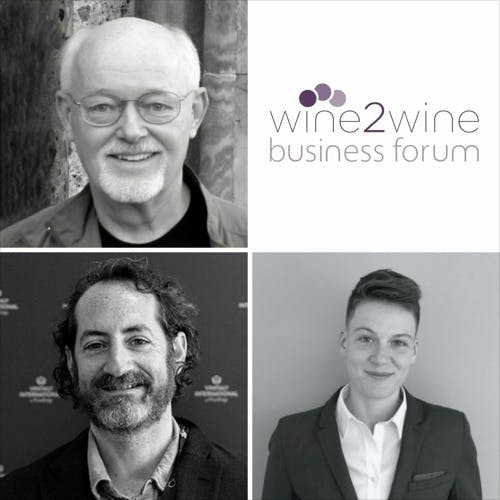
Ep. 757 Politics And Wine Trade | wine2wine Business Forum 2021
wine2wine Business Forum 2021
Episode Summary
Content Analysis Key Themes and Main Ideas 1. The pervasive influence of politics, both internal and external, on the global wine trade. 2. Internal political tensions within the wine industry, such as appellation rules and resource allocation debates (quantity vs. quality). 3. The impact of a stagnant global wine market, shifting from a ""positive sum"" to a ""zero-sum"" or even ""negative-sum"" game. 4. How external geopolitical disputes (e.g., trade wars, tariffs) often use wine as an unrelated target due to its strong identity. 5. Opportunities for the wine industry to unite and adapt through common causes (anti-alcohol movement, climate change) and evolving business models (education, direct-to-consumer). Summary In this session of the Italian Wine Podcast, wine economist Mike Veseth delivers a presentation on ""Politics in the Wine Trade,"" distinguishing between internal and external political influences. He explains that ""everything is political,"" and the wine industry is no exception, grappling with internal tensions such as debates over appellation rules (e.g., Spain) and strategic disagreements among national wine promotion groups (e.g., South Africa's quantity vs. quality focus). Veseth argues that a stagnant global wine market intensifies these internal conflicts, turning it from a ""positive sum game"" (where everyone can win) into a ""zero-sum game"" (fighting for market share), or even a ""negative sum game"" if infighting confuses consumers. Externally, wine often finds itself caught in the crossfire of international political disputes, such as tariffs imposed by unrelated trade wars (e.g., US-China, China-Australia). Veseth highlights that wine's strong, branded identity, often celebrated through terroir, ironically makes it an easy target for political leverage against specific nations. Despite these challenges, he offers hope, suggesting that common ""enemies"" like the global anti-alcohol movement (""Wine in Moderation"") and climate change (""Porto Protocol"") can unite the fragmented industry. The co-moderators and audience add to the discussion, emphasizing the need for industry adaptation through education, direct-to-consumer models, and fostering collaboration to address these complex political and economic landscapes. Takeaways * Politics deeply infiltrates all aspects of the wine trade, from internal industry debates to international relations. * A flat or declining global wine market intensifies internal competition and political squabbles within the industry. * Wine's strong national and regional identity makes it vulnerable to being used as a pawn in unrelated geopolitical trade disputes. * Globalization's current fragility poses significant risks to wine exports that previously benefited from expanding free trade. * Industry-wide collaboration on common threats like the anti-alcohol movement and climate change can foster unity and positive change. * New business models focusing on education, direct-to-consumer sales, and storytelling are crucial for adapting to market shifts and political pressures. * The wine industry needs to perform political risk assessments to understand its vulnerabilities to domestic and international political events. Notable Quotes * ""Everything is political these days. And if everything is political, how can wine be different?"
About This Episode
The speakers discuss the challenges of the wine industry and the need for a "weanovering the system" game to achieve positive economic environments. They emphasize the importance of addressing global political and energy policies and managing political risks to avoid "weanovering the system" and "weanovering the world." They also discuss the impact of tariffs on wine exports and the potential risks of global lockdowns. The speakers emphasize the importance of protecting their brand and marketing for a "weanovering the system" and "weanovering the world."
Transcript
Talian wine podcast, a wine to wine business forum twenty twenty one media partner, is proud to present a series of sessions highlighting the key themes and ideas from the two day event held on October the eighteenth and nineteenth twenty twenty one. This hybrid edition of the business forum was jam packed with the most informed speakers discussing some of the hottest topics in the wine industry today. For more information, please visit wine to wine dot net and tune in every Thursday at two pm central European time for more episodes recorded during this latest edition of wine to wine business forum. Alright. Well, good afternoon. Good morning. If you're in Asia, good evening. I think we had people from all over the world in this session. So, excited to have the opportunity to co moderate, politics in the wine trade. So, my name is Russ Lorber. I'm a certified Italian wine ambassador, and I am an importer wholesaler based here in Baltimore, Maryland. Also working in Washington, DC, and this is a topic that's very near and dear to my heart. So, I look forward to co moderating this with, Gemma Richardson, who I'll turn it over to now. Thank you, Russ. Yes. My name is Gemma Richardson. I am, also an Italian wine Ambassador. I have a business called Love Anna Maria, and make, primarily Pesto genovese in Philadelphia. I also conduct online classes on, Genoa's cuisine and culture, which obviously encompasses wine, a great passion of mine. I'm really excited about this session today with our speaker, Mike Viesif. Mike is a Professor emeritus from the University of Puget Sound. He taught international political economy. He's also today known as the wine economist, so you probably know him from his blog online wine economist dot com, mostly focuses on analyzing and studying, today's global wine markets. He's written several books. I really appreciate his, kind of interdisciplinary lens, not just as an economist, but as a storyteller. And, today, he's gonna really dive into really just, the intersection of wine at, between economics and and politics. And so that really encompasses internal, several internal, factors as well as external affairs as we've seen in, recent years, bit of true, kind of concern that we don't possibly, we don't know what the future holds. But hopefully, Mike will have more to say on that. So I'll pass it over to you, Mike. Pleasure to be here today with you. Thank you, Gemma. Thank you, Russ. Chow. It's a pleasure to be here virtually in verona. In real world, am near Seattle Washington, and so it is six forty five AM. And I'm looking forward to coffee with you all later. I think when the session starts, let me let me share my screen. I have a brief presentation, but there'll be time for us The three of us to discuss, and if there are questions from the audience in verona or elsewhere for that to happen too. So all you know how this works. Just be patient here while I try to share my screen. Here we go. So the, the topics that I was given, I've been asked to speak on politics and wine trade. And I I think this is, sometimes when I'm asked to speak at conferences like this, it's because of the wine economists side, and sometimes it's because of the professor side, the international political economist side. And I think this time it's a little bit of both, and it's actually a a very challenging topic because where do you begin? Where do you end? You know, you're talking about politics and the wine trade. Everything is political these days. And if everything is political, how can wine be different? There is so much to talk about. If you had the time, you could probably write a book. About wine politics. But the good news is you don't have to because that book already exists. Tyler Coleman wrote a book, it's a two thousand and eight, I believe, is the date of the book, wine politics, how governments, environmentalists, mobsters, and critics. Influence the wines we drink. It was actually for the the academic side of it. It's actually a revised version of his, doctoral thesis of all things. If you haven't haven't read about wine politics and Tyler Coleman's books, I recommended highly. So, and trying to figure out how to how to, simplify this so we can we can get going today. I decided to talk about what I think of as inside and outside of wine politics. There is a wine politics in the news today inside the wine sector. Sort of wine versus wine as we try to hash out, how to how to how to approach the world today. And then there's also wine in the crossfire. Well, outside politics. How outside national and international political disputes can affect the, the, the wine politics and, and, well, what we do and how we do it and so forth. So to start with the insight. I was just accumulating, looking at headlines so forth recently. And I was struck by this headline on wine searcher dot com, which is a good source of, of economic and other analysis of the wine business. Spanish wine industry gets political. Well, of course, it gets political. Politics and wine are aligning in Spain as the industry in this country struggles to hold together. And what the article was about is an inherent tension within the Spanish wine industry, which I think is not just the Spanish wine industry that, the Appalachian regulations and rules, define a brand and so are very useful from an economic standpoint for wine, but they also represent restrictions as markets change and evolve and conditions change. And so within Spanish wine appelations, there's this tension with about appelation rules. Some wanna see the rules, relaxed or changed or regulated to accommodate the changing conditions while others wishing to strengthen the brand and and keep the brand together. And so hold on to the traditions and so forth. You see this many places. Sometimes it's driven by economics as is the case, I think, in the Spanish wine industry. Other times it's, of course, driven by climate change where climate change is the factor that's making things, transforming the environment, the the economic political, all the environments. And you see this, for example, in Bordeaux, where, a whole handful of new wine grape varieties have been improved because just because the environment makes that so very necessary. And so in Spain within the Appalachian, wine versus wine, fighting over identity. What does an Appalachian mean? What does Spanish wine mean? You see this elsewhere in the politics of national wine promotion groups. And here, I've put the uh-uh wines of South Africa logo on the screen here, but it's not just the wines of South Africa. Wines of Portugal, the Spanish wine, Italian wine groups as, we face scarce resources changing environment. The, there's a fight over the how the resources are used. In South Africa, if you're, familiar with it or not, there there is one very important group of producers that focus on quantity. If they can get yields very high. Then despite low prices, wine can be profitable in South Africa to do this. And so, they push to try to have their wines promoted by wines of South Africa and other such groups. But then there's that mirror image the quality group, the group that you might associate with wines from Stella Bosch, for example, or elgin, where, the there's no way they can get yields high enough to, to to to compete in the quantity side of the market. So for them, it's all about premium prices pushing up prices promoting the most premium products. And so you hear you have quantity versus quality or premium, of this. And, it's it's a battle that that you see almost everywhere. And, of course, the problem is that, which which side of this is going to work and how it's going to work depends a bit on the economic environment. And so here I have another, book cover a picture for you. This is a book from the nineteen seventies by the MIT professor, Lester Thueroux called the zero sum societies. In the nineteen seventies, There was a change in the overall economic environment from a growing market where there was a positive sum game. In a growing market, everyone can win. There's there's no reason to have wine versus wine conflict or our producer versus because in a with a growing, growing pie, we say in the US, I was interested to learn that, in China, they now talk about the cake problem. The growing cake versus the the static cake. When when the cake is growing, when the pie is growing, when the market is growing, politics is, is peaceful, specific. We can get along. But once the growth slows or stops, then the game changes to a zero sum game where you fight over market share. It's like the situation in Spain or it's like the situation in South Africa. You begin to fight for scarce resources. And the worst case scenario is that the squabbles, the political squabbles of a zero sum game, in fact, turns to a negative sum game where we confuse consumers so much. We divide up, things we we lose influence so much. Then in fact, the the the market begins to decline on a a client on us. And we risk doing that right now. So here's an our recent o I v graphic. I hope this is clear for you all. That shows the evolution of worldwide consumption, in the twenty first century, from two thousand to, two thousand and twenty. And this is by volume, not value. Value. The value picture is just a little different. And you can see we've actually gone through a, evolution for the three types of games from two thousand to about two thousand and eight from that period before the global financial crisis. In fact, we were in that positive sum growth situation where wine politics was less divisive because the market was growing. We could all win. We could all produce. It was a a period that was, really quite amazing. And then we went through this period until about two thousand and sixteen where it was more or less, stable market. And so it became became more of a zero sum kind of game. And in just the last couple of years, global consumption according to the OIV has has declined overall. Again, if we did this by value, this would not be quite the same sort of declined. So the the environment in which wine politics exists has been changing and not changing in a very good way changing in a way that pits wine versus wine and, makes politics actually somewhat dangerous for us. It seems to me. But that doesn't mean that that's the road we have to take. As a political economist, someone who studies international, the politics of international economic relations, I know that sometimes having a common enemy is a way to bring people together to get past the politics of division, the zero sum politics and get to the positive sum politics, where the growing pie or cake or growing wine market actually lies. And if you think, well, what common enemy do wine producers around the world have that, can help bring us together to give us a positive economic environment. Well, there's two of them. One is the global anti alcohol movement that threatens all wine. It threatens all producers of wine. And here, an organization called wine and moderation has been so very useful in, bringing producers within countries and between countries, to unite around a message of a wine as a cultural element wine in moderation as a healthy product at I've been very impressed with what my wine in moderation has been able to do to be a counter force to the anti alcohol movement, but also a counter force to the divisive politics that you see. And then the second image that you have here, the portal protocol. There are a portal protocol is, was launched, I think, three years ago in portal and it's environmental movement. Trying to unite people both within the wine producing sector but all throughout the wine supply chains as well unite them to oppose climate change. Unite them to find and share techniques to reduce the climate impact to make wine a part of the solution to the climate change problem as opposed to part of the problem itself. So the anti alcohol movement, climate change, these are both factors that I think can bring us together. And so politics can be positive for wine or politics can be negative for wine. And it seems to me that this is something that we need to pay very much attention to. So that's my discussion of some elements of politics inside the wine industry. What about the outside effect? Well, I've had an interesting experience this, last summer. I I went back and reread, wine wars, my two thousand and eleven book about the, global wine economy. And it made me realize how much the wine world has changed in just ten years from two thousand eleven to two thousand and twenty one. And so I pulled myself together and I've written a a second a follow-up book, wine wars two that will come out in twenty twenty two. And, there are a lot of differences. It's just incredible how much wine has changed in just ten years. One type of change, which is relevant to us here, is in this global political environment in which wine exists. Back in two thousand and eleven, the wine existed in a political era of expanding globalization. Again, it was that growing economy, growing market growing pie. And despite the fact of the global financial crisis, it seemed like that's where we were still going. Globalization seemed like a remarkably enduring and sturdy and powerful force. But just ten years later, when I was working on wine wars two, it seemed like things had changed quite a lot. Globalization is resilient but fragile. We see how, in terms of the politics, in terms of of, oh my gosh, global logistics, just moving products from here to there. In terms of energy and everything, globalization seems much more fragile than we would have thought of it just a few years ago. And instead of wine benefiting from the political system as we saw in two thousand and eleven where wine was benefiting from free trade agreements, with China free trade agreements with Europe, free trade agreements with the United States. The realm of the wine kingdom bigger and bigger and growing, we see the opposite happening in twenty twenty one and so forth that as the, as globalization retracts as globalization cracks and fissures, we see the wine actually gets caught in the crossfire and so that wine is a victim of international politics in twenty twenty one twenty two whereas wine was a beneficiary of international politics in twenty twenty twenty eleven and before. You can see this a little bit in the data. Here again, these are o IV data. Here I've done by value instead of volume with but this is the evolution of world export, wine exports. You can see wine exports rose and and hit a little bit during the global financial crisis, but then they continue to rise again that, even as global as a and until finally globalization began to crack twenty sixteen. What happened in twenty sixteen? And then, and then the most recent things. It it seems like this, the, as globalization has slowed down and, withdrawn somewhat. I won't overstate that. Oh, it it has had that effect on wine too. How does wine get caught in the cross fire? Well, here is, magazine cover from, just a couple of years ago, and it's it's that thing that happened in twenty sixteen, which is the election of, of, populist protectionist, president in the United States. But one has got cut cut in the crossfire. We've seen, tariffs on wine by China against the United States, tariffs on wine by the US against, some members of the European Union. China wine tariffs against Australia most recently and then, Brexit disruptions and so forth. The, but the interesting thing about, these tariffs, the thing I wanna focus on here, is that in those case here were these normally protectionist tariffs. That is China didn't put a a tariff on US wine to protect Chinese wine industry. The US didn't put a tariff on, European union some members of the European unions won to protect US wine. China didn't put the two hundred and twelve, I think, percent tariffs on to protect, Chinese wine. In each case, the situation was that something else was involved, with the US and China was tit for cat. The US puts tariffs are Chinese steel. So China puts tariffs on US one. The US gets upset about possibility of, EU regulations on, on technology firms. The Boeing Microsoft thing. Instead with US putting tariffs on Airbus products in the Boeing Airbus dispute to put tariffs on some, EU wines. And in the case of China and Australia, Australia, some Australian leaders called for investigation, thorough, more thorough investigation of the source of the, COVID pandemic and China put the high tariffs on on Australian wines. And so, why pick on wine if the issues have nothing to do with wine. And then then why pick on wine? And and it's in fact the the an interesting situation that for many other products that are traded internationally and so forth, there are, had they have complicated supply chains so that, for example, if the US had put a tariff on Airbus airplanes, this would actually have had a number of very terrible effects on US firms because the air production of Airbus like the production of Boeing airplanes is in fact the globally integrated process. It's it's we see them as European products or US products, but in fact there are to a certain extent global products. And so it becomes becomes self defeating to try to do this. Now this is true to a certain extent in wine as well, but wine is one of the few branded agricultural products. It's one of the few, globally traded products that that has such a strong identity. You know, in in wine, we we are happy about our terroir. We brag about our terroir, but this makes us a target for people who wanna to, do something to punish France? Well, you French wine. Wanna do something to punish Australia? Well, Australian wine. Australian was the worst affected. Although, this is, disruptive in every case. Sorry though, of course, was the worst affected because it has spent a dozen years investing in the Chinese wine market. And so China was Australia's number one wine market by far bigger than the UK bigger than the US And then suddenly it with those, tariffs, which again, are not about wine. They're really about politics. They're really about political power and influence. Suddenly, suddenly, it's all over, at least for now. And so and so this is this is very disturbing. It's disturbing both because of these, unintended side effects that we get caught in the crossfire. It's also disturbing as I think probably Russ, we'll we'll talk about in a minute because When we put say, tariffs on French wine or tariffs on, on, German wine or something, we think, well, we're just hurting hurting the French or the Germans, but in fact, because of internal distribution and the and international, commodity cycles. In fact, the impacts are much more widespread and to a certain extent, we are, like in a bad western movie shooting ourselves in the foot. So what is the future of wine politics? Well, here I drew on us what what you'd call in the US a spaghetti western. The good bad and the ugly, Elbono lebrutto lecatevo for this. It seems to me that it's possible for this to go in a number of different ways. And so this means for those of us in the wine industry that there are important risks that we need to consider. There is a movement to rebuild the rules based international system. To try to grow the world markets, grow world wine as well. That would be a borno. And I think I I hope that is the, positive sum market case. Wine can contribute to this to this by, coming together for wine and moderation, coming together for the portal protocols, and and then moving beyond this to try to do our part in supporting a, a growing international system. But there are many things to go go wrong with this. We could move back into the, zero sum game, Elbrutal, in this case, and and so the the the fight becomes more internal. The, the danger is, El Cativo here. It's the danger is that, the game becomes negative some. A race to the bottom sort of affair where we we move against each other so well. The the the just this morning, there were was economic growth news released from China, where, it appears that China is willing to, sacrifice growth in order to, to reform its economy, and China is such a important engine of economic growth. It means that things are very risky. And so that's, the, looking at the takeaway ideas, the stagnant global wine market increases political tensions within the wine in and so we need to try to manage those tensions so that we avoid the worst case scenario. Wine has caught in the crossfire as global momentum has stalled. We need to support the policies that can can can bring back globalization and move us ahead in this and recognize that, we have a part to play in trying to get the global markets ahead. And finally, we need to recognize the risks. Wine politics adds another risk to, international. It wouldn't be such a bad idea if we all in our businesses were to were to do a politics, a political assessment to look at how open or vulnerable we are to the domestic and international, political risks. Alright. That's my that's my report. Thank you. Gemma, over you. Yeah. Thanks so much. That was, really enlightening. Especially when you talk about, you know, the US and and various countries, not really, you know, Wine has such a strong brand and identity. And so better to put better to put a tariff on on wine rather than Boeing Airbus, which ob has obvious implications to various industries in the US, but it is so true that it has deep applications. Many industries, and I can speak, you know, obviously, Ross Ross will have a lot to speak on this as an importer. Me coming from the beverage management side, I, you know, I launched my food brand during COVID, but, before that, I've I've been in beverage management in restaurants and New York and Pennsylvania. And so I I actually moved to Pennsylvania right before COVID and was kind of, I guess came, you know, this was a new market, and I understood that, you know, it's a liquor controlled state. There are the state of Pennsylvania puts tax on all lines and and liquors, even for restaurants. And therefore, you know, I was presented as someone trying to put a put together a wine list of beverage program for an Italian restaurant, trying to highlight Italian wine. There are various obstacles. Number one, the wine itself costs more. It costs more. And we are, you know, we were reading in the paper about Trump, you know, it putting, you know, increasing tariffs, hundred percent, starting, I think, in in January, you know, thank god that didn't happen. But we were kind of wondering what are we gonna do because the consumer in Philadelphia is is a bit more price sensitive than than one of New York City. And so, you know, I I think with every challenge, there's also the opportunity, and it brought an interesting, you know, we saw it. How do we deal with this? And so, you know, it it brought on this kind of idea of expanding maybe a bit of the program into domestic wines that, you know, that highlight Italian grapes. You know, grown in California, Washington state, which which obviously has its place and and should be celebrated. But at the same time, what do you do when the prices are just gonna get higher? And the price sensitivity is not really gonna change, from the consumer side. So I certainly see that in my own food production, with pesto genovese. I've seen the price of pine nuts go up probably seven dollar up seven an increase of seven dollars a pound in the past three months Wow. Wholesale price. So that is really hard when you have a premium product that already is pushing, the, you know, the boundaries of of what someone will pay for a fresh product is that. So, yeah, I mean, it's it's just been it's kind of like we're in the ringer trying to we're just kind of playing trying to figure it out as we go, but, at the same time, you know, carrying it on with grace as you would in the dining room. I don't know if, Russ, you have more to, elaborate, especially as an importer how you you were handling, the resources of this trade war. Yeah. Absolutely. And and sorry for dropping out there for for a moment. But thank you for for letting me back in. As you mentioned, I, as as an importer, what happened with the tariffs recently was, it was actually existential for me. So I, I launched my business. I started building the business about two years ago and launched last year. And, the tariffs went in place around September of twenty nineteen. Italy was left out of that, but there were these threats of one hundred percent tariffs that were that were happening. And so I remember writing my business plan thinking, if that happens, that wipes me out before I even get started. Like, why would I why would I do this? And so, you know, Mike, I think at the macro level, you point out some really interesting dynamics with the market, not growing, the intensity of competition, and the, you know, almost politics being wielded as a weapon. So why should I not shut my business down and just go do something else. Is there anything you can give me that maybe provides some hope for the future about the, you know, the dynamics of, of, globalization and moving away from it? Oh, well, I I feel like I've become a counselor now, Russ. You know, the I mean, the the good news is it seems to me that, underneath all of this, the, consumers are be becoming better informed about wine, that that in that in fact the, within the US, because that's that's where your market is, of course. That some consumers at least have used this period of time during the COVID era here to to learn more and and become, better not more knowledgeable about wines and so forth. And, the, it's been interesting for me to watch the impact of the, direct to consumer marketing that takes place. Now I know that you're an importer and wholesaler and this, but But, as people have, have gone to this, have had to shut down, this had a bad effect and a good effect. The bad effect is they're they're not eating at restaurants and bars and so forth. Like, they don't have the Psalms guiding them to new discoveries in wine that would be so very helpful and that that's that especially so many of my Italian and French friends have used as a way to introduce wines to the American market. They've gone first into the restaurant sector where they will have hand cells of wine, and the hand cells then are are a very effective way to have consumers learn about new regions or new brands and new grape varieties and so forth. And we've lost that. And so a hopeful sign is as we return to, something that is more normal that it seems to me that as we come back to that, we'll be looking for that experience again. We'll be looking for the the the restaurant to help us have these new discoveries that this will be even more important than before. On the other hand, during the pandemic, to a certain extent, some of the, direct to consumer producers have tried to to fill in that gap as well by, trying to introduce wines. I have seen so many mystery box sales. Where they will put up a a a bunch of wines from different places and so forth and ship them out. And to try to have people have these discovery experiences because there is one part of the wine of wine consumers that just wanna have the same wine that they like every night, night after night. But for the rest of us, the world, the world is a playground. We wanna discover these things. And so I was looking over your list. Yeah. You Russ, you you have some great producers from interesting interesting regions in Italy, and you have one from Spain, I think, as well. And, gosh, what a playground? What a what a chance to discover some interesting wines. I can't wait for more people to, be able to to take advantage of that. I think it's coming. I think it's coming. Thank you. You you actually touched on something that's pretty. I I think that you're the consumers that you mentioned are the ones that I'm that I'm looking for. So but but thank you for the for the council. I'm sorry, John. I didn't I interrupted you. You're about to Yeah. No worries. I I, you know, this conversation is really, obviously, has parallels to you know, my food business and and a lot of other businesses, you know, intersecting with hospitality food and beverage. And I I really think this idea that consumers are maybe spending less time in restaurants at least now, which means less interface with that Psalm, who is your guide into the world of wine, is really pushing and encouraging other businesses or other, you know, people in the game to possibly encourage or highlight education as part of their business model, that certainly has pushed my business from originally a consumer packaged goods brand to really an educational one. You know, if I am not going to be a sommelier in a restaurant, I'm certainly gonna be one online with my consumers. My, you know, for me, Ligorian wine is, you know, obviously not the it's very has very small production compared to other regions. And, you know, obviously, there's I I will never pass up a glass of bravo, but it certainly tells a story, and a very it has a very lengthy story and is a playground that spans centuries. And, you know, that's something that I wanna share with people. And, for me, the hook is pesto because people it's such a it's part of our book, everyday vocabulary, what in whatever iteration it might be, but really, you know, in order to get them in, I can then share with, histories of genoa, you know, the Republic of Genala to, Rosese de Eduacua, the Roman Empire using that as an ancient, Harvard. To, bring the marble from Casa Cararada down to Rome. I mean, it you could either go on forever. So, you know, I kind of see the U Russ. Hopefully, you know, I don't know to what extent how big your your company is, but, you know, do you see education as part of your business model or partnering with people who, really focus on that. Yeah. For me, for me, absolutely. In fact, if, one of the things, if you, if you visit our website, our our mission and and values is essentially combining a curated portfolio with with inclusive and approachable education. And because we're looking, you know, Mike, I think you kinda described the consumer breakdown very well and that you have some people that have their every night drinkers. And then you have other people that are curious, and I even find them to be somewhat brand agnostic where they're more interested in just trying as many different things as they can. And if the producer has an interesting story to the point where it gets in front of them, then that's that's kind of the key. So I I I I think along with that is I because I kind of, you know, I look at people like, like Gemma and I look at other like minded importers, like, we're all fighting the same fight effectively. And and I I, you know, Mike, one of the things that you you explore is with the market kind of shrinking it intensifies this competition. I'm looking in the chat box and, and Joaquin Garcia Martinez points out in Spain, where the Appalachian are essentially missing an opportunity because there's too much internal competition. What do you think is keeping the wine industry from reframing its competition? And instead of seeing each other as the competition maybe working more together to find those consumers that are just interested in in trying different things and maybe trying to take share away from a category like spirits, for example. No. It is it is the case that in the US It isn't just the the wine consumption is flattened. It it's the case that the, the whole alcohol, a beverage alcohol consumption has flattened out and that, beer has suffered. In in the US, spirits and wine to a certain extent have, taken taken the beer market away except for apparently Mexican beer is the exception to that. In, Spain, well, of course, in Spain, there's recently been good news that Spain is a is a market that, where wine has declined and and beer has, has risen in much of the twenty first century. And just recently, we've seen, domestic consumption, which is why Spain has to push so hard on exports. And, to a certain extent, Spanish producers engage in a race to the bottom. Because they have, their the prices that they get for their wines are much lower than they should be Spanish wines Spanish wines, based on quality. Certainly can compete at higher price points that they do, but because they're all pushing together to export so much. So there is this frantic race to the bottom. And so the good news here is in Spain, the, domestic market is recovering, as well. And so so maybe this will change the dynamic, but it is just so hard, in, the, the people who see the future and change, and the people who see the future in, in protecting what they have. In, in wine wars, Gemma, I know you're reading it now. In in the chapter on Mando Vino, I discussed two different definitions of what an entrepreneur is. In America, an entrepreneur is someone who grasps change and moves ahead in something new. And, in France, an entrepreneur is someone who can protect what he already has. And it seems like it's it's those two it's those two ideas of what it is to be, to to to be an entrepreneur and a leader that happens. In in Italy, the, the debate, it is less it is this is less political because the, I GT wines are are the escape valve for Italian producers, especially who wanna do something new and different and not be bound by the rules. And I so many of my Italian producer friends have, reacted to the changing market environment by by, developing more, to to fill in to fill in this gap? Well, yeah. I really like I like the breakdown of the entrepreneur as I find myself at the intersection of, being an entrepreneur in the US trying to celebrate entrepreneurship of a of a different country. So a different, lens. I, you know, I I almost think I'm thinking about, again, just, wine as an emblem. And in a political sphere as a brand, And, yeah, it's a little bit I don't know if it's sad or just we're we are in the US, still forming a culture around wine, to the extent that in the political sphere line is not considered yet an emblem of the US. You were talking about, I think, earlier on, quality versus quantity and, for some markets, where, you know, for example, in Stellenbosch and Elgin, where the yields aren't, you know, they can't reach such high yields and they so they really have to push on quality, premium wines. I I was listening to, one of your other talks, that I I found really interesting this idea on, marketing and branding of landon brand. And so I was just wondering if you thought, with Salambach and Elgin, you know, where they have to push premium, and perhaps, are you finding market says that prioritizing some a lot of their resources on branding and marketing. And is that that taking away from producers? Oh, the, taking away from them, Jim, in what respect? Financially. Financially because you are, you are just really focusing on, marketing No. Yeah. Blah. Because everybody in the wine business is all surprised of how much time they spend selling. They they, you know, they, it's it's it's you just it's what you have to do, but I see I see sort of a pyramid where you have things like, wines of South Africa or, wines of Portugal that that develop a regional base so that there's a identity to say Portuguese wines and then, maybe an identity to wines of the Dural And then so this then, so these collective marketing groups build a foundation that then makes it, facilitates the private brand to go on top of this so that so that you get both land and brand, but through a combination of cooperation and competition. Gotcha. Gotcha. And who are the who do you think are the first movers in creating regional identity. Is that something happening internal to the country? Or Yeah. I I I I think it has it has to come from within. And so that we we need to begin with cooperation. And cooperation is difficult. It's a hard fire to start sometimes. I totally agree. Yeah. Especially in such a fragmented area. So well, Mike, Mike, this has been brilliant. I think we are at the end of our time here. Today. I feel like I could talk with you about this for hours, though. So, thank you for for for for for the presentation and for the discussion after if, if there are any other I'm looking in the chat box now. Actually Richard posted something. If there are any other questions that come up from anybody who has participated in this session or anybody who watches it after the fact, contact wine to wine, through their social media channels in the coming days. And we'll see if we can get those questions filtered toward us and toward Mike so that we can get answers for them. Gemma, any closing words from you, Just thank you. This is great. I it's it's ten thirty AM, and I'm ready for a glass of champagne. I'm really yeah. Thank you so much, Mike. It's great having you and great to speaking with you also. Cheers to you both. It's a pleasure to to meet you, and I hope we can get together in one place for it. Yes. For a glass of prosecco or something. I love that. Right. Right. Yeah. I'll put on your doc. Let's do it. Nice. Thank you. Alright. Alright. Well, thanks everybody. Child salute and, Listen to the Italian wine podcast wherever you get your podcasts. We're on SoundCloud, Apple Podcasts, Spotify, email ifm, and more. Don't forget to subscribe and rate the show. If you enjoy listening, please consider donating through Italian wine podcast dot com. Any amount helps cover equipment, production, and publication costs. Until next time. Hi, everybody. Italian wine podcast celebrates its fourth anniversary this year, and we all love the great content they put out every day. Changing with Italian wine people has become a big part of our day, and the team in verona needs to feel our love. Producing the show is not easy folks, hurting all those hosts, getting the interviews, dropping the clubhouse recordings, not to mention editing all the material. Let's give them a tangible fan hug with a contribution to all their costs, head to Italian wine podcast dot com and click donate to show your love.
Episode Details
Keywords
Related Episodes

Ep. 2474 Ben Aneff of US Wine Trade Alliance| On The Road Edition with Stevie Kim
Episode 2474
Ep. 1355 Andrea Leone | Italian Trade Agency Masterclass Wineries In Germany
Episode 1355

Ep. 1328 Wine Suite | wine2wine Business Forum 2021
Episode 1328

Ep. 1319 Wine Influencers (Italian) | wine2wine Business Forum 2021
Episode 1319

Ep. 1310 Native Digital Content | wine2wine Business Forum 2021
Episode 1310

Ep. 1301 Croatian Wine Market | wine2wine Business Forum 2021
Episode 1301