

Ep. 1680 Pablo Fernandez Interviews Maria Chiara Dal Cero | Clubhouse Ambassadors’ Corner
Clubhouse Ambassadors’ Corner
Episode Summary
Content Analysis Key Themes and Main Ideas 1. The historical legacy and family-driven growth of Cadei Frati winery. 2. The unique terroir, microclimate, and flagship Turbiana grape of the Lugana DOC. 3. Cadei Frati's diverse wine production, including sparkling and age-worthy Lugana. 4. Strategies for sustainability and adaptation to climate change in viticulture. 5. Cadei Frati's international market presence, branding, and comprehensive wine tourism offerings. Summary This episode of the Italian Wine Podcast features an interview with Maria Chiara Delcero, Communication, Marketing, and Event Manager at Cadei Frati winery, conducted by Italian Wine Ambassador Pablo Fernandez. Maria Chiara shares her personal journey into the wine business, initially pursuing humanities before embracing her family's legacy. She delves into Cadei Frati's extensive history, which began in the 15th century with Carmelite Friars and continued with her grandfather, a key figure in establishing the Lugana DOC in 1967. The discussion highlights the distinctive glacial terroir and microclimate of the Lugana region, along with the versatility of its main grape, Turbiana. Maria Chiara outlines Cadei Frati's wine portfolio, including 100% Turbiana wines and traditional method sparkling wines, emphasizing their age-worthiness. She also details the winery's commitment to sustainability, adapting to climate change through practices like solar energy and water recycling. The conversation covers Cadei Frati's strong international market, particularly in Germany and emerging Asian countries, and their brand strategy rooted in family values and the ""House of Friars"" history. A significant portion of the interview is dedicated to their extensive wine tourism program, offering free cellar visits and integrated paid experiences at their hotels and restaurants. Maria Chiara expresses a positive outlook for the Lugana DOC as a high-quality, approachable wine and concludes with insights into her personal wine preferences and a book project combining art history and wine. Takeaways - Cadei Frati winery boasts a rich history dating back to the 15th century, growing significantly under the Delcero family. - The winery's founder, Felice Delcero, and later his son Pietro, were instrumental in the development and formal recognition of the Lugana DOC. - Lugana DOC is characterized by its unique glacial terroir, microclimate, and the versatile Turbiana grape, producing both fresh, easy-drinking wines and age-worthy expressions. - Cadei Frati embraces sustainable practices, including solar power, water recycling, and eco-friendly corks, to address the impacts of climate change. - Germany is Cadei Frati's primary export market, with increasing focus on expanding into Asian markets like South Korea and Singapore. - Wine tourism is a cornerstone of Cadei Frati's business model, offering free cellar visits and integrated hospitality experiences through their owned hotels and restaurants. - Maria Chiara Delcero represents the fourth generation, blending her background in culture and art history with wine communication and marketing. - The shape of the Turbiana grape is naturally adapted to avoid humidity issues, aiding winemakers in the Lugana region. Notable Quotes - ""I always need to match wine and culture in our events and experiences."
About This Episode
The speakers discuss their interest in the Italian wine industry and their plans for the future. They discuss their plans to visit wineries and wineries in Brazil, including a master class in philosophy of food and wine. They also talk about their approach to sustainability and their plans for the future of the craft. They express their desire to invest more in South Korea and Singapore, as well as their desire to create a guide to follow their projects. They also mention their love for wine and its association with history and the French language.
Transcript
The Italian wine podcast is the community driven platform for Italian winegeeks around the world. Support the show by donating at italian wine podcast dot com. Donate five or more Euros, and we'll send you a copy of our latest book, my Italian Great Geek journal. Absolutely free. To get your free copy of my Italian GreatGeek journal, click support us at italian wine podcast dot com, or wherever you get your pots. Welcome to this special Italian wine podcast broadcast. This episode is a recording off Clubhouse, the popular drop in audio chat. This clubhouse session was taken from the wine business club and Italian wine club. Listen in as wine lovers and expert alike, engage in some great conversation on a range of topics in wine. If you enjoy listening, please consider donating through Italian wine podcast dot com. Any amount helps cover equipment, production, and publication costs and remember to subscribe and rate our show wherever you tune in. My name's Stevie Kim, and welcome to the Italian wine podcast. Can everybody hear me? Yes. We can hear you. Yes. Okay. How is everybody? I mean, for the no police, sold in Brazil now. Still in Brazil? What are you doing in Brazil? I'm a president, so I live here. I'm just What time is it then? Now it's one PM. Yes. So it's still earlier for you. So now we updated our clock. So now we're only four hours apart, I suppose. Yeah. It's four hours difference. Yeah. It's five pm here. So, this is the what is known as the Ambassador corner. It's kind of a fireside chat style for the tie in wine podcast. We do replay every single call that we have here at Clubhouse on the tie in wine podcast, and it is one of our most popular shows, believe it or not, for especially for all of the Italian Gates. Now, I think most of you know how this works is that we choose an Italian wine ambassador at lodge. Today, it is, of course, Pablo, Fernandez, and I met Pablo actually here on Clubhouse. Right? Exactly. Yes. It was here that it sparked my my fire for Italian wine's podcast and also Italian wine ambassador program. Yeah. Yeah. Absolutely. So it's very exciting to be back. And how many have you done so far, Pablo? Actually, two, one with Arvalione Angelo and also one with, her name is the soccer player, the football player, actually. Oh, right. Right. Right. The famous soccer player. So tell us a little bit about yourself a very skinny version. Well, am I an engineer, I'm back working with engineering. Oh, you are. Yeah. I am since last August and that's why I missed the Aetna trip. I was so upset about that. But Oh, that's too bad. We actually, like, it's just coming back. She came back this morning. Right? Yeah. Yeah. I actually did. Tell us a little bit about the trip, Leica. It was really fun. We went to several wineries, famous wineries, actually. One of the highlights I went to was tornatorre, also Donna Fugata. It was really fun. We've tasted a lot of points. So In the beginning, we went to the Tarmina event, which was, organized by Konacridicusto. It was three days and full of master classes. And afterwards, we had three more days to spend time to visit wineries around the area. So that was really fun. Yeah. There are about seventeen of them. I was just in the very beginning bit and I did some Insta Lives if you wanna check that out of some master classes of which there was an epic master class by Daniele and Pedro Balesteros, the master of wine from Spain with four vintages of Saskicaya. Unfortunately, it's an Italian. It's an incredible storytelling of these two professionals wine professionals who have been dedicated their lives to wine storytelling about Sashi Kaya and Bolgit in general. So check that out on our Insta grid, both on Italian wine podcast and Vineical International at academy. There were some other Insta lives, which I think is worthwhile. There was a blind tasting between Aetna and on burgundy. We had salvo forty, and then we had some Donna Delvino from cool. Yeah. Very exciting as far as I'm concerned with regards to master classes. So check those out as well. So Pablo, so you went back to engineering because you couldn't make any money from wine? No. It was a good opportunity. It was an Norwegian company, renewable energy. So it was fine. And nobody takes, wine classes nine to five. Right? I'm mostly a wine educator and still, going with my company, which is debitalia dot com. I think I we briefly indirectly discussed a little bit about Babitale because I want to make a project with you guys about blog postings and etcetera. We can discuss at wine to wine if you have the time. But, yeah, if you keep my wine education project, I am a certified educator with the Vineita International Academy. So I have plans to have the Italian wine master next year here in Brazil for the first time. Let's see how it goes. Oh, exciting. That's wait. Hold on. I have to do a special effect for that. Yeah. That's that's fantastic Pablo. Very exciting. I'm glad we have a little, you know, a half foot inside into Brazil. That's very exciting. So Pablo, let's get on to the show today. Yes. Let's get it on. Why did you select Maria Kiara Delcero as your favorite producer today? Actually related to Via because, during the time between the five star wines twenty three event, that was a judge. Thank you, Steve. And, Upper Wines. I was invited by my friend, Alan Kwok, which is a Italian wine expert and was, panelists in my table at five stars to join a trip with, some of the Via Hong Kong community. With Susana Poon, and also Charlotte Ho. I'm friends with them. I'm actually an honorary Hong Kong member of the community, actually. So, and then during the trip, we visit Cada Frati, where Maria Kiarra cousins is the fun of which is the export manager there. Warmly welcomed us there, and we had a wonderful visit, a wonderful lunch at their restaurant, in Dezenzano. It was so such great experience that I really had their in mind for maybe a future collaboration here. So I was thinking about them since April, but a lot of happened during this time. But finally, now I also preparing to go to Antoine. I'm not missing this year. I thought that I had to make a conversation with a producer, and so Katefraat came to mind. And, Stefano, he introduced me his cousin, Maria Kiara, the communication and events manager for Katifratin. Here we are. Fantastic. I remember Cadifrati when I first came to Verona. So I'm very familiar with Cadifrati. Of course, it's very local. So very excited, but I've never been. So I'm pretty excited to listen to your conversation today. As you know, what are the learning objectives we should expect from this interview, your call with Maria Cara today. Sure. Also, not only Katiflati, but they are in the Garda area, which is lugano Doc appellation, which is the appalachian that I really like. So one of the objectives are a comprehension of the Viticulture and winemaker practices, at Calefrati, and, of course, lugana, some insights about their wine portfolio and the market presence, understanding the heritage and the brand identity of Calefrati, and also a little bit of exploration of wine to reason. That is very interesting subject there. And a consumer engagement with, Caleflracti and also Ligana. That's our the main objectives. Excellent. Because, you know, Ligana Doc is our friend because two of our ex colleagues work in Ligana, do you see right now? The consortium One is Arora, who's was our social media manager, and I believe she's doing some marketing there. The other one is Eduardo, and he's the, I guess, the consortiums director. That's his official title right now. I remember Arora, her reals on Instagram were so funny. Yes. Yes. Yes. We all love Aurora. She didn't stay very long with us, but she had this great opportunity to go on to lugana consortium. So good luck with that for her and both Eduardo. So I'm going to pass the mic over to you now, Pablo, and then, maybe we can come back at the towards the end of the show to see if there are any extra questions from the audience. Okay? Okay. Okay. Thank you very much, TV. Firstly, I introduced Maria Kiara Alcero, graduated in ancient literature and history of art at the on the cut of Milano and University of Verona, then two masters, one in philosophy of Food and Wine at San Rafael, Milano, and communication for companies and management of events at the University of Florence. She's also a familiar at the the Italian, associate a simulated association and also a WSTT level two. She works as communication, marketing, and event manager of Cadifrati. And she's the winemaker's daughter and she's fourth generation, in Cadifrati. So, Maria Kiara, thank you very much for joining us. Hello, everybody. Thank you. It's a pleasure. So let's start. How did your journey with wine began? And what sparked your interest in it? It was really being the family that you had no choice. Oh, you really were interested, since the young, so tell us a little bit about that. Yeah. It's a good question because I had a particular education, at university. ITU's ancient literature because I am, and I was interested in culture. My choice was quite hard for my father, but after the first graduation, I enrolled again in university, but, another time for history of art. So nothing about wine again for my father was a nightmare, but this freedom for me was really important because now I have an exceptional, cultural knowledge that I can decline on the creativity. I always need to match one in culture in our events and experiences. And during the years of the university, I did a summary course in Russia, and I ended it in three years with the final diploma. After that, I did a w set one and two and a master's one year in the management of wineries and another one in hospitality in wine. And during the pandemic, I also enrolled in a master in philosophy of food and wine in Milan, just to complete my education about wine, and it was really helpful for my job. Nice. But were were you trying to escape the destiny? Or, it really was, I was convinced to join the winery at the end and was just a little bit of rebellion, and then you just we're trying to. What what was happening there? I I was prepared and yeah. I don't escape. Yeah. Yeah. Yeah. Yeah. Because sometimes we want to have different objectives from our parents during us certain period of time, but then at the end, you you understand that maybe it's what sparks your interest in and then you join it later. Exactly. Yes. Finally, yes. And it was really, really interesting. And also now, I'm very happy to to be part of this big word of wine and like an ambassador, also for the history of my family in wine and also for the, wine word in general as a woman. Yeah. I don't know. That's very important, especially in, or Catholic societies that women, has a lot of barriers until now, but I've really admired women in wine, you know. So, yeah. Yeah. So let's talk a little bit about Caday Fratzi History and the journey that led to its current prominence. What is the story behind the name and, the significance to the winery? This history, of Cadifrati began as early as the fifteenth century with the Carmelite Freeers who cultivate vines here. In fact, the name Cadifrati means in English, hours of years. Napoleon then closed the small religious realities in in the area. So the little house, of Khalifrati, passed into private hands until nineteen thirty nine when my Greek grandfather, the name was Felice Delcero, moved from, a small village in the province of verona, between Swava and Balicella, very well known for wines. The name was, to Lugana on Lake Garden in search of fortune after the the first world war. Then he continued to do what he know, and it was Viticulture. For me, it was very, very far sighted. Here, he had three children, one, of was Pietro Delcero, who was the only one to continue the family business in Viticulture. And Pietro Inter had here three children. One was my father, Regina, the producer, Maya Hunt, Anna Maria, and my uncle, John Franco, And now they are the current owners of the winery together with, grandmother Rosa. I represent the fourth generation with my cousin. So we have a very, very long history, and they are working in the winery as well. And we started with five actors in nineteen thirty nine. It was a little property, and now we reached three hundred actors of property. So we are very big now. And we have, produced wine for years, still now, of course, and also olive oil because, at the border of the vineyards, we have also many olive trees. One of our point about our history, very long history is to respect nature and soil, of course. So what we are producing is literally a product of our terroir. And we have done this for years according to the high quality in the winemaking process and I think that about our history, we can say that we are between tradition and technology, but I guarantee this is not a word-of-mouth in our case because my father put together different companies to make, for example, several technologies for our winery, following his experiments and, and they work. Another important fact for Cali Crati, was the specification and law for Ligana Wine, born in nineteen sixty seven. So it's an important fact of our history. One of the signatories and promoters was my grandfather, Pietro Delcero. So just two years later, in, in nineteen sixty nine, the first battle of Lugana, Ifrati, was released no longer as a as a bulk wine. So this point is very, very it was very important for us, and, also, now. Italian wine podcast brought to you by mama jumbo shrimp. It's very interesting. We were saying about the technology. I was visiting the winery of your cousins, the phone, I was very impressed about the installations and the machinery. It's really very impressive and, very, congratulations about that. And, since you you touched about the subject, the LaGuarda, I would like to talk a little bit about the the main grapes, so the audience, and to the those that are listening to this interview and doesn't know Laugana and La Guada. So let's discuss a little bit about the the main grapes, the impact of the Hawaiian wines, what are their practices, and focused on the wine production, let's do a bit of a summary. I know it's a long subject, but still let's I tried to summarize. I'm a big fan of Ligana, and the house for Lago Digard is so beautiful. Actually, I was in Lago Digarda like one month ago. Just for a weekend. Oh, yeah. I was traveling for work, and I thought I have to go to their own and visit, luckily, got it because there's been a time that I wasn't been there. So, yeah, that's why I asked you guys. I really love the place. Yeah. It's a fantastic place, and I am happy to be there. And about the location, Lagarda, for our operation, Lugana, is an extremely special place suitable for Viticulture since ancient times, in fact, the Romans already cultivate vines here. So there is already historically interesting Viticulture in this Syria. But I think that the fundamental thing I believe is precisely the territory and the climate that we have here. In fact, the soil is rich in mineral cells due to the fact that lake gardens has a glacial region and not volcanic region as many people think because we have the spas in Cermionic, but it's not. And the soil, in particular, has two different types. One is sand on the heels of the area of operation, and one is clay on the closest part to the lake. Fortunately, caulifrati has both type of soil where our vineyards grow. And this is very important for the final structure of wine and the floral bouquet of our DOC rugana. I add another fundamental point that it is the climate because we have a very, very special climate. I would even say maybe a microclimate. I think that in every area of Laggar that we even have special winds that concern the various towns of Lagarta. For example, here in lugana, we have, a special wind, the take name from lugana place. So this is very, very, specific one. And the climate is, I think, is a first detail because it has a quite noticeable variation between day and night, but which also allows us to maintain a temperature that is always rather mild in this area. Perfect for wine, and also a great humidity. We have for the lake, of course, our main grape variety is the Turbiana Turbiana is the name, which is part of the large family of Italian Turbiano, is a very, very big family. Is a white grape variety, of course. Naturally with Cali Frati produce, since substantially all the wines, we have a one hundred percent organic wines such as lugani Frati and our Proletino. Which can also be aged for ten months in French oak barres, but also the other blended white wines always have a good portion of tourbillon because it is our most important vine here. And I believe that lugana DOC is truly one of the excelences of our place, of course, because it represents exactly what local production is. And this minerality, freshness, and verticality in favors that can be felt in the glass. It really respect to what the fruit the fruit is. It's very fruity wine, I think. It is curious that the grapes also when it is ripe, it always has a very acidic part, which is easily brought back into the winemaking. So it is easy to drink and extremely versatile, and I think it is. Ligana is one of my favorite wine at all. Also, mine. I really like white wines and I really like the laguna. I think it's, a hidden gem of Italy, you know, and so we really still have to enjoy it and still that is not that expensive. So Yeah. I agree with you. And there's a little bit of difference. Even if you're saying about it, micro ten, who are between a lugana close to the lake and other lugana that is more inside, that is, one is more fruity. One is just a little bit, house of fruit, but a little bit of mineral. This is something that I notice, chasing some wines that is even differences between the Ligana dock. So Yes. Absolutely. I'd like to point out. I agree. And it is very, very interesting, for example, to taste different Ligana from the same region because in the appalachian, we have five different commons. Only one is in Vanetor region, and the other are in Lombardy, of course. And, yes, it's it's quite interesting to to find a little differences between, the Lugan of the hills, for example, and of the lake because are different. It's not so easy to understand maybe in the first glass you can try, but, yes, it's interesting. The vineyards from, in Silvigni. Right? Right. Yes. Milvigni. Ligana. Right? No. Just it was just a little bit of, Timisha because I was remembering my studies on the Louisiana adults. Let's dive a little bit about the wines of Katifat because you briefly mentioned about the wines that you have the Ifrati, broletino. Also, you have a blend that is plateau that it blends with salt and blood and chardonnay. But you also have some, privileged if amelia windsor was very curious about these ones because it's a version of the flatter burritino. Right? Yes. Exactly. Yes. It's a special version. We can say reserve about we don't use this kind of name, but it's I think it's the same because for Iphratt and Brolegino are one hundred percent to Beyond, of course, so our typical and verizon grape. But in the case of prevalated, if familiar, they stay in the winery for five years, and then we release it on market. So it's a sort of upgrade just to demonstrate that the lugana is not only, is it drinkable wine But it's also a wine that you can live in your cellars and open the bottle after five, six year. And the result, it's incredible, I think. I hope you guys do Bolicini, right, sparkling with Thabiyana. Right? There's Yes. It's very good. It's so good. We produce three kind of sparkling wine. Two are white, sparkling wine and one is a rosette. The two sparkling white wine, with tourbiana, ninety percent and ten percent of chardonnay. And in the case of the Jose, it's Marziminos and Juvera. Five red grapes we grow in the area around here very close to the lake. We use the traditional methods. So the same methods of Champa, of course, and they stay on lease for minimum twenty four months. And for the two brood, sparkling wine, but we have also the the Zajozero So no sugar inside. And in that case, it stays for, thirty six months on the leases or a little bit more. We appreciate a lot of the sparkling wine, and it's not a very, very big amount, but, yes, it's, an important number. Of our production. Just an extension a little bit about the war because the world is changing and the climate is crazy these days. And so if you could comment a little bit of the climate changing backs on Karifrati and what strategies you are employing in. And now, so something that I noticed that the Lago de garde, the level wicks a little bit lower than used to be. So I don't know if you probably, these are also impacting the climate, especially, so if you can discuss a little bit about that. Yes. It cannot be denied that agriculture and agriculture are also affected by climate change, and we live in close contact with nature, and are well aware of it In any case, our approach is that of sustainability. For example, every year, the initial moment of the harvest is brought forward. Our grandparents harvested in mid September But today, we harvest at the end of August. The grapes ripened earlier due to the heat, of course. The weather is often unstable and this is an impact that we manage while paying attention to the environment, of course. And the harvest is increasingly complex mostly because of this unstable weather. And we must be ready to present for any problem that maybe may may issue up, and it's not easy for those who do our job, especially to maintain a high quality of the grapes during over the year, during the year. And for the rest, we try to take the nature in everything it has to offer. If there are hotter summers, For example, we have a roof made of solar panels to be as sustainable as possible from an electricity point of view, for example, and even for the water we use in the cellar, We have a continuous recycling home automation system to avoid throw in away drinking water. And another example is the cork. We use a cork that is also sustainable. It is a technical cork made of sugarcane polyethylene, which allow us to use a much lower quantity of sulfates, than organic wines, for example, maintaining control of the oxygen and maturation of the wine in the bottle. And there are many small things I think which taken together allows us to to cope with climate changes whose impact is inevitable, I think, and we try at least to to behave respectfully towards modern nature, but it's not so easy for us. Yeah. Yeah. It's a problem, and we have to to adapt, to survive. Right? Yeah. So let's talk a little bit about the marketing and the business side. So because Cali Frater has gained a recognition outside Italy, and I was very surprised because You are very, popular if the Germans, and can you provide a little, like, some insights about their, the winery size, the numbers, the ballows that are produced at the yearly, the export's destination, of course, it's the Germans, and the proportion of the exported wines, and what strategies you guys, are using for promoting the wines internationally? Yeah. It's true. Before COVID, our exports were around thirty five percent and rest mainly remained in Italy. But after the pandemic, today we export around forty five percent mainly to Germany, where they know the Lageguard area very, very well. For holidays and for its food and wine, of course. For this reason, I am studying German and many of the guys who help us in the hospitality, at the desk, for example, in the in the cellar, our summer years and speak English in German as well. But we are also in many other countries in the world, not only Germany, of course. Although we want to never be missing in Italy, among the most particular places, for example, and I can say Mongolia and the Pans, Singapore, and many, many orders. We are present in around seventy countries around the world. And sometimes I have the chance to travel to present the wines around the world together with Stefano my cuisine, the export manager. For example, the last trip I made was to South Korea and Singapore, a very interesting trip, and they represent two new markets. For example, for us, Germany, Seestun Lee remains a point of reference for Cadifrati and for us outside of Italy. So much so that sometimes, I'm not joking. We heard Germans who when referring to Lugana, DOC say that they want to drink a Cadifratic glass So we we are so proud of this. Of course, you support a lot of German, but there's a lot of cellar door for Germans. Right? Yeah. Exactly. And so you support a lot of a lot of places, exotic places like Brazil. I I've seen, a long time ago, I don't think you guys export to Brazil anymore, I think. I know that in the past, yes, we had an important there, but now I think we had finished and maybe we have to to try again with another another man. Yeah. Yeah. Brazil is complicated. I understand you guys. A little bit. Yes. Yes. Yes. Again, marketing that the communication and branding of wines are crucial. So can you discuss a little bit, about branding strategies employed by Cali Frati to evoke the essence of its wines, like One of the most interesting things is that, really remembers, friar's house, the wine itself, the entrance is so beautiful. At Vine Italy, the stand was, reproduction of the interest of the wine, which is so beautiful. I was, to meet Stefano there and, was so impressed by the stand and been able to this year. So Yeah. Yeah. I know. It's an interesting marketing operation. And, for example, I was in South Korea. I had the same experience because they're they represent Calefrati on the shelves, like the House of Priosso was very, very interesting. And I think we have a very, very strong, communication in this sense mostly, we work on some main values like family, quality, and territory. I always say that the mark of the winemaker, my father, is in bringing out the aromas and flavors that derive directly from the grapes and therefore from the territory. So this is one of our points, and this is what distinguishes all of our wines, the so called primary missions. At brand level, we therefore show ourselves as a company with a long family tradition in the area or simple, peace, and values, aiming for quality and respect for the land. For this reason, even abroad, our brand remains the same because these values are intonation and and trashing all cultures according our opinion, of course. Our brand comes from fifteenth century. It is the ancient symbol of the Carmelite Freeers who live in Katifati. And we wanted to take up this long history because the Freeers already cultivated vines here. This term is found through the entire journey in the cellar where we also put music of the freers in the bar and cellar, for example, ending brochures that look like ancient books. The collars, for example, we use our colors that recall the hearts, our continuous reference, and it is, an important strategies, I think, all over the world, and just to have a connection with our place in Italy. At a communication level, we try to make lugana known through the history of the family and the company. In fact, we often talk about our denomination and lugana in general, even during the visits that were to the seller. We use, of course, also social media because if we we talk about communication, we have to talk also about social media. We are on Facebook and Instagram to also introduce young people to drinking well and consciously to better appreciate the choices and the choosing of a territory. We have also a monthly newsletter in Italian, but also in English and German, just to stay updated on all of our activities, which as I was saying before. But the purpose is to discover the secrets of the of the denomination. So we have a strong brand, and we want to represent our brand all over the world with the same line nice. Interesting. I want to discuss further the the visiting at the wine, the at the winery. Sorry. Because I was very impressed by the winery when I was visiting. Very nice experience. And I think now wine tourism is very important for wineries. And, let's discuss a little bit about the, so could you shed a light on the experiences that visitors can expect the exception of wine to reason, the winery, and, its significance to the overall business because I think people are really looking more and more about having experiences. Just a little bit about that. Absolutely. Absolutely. Yes. For us, wine tourism is a very, very important part, and we are open throughout the week, to welcome guests who, of course, by booking through the site to our website, come to visit the seller and taste some of our wines, all for free. Only that we can. In the seller, we have a special experience when the winner is closed. Saturday evening or Sunday morning, for example, and we offer some paid food and wine experiences monthly. There is a limited number for participants. And here, the visit to the seller becomes a little bit longer more or less is one hour. The testing is accompanied by an artisanal savory aperity from our pastry bar. And finally, the experience end with the testing of Amaroni, during lunch or dinner on the lake, of course, in our restaurant that we have we have two restaurants on the lake, only one kilometer from the seller, so it's very, very close. And I personally take care of these experiences. And I am the one who acts as a guide in the seller because I like to have contact with wine lovers, while representing my company and my family, of course, the fact that standard visit during the weekend are free is a point that sits us apart because in Italy, no one visits have winery for free anymore. But open hospitality has always been a family value for us even when the grandparents, Pietron Rosa opened the gates for buyers, even if they came on Sunday. In the past. And nobody in Calefati refuses a taste of wine. So we also try to combine our tourist activities in all of these. We have two hotels, tourism, as I said, and family pastor Bistro where we can complete the gastronomic offer to the full. And during the year, we also have the various cultural events just to attract people in the winery. Always with wine at the center of course. And we combined, in the past, for example, music, quit wine, religion, philosophy, but also tasting evenings such a Calefrati wines and cheeses from around the world. So it was an incredible, incredible evening let's say that we are always open to new frontiers in that sense. I'd like to point out that I had a personal experiences on the I I think it's the name of the Otter Xaculadoro. Right? Yes. It is insane. Alright? It's one. Aquilador, it's one, and we have also lugana Parcollego. It is closest to the winery. Yeah. I think that Stefano brought us to this concern. It was so such a nice experience just by the lake, the view, and that atmosphere is so beautiful. The restaurant was so good and the, really, they had positive memories from that experience. It's really, really what was really nice. Yeah. Next time, let me know that you can you can try the other ones. Yeah. Oh, no. Definitely. And so just make observation about this. What do you hope people take away from their experience at the katifrati? Whether they are tasting your wines or visiting states? So what do you expect that people? I I mean, personally, was I have Cali Frata. It was one of my favorite wineries after visiting. So, that's my personal experience, but what do you hope when you plan these events and, these experiences? So This is my job. So I hope that they learn, first of all, what is behind a bottle of wine, how much effort, how many viable, primarily natural we have to face and to deal with. I hope that they learn to appreciate the products of a territory, not just towers, creating an open attitude to discover. Usually, the people I met and I always meet are amazed after the visit to the seller, explaining in detail the processes, technologies we have and times necessary to create wine, and also to create awareness of what is behind, and inside a glass of wine, I think it's it's very, very important, and it's very interesting for for them. Our intention is not only to share our history and our activities. That is, of course, one of our points, but, also to share the war of wine in general through a way of being an approaching, approaching the product. And so we want to share our knowledge about wine and mixing together different experiences the theory, for example, for the first part of the experience, but also the testing in the in the second part, of course. Very, very interesting. Yeah. Yeah. Thank you very much for the answer. And, exploring vision now, how do you see Cali Frati's future both in wine tourism and wine making and the whole picture. Yeah. Personally, I see a growing future for Ligana region in general. And this is also my hope, of course. Mainly, I believe that lugana DOC is a simple wine to drink, appealing to old palates due to the to its great freshness and its fragrant beans. And I think it's difficult not to love a wine like this. Ten. For those who really love YPLY, we have also created a new line as I I sell Ligana, ifratin, you know, privilege of the familiar. This is for us another point just to have a another experience, a little bit deeper than the standard one. I think that it's important to understand the potential that, apparently, simple wine as lugana can have over time, and this is the direction. So a wine that will be discovered more and more thanks also to the tourists push that, of course, the our area certainly has, but another point that must not be missing today for me is the attention to sustainability in the seller and the ability to make the wine itself speak of territory. My father always says that well made wine is one that can be recognized on the nose and in the mouth without knowing the label. It's quite hard, but I think he is right. And in Italy, we have many good wines from extremely different territories, and each must find its own pet, its own market. What probably distinguishes one wine from another is the territory from which it comes into life. And this must be the direction it aims toward both on technological and communicative level, I think. And I think you guys are in the right direction, especially if the trends that we are seeing in the wine world that are people are asking for more freshness, more young wines, and also easy to drink, but it's not simple wine. It still has its particularities, a little bit of complexity and, affordable at the same time. So, yes, I think, you guys are in the right path. And people when it starts to figure out LaGana as a quality region, and I think people in general are really looking for LaGana wines, and I think the future is bright for the region, actually. Let's talk a little bit about, wine and fruit berries, especially for the California. I think it's a very good one to have with food. So what are your favorite pairings? I really like, zero dessert sparkling wine through the meal. I find it very versatile and goes well with mediterranean cuisine, of course. However, if I have to choose one of our iconic wines to best match, it is the Luganay Frati doc with a grilleted sea bass or a typical lake fish and a side fish of vegetables. I find it a simple and tasty dish ideal with our wines. In my opinion, the best pairings are those that remain remain local a local wine with, of course, local food, I think. It is also nice to understand the tradition often rural here of some typical combination that are made in Italy. Personally, when I travel, I always try to taste the typical products offered by a place just to learn something deeper and experience the area in this way This is what I try to do through our wine and our wines experiences in in the cellar, which, at the end, also concern our restaurants. And during the holiday, I also really like the Pasito Treffillier, combined our sweet wine, of course, combined with our Venetiana is a traditional, panettone, if how we can say, yes, less known. It is a low, a low panettone, which we make in our pastry shop. With Africa just to match my analogy with our sweet wine of Turbana grape and this kind of pani tuna. Just a a personal question. What's your favorite wine region apart from Loghana? Or wine that you like. It's quite difficult to say. Usually produces just oh, I like my wine. That's it. No. I can say I can say different wine. Yes. I am a wine lover, and every time I go abroad, or tour Italy, I always I'll always try to combine a visit with some wineries, of course, and it is an intriguing work where you never stop learning something. Among my favorite wines, there is absolutely port. I particularly love towny port, but I believe Yeah. But I believe that in addition to the taste of the wine, in that case, my opinion, is also greatly influenced by the history of that wine, which fascinates me greatly. And I have been to Portugal many, many times, and I have visited all the Portuguese wine places with my boyfriend, and I love really love their lifestyle. But I also really like white wines, the ones most similar to our Lugana, for example, if I go out for dinner, maybe I will happily drink a glass of Muldertugau, for example, or riesling. I really enjoy wines fresh and fragrant in general from the north, north of Italy, and north of Europe. And maybe that's why the Germans like your wines because really it reminds a little bit of her reasoning in a way. So, yeah. Yes. I think so. Absolutely. And I also talked a little bit about town report. I love my data. My data is great. So great. Oh, yeah. So cheap. Stitchy. Even the old ones are so good. Yes. Yes. We are forty five. Only wine lovers, light forty five wines these days actually. So, yes, I I agree to use. I want to talk about one of your project because you're a writer and have a book released. You study a lot. Your resume is impressive. So that was a little bit about about this. Yeah. So the book represents my ability to combine, the culture in which I have always been interested and especially the artistic field with the term of wine. So for my second degree in history of art, I choose to write the thesis on the representation of wine and vines in the middle ages around Lake Garda across our three regions, Crrentino, to Adigi, Lombardi, and Veneto, and Verona. It's like a triangle. The book was then published because it was interesting. It was of local and tourist interest, and The idea is to have a guide to follow. Just discover territories and areas unknown most through the wonders of medieval art on Lake Garden. And in the book, I also mentioned this is a a curiosity. I mentioned the ways in which people at the time drank and paired local foods. And in this way, I demonstrated to my family how one is truly a versatile topic Very nice. Very nice. Congratulations about the book. What is the title? If I translate, is the representation of wine and vines around the lake Garden in the middle age? Nice. And now, since we talk about curiosity, it's the the last question that I have and just to spark a little bit, tell me something and can be about anything we discussed or not. Tell me something that I probably don't know. About Karistrati? It's quite difficult because anything. It doesn't need to be, but it could be a la garda, a dog. Okay. A secret. There's no secrets, I think, because the territory and nature are are fantastic here, and there are no secrets. Birds, but It's something that I probably don't know from locals only know, maybe. Have you ever seen the shape of the grapes, of tourbillon grapes, maybe when you came here? Unfortunately, you know what? So because the shape of the grape of tourbillon grape, it's a little bit different from others because of the nature. So we have, very, very high differences between day and night in terms of temperature. The shape of the grapes can avoid the problem of humidity between the fluids in this case, the shape of the grape, in this case, can help the winemakers just to protect the food during the maturation in the in the vineyard. So it's a curiosity that I can tell you. Nice. Nice. So we're done. This is Stevy Liker. It's, Okay. Well, my goodness. I thoroughly thoroughly enjoyed this conversation. I feel a little bit embarrassed because I do live in verona for many, many, many years, and, I've never been to Katefrati, but Maria Kiara, we do drink your wine. So I hope that makes up the to It it's a pleasure. I I wanted to wait for you there. You know, I think the fact that you have the winery visits for free for everybody is commendable because nobody does that anymore. And I think everybody, I don't I'm not sure you were supposed to announce that because we have a lot of listeners, and they might be coming in an invasion style to your wine already. So I'm not sure. That was such a great idea, but Thank you so much. Pablo, seamless interview. You are super prepared. I'd love it. You're like an engineer going into this discussion. Thank you for bringing Maria Kierra along. Today on this call. And I do believe we have a question, from the audience. Right? Like, Yes. It's actually from Anna. She's still here. She said, hello, I have a I have a question. Which markets you are focusing on right now? Do you believe that Lagana could be the next it wine? P s love your wines. Oh, thank you so much. As I said, our main market is Germany, and we are focusing on it now, but not only Germany, also the Asian Asian part is our market now, and we are investing a lot in that area. For example, we are planning for next year another long trip, more or less two weeks between China and Japan, me and Stefan, we have been China since long time more or less more than twenty, twenty years, I think, and Japan too. So it's not a new market for us, but we want to invest more in South Korea, for example, or in Singapore, or in that part of Asia, and so for us, they represent our new markets. And, yes, absolutely. I believe that Ligana could be next important wine. I hope worldwide in this sense. Okay. Great. Everyone loves your one. I don't know if you're, following the chat Maria Kiara, and I see also Kevin from Buffalo. I don't know if it started snowing there yet. But thank you so much. I'm going to close-up the room now, so it's a wrap. We are signing off until next time Chategatsay. Listen to the Italian wine podcast wherever you get your podcasts. We're on SoundCloud Apple Pod podcasts, Spotify, email ifm, and more. Don't forget to subscribe and rate the show. If you enjoy listening, please consider donating through Italian wine podcast dot com. Any amount helps cover equipment, production, and publication until next time.
Episode Details
Keywords
Related Episodes

Ep. 2725 Ep. 22: Tra Mare, Nuraghi e Vigneti | Pellegrinaggio Enoico con Attilio Scienza
Episode 2725

Ep. 2708 Opera in a wine bottle with Fulvia Tai IWA and Domenico Tappero Merlo | Clubhouse Ambassadors' Corner
Episode 2708

Ep. 2664 Ep. 12: La Via Romea Germanica Imperiale | Pellegrinaggio Enoico con Attilio Scienza
Episode 2664

Ep. 2654 Ep. 10: Vini, leggende e vitigni tra Romagna e Toscana | Pellegrinaggio Enoico con Attilio Scienza
Episode 2654
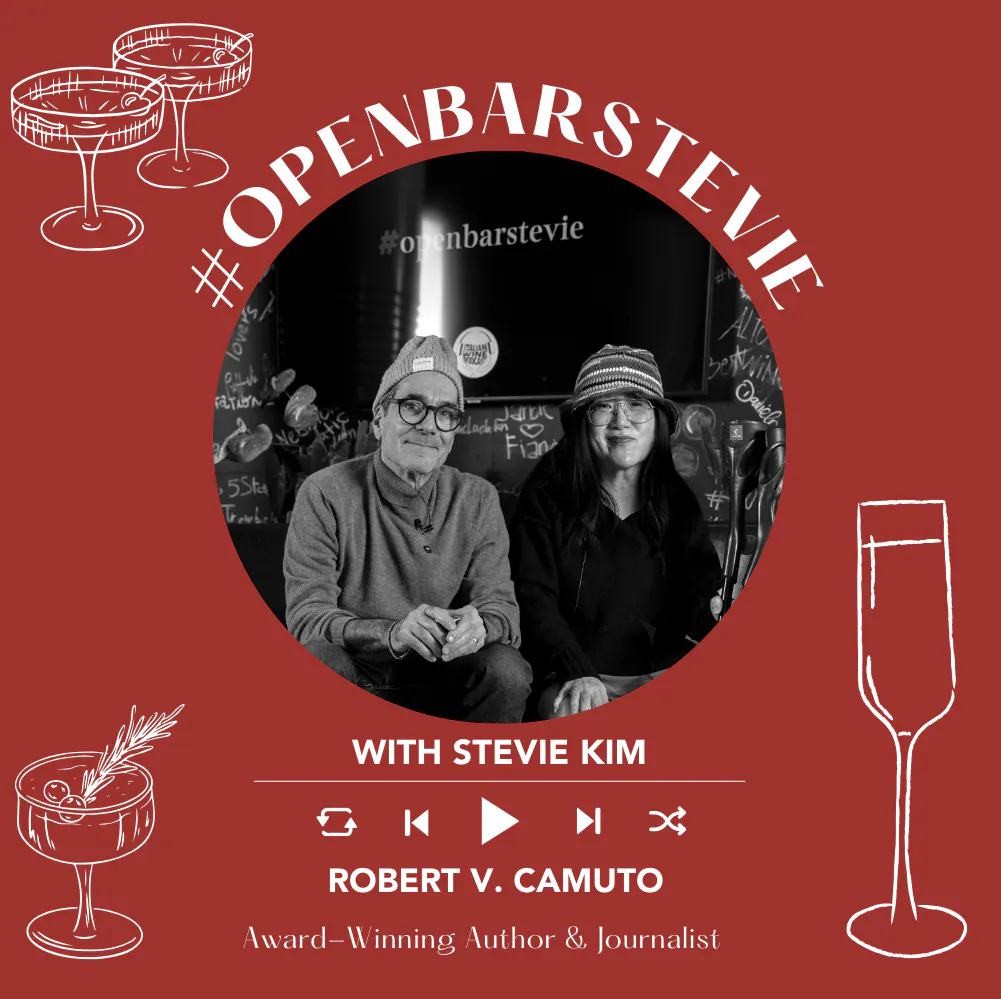
Ep. 2603 More Than Wine: Italy, Terroir, and Everyday Culture with Robert Camuto | #openbarstevie
Episode 2603

Ep 2325 Anna Obuhovskaya IWA interviews Fabio d'Attimis-Maniago of Attimis-Maniago | Clubhouse Ambassadors’ Corner
Episode 2325