
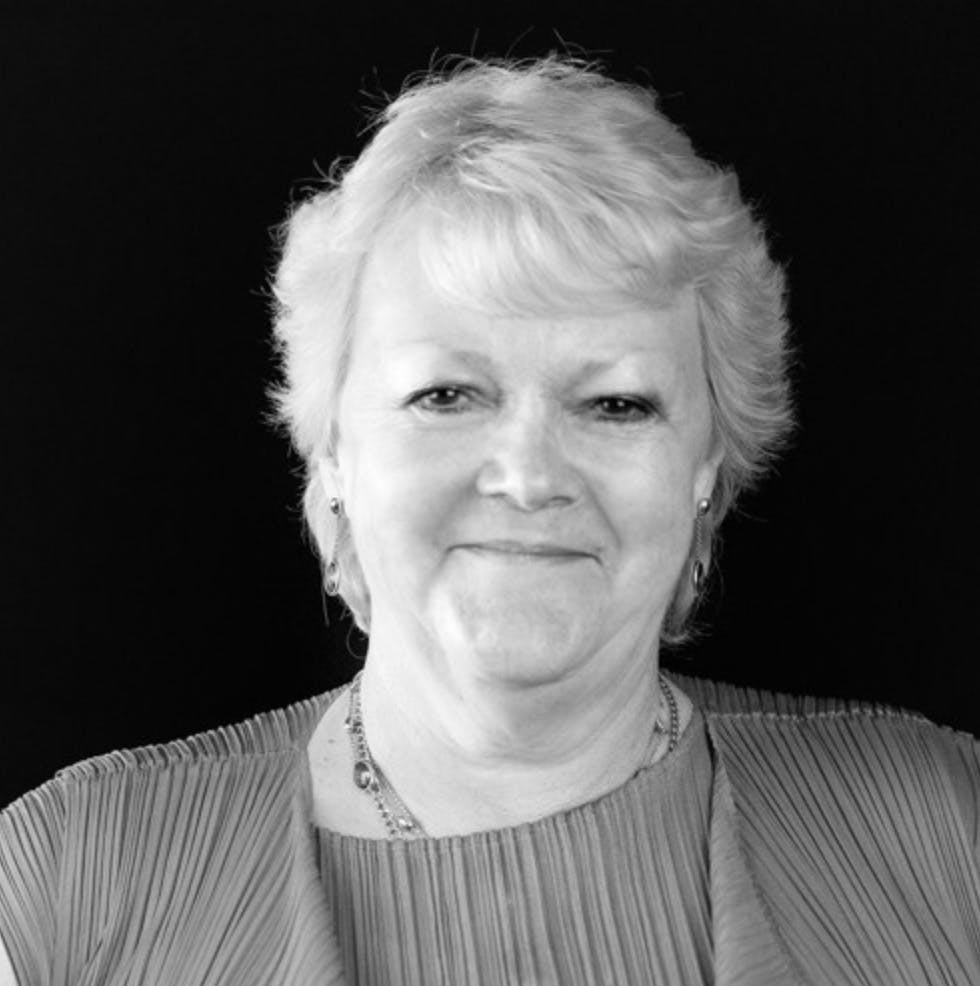
Ep. 175 Monty Waldin interviews Lynne Sherriff MW | Italian Wine Personalities
Italian Wine Personalities
Episode Summary
Content Analysis Key Themes and Main Ideas 1. The non-traditional career path into the wine industry. 2. The importance of diverse international experiences in wine production, buying, and education. 3. Challenges and opportunities for women in the historically male-dominated wine industry. 4. The role and philosophy of wine education and consultancy. 5. Insights into blind tasting and distinguishing complex grape varieties (e.g., Sangiovese vs. Tempranillo). 6. The promotion and global market penetration of Italian wines through initiatives like Vinitaly and Five Star Wines. Summary In this episode of the Italian Wine Podcast, host Monty Waldin interviews Lynn Sheriff, a distinguished Master of Wine, delving into her extensive and diverse career. Lynn recounts her unconventional journey into wine, starting from hotel management in South Africa, which instilled in her an early appreciation for fine wines. She then pursued formal wine education and worked in production and wine buying in South Africa, where she notably faced and overcame gender bias. Her international experiences include a pivotal French government bursary exposing her to various French wine regions, followed by a move to Hong Kong to establish and head a Wine and Spirits Academy, significantly contributing to wine education (WSET). Lynn discusses her current role as an independent wine consultant and educator, working with prominent Italian wine groups like Istituto Grandi Marchi. She shares candid insights into the complexities of wine tasting, particularly distinguishing similar grape varieties like Sangiovese and Tempranillo. The interview also highlights her involvement with Vinitaly's Five Star Wines competition, an initiative aimed at promoting quality Italian wines globally. Lynn emphasizes the importance of humility, approachability, and factual knowledge in wine education, contrasting it with pretentiousness. Takeaways * Lynn Sheriff's career demonstrates a unique transition from hotel management to a Master of Wine. * Early exposure to diverse wines and international experiences were crucial in shaping her expertise. * She faced significant gender discrimination in the wine buying sector in South Africa but persevered. * Wine education, particularly through WSET, has been a central and enjoyable part of her career. * Distinguishing grape varieties like Sangiovese and Tempranillo in blind tastings requires understanding their chemical profiles (acidity vs. tannin). * Italian wine bodies like Istituto Grandi Marchi and Vinitaly utilize independent experts for global promotion through masterclasses and competitions like Five Star Wines. * Effective wine education prioritizes clear communication and humility over pomposity. * The Five Star Wines competition aims to identify and promote high-quality Italian (and other regional) wines internationally. Notable Quotes * ""His cellar was something to be seen. That had to be seen to be believed."
About This Episode
Speaker 2 describes their career in the wine industry and their interest in learning about cellar technology. They work with barrel makers and their own crafting. They discuss their experience working with French wineries and their desire to be independent. They also talk about their language and the importance of educating students about their language and speak in Italian wine. They mention a potential tour for a business to business trade event in 2019 and discuss their experience with a business to business trade event and the importance of being at home. They also mention a store in Tuscany and provide feedback on a podcast and a store in Tuscany.
Transcript
Italian wine podcast. Chinching with Italian wine people. Hello. This is a town in my podcast. My name is Monteell. My guest today is? Lynn Sheriff, master of wine. Go and tell us a bit about yourself. Your CV is longer than a Bible, awards, claim, very, very career. Where are you from? I'm from Cape Town, South Africa, and, was was born born and raised. They went to school there. Wine background there? Not at all. I was I was born I was actually almost born in a hotel and both my parents were at Hotel's, and then I studied hotel keeping with doing a practical for three years at a very prominent Hotel in Seapoint called Arthur Seat, named after Arthur Seat in Scotland. And it was run by a very stern, very good hostess Swiss, and we were famous for banquets then with all the silver service and the water fed crystal, glasses, and so on. And we'd often run backwards, which went on to one or two in the morning. And then the reward for the five of us, the, a young managed team, was that he'd open a bottle of wine at the end of it, and his cellar was something to be seen. That had to be seen to be believed, and he used to take out things like, we have bottle of Chatea Marg go once. He opened a bottle of Krug. He opened a bottle of rum and he can't do once. And I just I just I I started to take then much more of an interest in in wine. And decided after three years in hotel keeping Wahran, a hotel in manners for him that actually I wanted to go into the wine business. So quite an idyllic life. You're learning and you you got hotels working out that are both on the coast. Right? Yes. Yes. Okay. So the next step that what was your first big deep step in to the wine industry. I enrolled at, an agricultural college, which falls under the University of Stelomos, to study cello technology. And again, there in year one, we spent part of the time in the vineyards. And in year two, I I had two to three months in the cellar, and we actually were allocated two or three rows of Divignard, and we actually had to make our own wine. It was great fun. Okay. So that gave you a really good practical grounding in the mechanics of wine growing and wine making. What was the that. The next step was, that I wanted to go and study somewhere in Europe. Why? I just felt that I wanted the international perspective on on wine. South Africa, of course, was very much in the old terrible politics political system, and I wanted to get out and and and experience winemaking and wine growing somewhere else. So what was your first stop? My first stop was was Germany, actually, you know. Interesting. Yeah. Well, at that time, that's it's not really such a big at that time, all the technology in South Africa was stainless steel, cold ferments, etcetera, you know, that the Germans are very good at from a white wine Filtration. Making bespeaker, excellent filtration, and so on and so forth, to make really briefy clean wines, most white wines, mostly without oak. Right. So, and also with a bit of residual sugar, and they didn't re ferment in bottle or sterile filtration on that sort of stuff. Exactly. So next step. Next step was I came back to South Africa and started work working in a winery called the best selling was farmers winery, which today belongs to the store. But that was one of the biggest wineries at that time. Wasn't it? It was was the biggest at that time. Yeah. But you were working on the production side or on the marketing and sales side? No. I was on the production side to begin with production and wine buying. We had a wine buying team of six, and each one was allocated a certain number of sellers to look after. So you're buying bulk wines then. You're going and tasting bulk wines that could be blended to make a brand for Exactly. Yeah. Yeah. Was it quite egalitarian there in terms of the mix of employees between females and males or were you the only lady? Yes. I was the only lady in the wine buying team. How do they treat you? Oh, the wine buying guy was a total chauvinist and very short. And he said, nobody be no woman will ever become a permanent member of my wine buying team. So that was a red rag to a bull? Yeah. Or a bullet. And, I I worked there for three years and enjoyed it very much. And then I heard of, a system which was being run by the French government, which recruited people from all walks of life in industry, to have a year's bursary in France. And the idea then was to stimulate contact, commercial contact between France and various other countries over a very broad range of industry. Was this during the year of sanctions against South Africa when it was difficult to, get out of the country or Well, it it was never difficult to get out of the country. It was very difficult to get money out of the country, and it was old performance just to get traveler's checks at that time. And it was between the years eighty five and eighty six, which was some of the worst political years in South Africa's history. There was stone throwing. There were tires being thrown onto the highway. And if anything, it was a good time to be away from South Africa, we lost constantly in the news in France us all the time. So you're in France from eighty four eighty five? Eighty five eighty six. Okay. And actually, that was for me a real eye opener. The way the system worked was, they you had to pay to get yourself there. So you bought the single ticket with, you know, instructions from them that you're a guest of the French government. So it was easy to get a visa, and then you and then they paid to get you home. But what they did do was they covered hotel train taxi meal arrangements whilst you were there and I was in France in all the different wine growing regions for a year. And on my very first You're fact finding, basically. Yeah. But it it was for them, probably a very commercial investment, because when I came back, I I had decisions to influence, things like barrels, for example, and so we had been buying, at Needbrook, for example, all our barrels from Germany or from Slovenia, or from Hungary, and, when I came back, I said, no, no, no, no, we've we've got to look at French barrels. And so we started working with all all the barrel makers, Demtos Seguin Mobile. And so forth, and so, you know, that the, well, barrels today cost between six and nine hundred pounds of, you know, or euros, piece. So it was a it was a an investment, certainly, for Silamos farmers winery and for France that paid off in my case. But I would say with some people from the dairy industry and, you know. Yeah. It was farming in general wine was just part of the mix. So what was the next step? Well, my very first, I mean, it was such an eye opener. My my very first stop was boarded and, my very first stop of the morning at nine thirty. I'll never forget it. Was it chatter market. And, my friend, my lifelong friend, Doctor. Paul Pantlier was my host. And it was the day that they were putting the combine together for the eighty three vintage. Blending. And he had, at that, at that time, they tasted with eyes her glasses as horror little things. And he handed me a glass and said, right. This is what you have to do. Here's your paper to make your notes. This is the rest of the tasting team, and nobody speaks until we reach the end of, you know, the and, that was my introduction to the World of French fine. I gained Kind of the deep end. I I gained a lot of knowledge, and I also gained a life long friend who sadly is no longer with us. So that knowledge was like interpretation of tannin and things like that. Yes. That was actually Paul's Doctorate was the the behavior of tenants and the management of tenants from harvest to to bottle. I learned a huge amount for him, and he became a partner to still watch from Zwanyo in a venture at Prasier de Moir. I think he did that for about fifteen or sixteen years. He was a shareholder wasn't in a business hand? He wasn't a shareholder, but we paid him a consultancy fee to to come. He's he he was a shareholder in a property in Chile, and so he divided his time between France, Chile, and Southern. Okay. So you've got into Bordeaux. You're taking French ideas in terms of how to make red wine and and how to age him in terms of the barrel back to South Africa next step. Well, one of the other, I think interesting things that I did was, at that time, our harvesting machines were forbidden in France, and I got to Champagne, and there was actually at the same time a harvester being tested, a mechanical harvester being tested in burgundy. And so the head winemaker of mum Champagne took me to burgundy in a helicopter, so that they could go and see what was going. I mean, it's just just it's The sub sheepscase aren't they? That's okay. It was like being in a sweet shop, you know, like a child in a sweet shop with an array of things to choose from was extraordinary. And what was good, Monty was I, I spent time also in the lesser known regions like Safois, Juois, and so on. And so I really I I got to know the French wine industry backwards, and I was I felt so privileged to be able to do that. Next step. Next step, I went back to South Africa. I worked in partly in production, but then I moved into marketing, marketing, at at the Nederburg wine estate, and I was there till nineteen ninety, and then was was hit handed to go and open a wine academy in Hong Kong. The wine and spirits academy. And we were a service provider of the WSTT. The wine and spirit education address. Exactly. And, I So wine education what we're also running through your veins, isn't it? Yes. It is. It's it's one thing I really enjoy doing, and and what's wonderful is to to lecture or to teach students who are there because they want to be there, not because they're forced to be there. They're paying their own money to come and, you know, listen and then write exams and so on. So it was very stimulative. So now your your principal activity, I mean, you have many strings to your bow, but you're an educator, an independent wine consultant. So you you couldn't educate people in the wine trade as well as, about both the business side and the technical aspects. So you're working with the Italian wine producers at the moment. How does that work in terms of adding your experience? What are they looking to get from you as someone who's had this incredible global experience in wine producers? What are they asking you? Well, I have at times worked with groups of producers, and one of the the super groups I worked with was the Instituteo Grande Marci. And of course, that consists of wine is like Dyer, like, lungarotti, like Antinori, and so forth. So these are words of family of really well known brands. Very well known brands that that stretches from our all the way down to Sicily and everything in between. So that's a really stimulating environment to work. And then actually what was required for me at that point was to present master classes for them as an independent person, in places like Hong Kong, Moscow, Saint Petersburg, to follow a sort of a tour of what they were doing, and give these independent master us. And it was very easy because all, at one point, there were fifteen. I think they're now seventeen. But seventeen top top rate producers and just, you know, to focus on their wines for families for, you know, for in the trade for importers and so on. So it is I mean, it was not a difficult job. So don't be bashful, but I mean, you're, you know, you're not just giving a tasting saying, this wine smells are strawberries. You've got the technical knowledge behind it because you've worked so closely on the production side, and obviously you've got a global vision, in terms of global markets. So what are the what are the most frequent questions people ask you in those master classes? Are they confused about the nature of great varieties? Are they looking for more detail on the winemaking or the market ting? If we look at it from an Italian perspective, for example, one of the things that students, confuse very often, is sangiovese with tympranium. And I I can't can't can't In a blind tasting. In a blind tasting. It's a familiar Spanish red grape main one that mixes their rioja. Rioja. And, the reason why they confuse them is that, is that the way tenon and acid lie on the pallet, you can sometimes muddle them up, or if you've got a lot of tenon, it sounds a nasty acidity. And so it was a mistake that I made when I was trying to do my master while I constantly mixed up, you know, Kianti and Tempreneur at the same price point or within the same price band. Until somebody said to me, one day, you're confused facility, maternal. And, and I realized that, yes, Temporanillo tends to be lower in the city quite a lot lower, and high in town, and where SanJovese and Naviolo are both high in tenant and high in acidity. So, you know, it's things like that. And I tell the students when I'm when I'm I said, you know, it took me eighteen months. I kept confusing them just when I thought I had to try to make the same mistake again. You know, it's nice that you do that though because, you know, there is this perception sometimes of just masters of wine, but master sommelierza, we're all human. Yeah. Can't we? But some sometimes, a little bit of factual knowledge, it's not just opinion. It's actual kind of numbers on the on the analysis chart. So you probably that takes you back to your Pompa Paul Pontaglia days in Bruno. Exactly. You know, wine is romancing and all the rest of it, but actually it's it's you ought to look at what's under the bonnet. Yes. Absolutely. And, I was I I think what I've been awfully lucky in my wine friendships, and some of them go back to those days in France, some of them go back to my days spent in in Germany, where I met people like, you know, Paul Pantali, like Ettien Yugou. In Alsas. In Alsas, like, parent andori, also very old friend, and I've he's I've hosted him in South Africa. I've hosted him and his wife in South Africa, and then he he's subsequently brought each of his three daughters to sell that because, so, you know, yeah, and to sort of have have people like that, and that unigrett reegarth and sadly also no longer with us, from the Muslim, and she gave me a real insight into how to recognize wines that were low in alcohol and high in acidity, and that was just fascinating too. And I I just think I'm privileged to call all of these people friends. I like I don't mean friends in the American sense. In France in the in the British sense or the European sense, if you like. Okay. So when you're hosting a Mastercard, what are the most common questions you get asked on Italian wine? Why is it so complicated? The most common questions when I when I'm lecturing on Italian wines usually relates to acidity and talent levels also the fact that some of the grapes are quite obscure in international terms, like Alianico, you know, I think Alianico is an iguan in Italy. I I don't think I've ever seen one outside of Italy. And, you know, how to recognize those and what to look for. One of the most common questions I've asked in the master classes is, you know, what's your favorite wine, which is, you know, I don't have a favorite wine. I have lots of favorite wines, plural all, but not a a favorite one. I always say the last good one I have with friends. Oh, that's a good one. That's new. Okay. That was a little bit weird. I might pimp set from you. That's alright. It's not copyrighted. And as you read it into a t shirt, in which case it would be. Oh, okay. So what's the next step for you? I've started to work with, CV Kim at Fin Italy International Verona Ferra, and also Five Star wines. So what is Five Star? Five Star wines, has been made into a book and is, it's a of competition, but it's evaluating wines in terms of a hundred point scale, and it's done by a panel, and everything is served blind. And those wines that rate over ninety points, are then published in the book with all their details. And Venicello takes them on their roadshows all over the globe to to show people, you know, that this is a five star wine. So it's mainly Italian wines that have been taste Yes. If you look at the twenty eighteen guide where the ones were tasted in April, I would say eighty five, maybe ninety percent is, is a section dedicated to Italian ones, but they also some from Romania, from Hungary, from Austria. And, you know, I would encourage producers who are direct neighbors, you know, to take part in this competition. It's brilliant. The list of judges was of course quite amazing. And then, you know, to, but to mainly encourage Jedonian producers to, you know, to take parts so that they can get their wines better known in the countries they would like to be better known in such as Russia. In China, of course, a whole different ballgame, but, you know, definitely in Russia and other parts of Asia, because, you know, when Italy, Verona Fira, they take this roadshow all over the all over the globe really, and to the United States, which is a key market too. So how's that developing that the states or Italian wine or initiatives run by it. So but on a Fieri, it's the company that owns, In Italy. Basically, organizers have been Italy and other other trade fairs on sofas and things like that. Yeah. They're marble, beautiful marble fair they organized too. And so they partnered with the initial for the marketing with anyone is is as Linda is saying is a blind tasting competition and master classes to really, professionals in the trade, whether it's a sommelierge or whatever to learn and understand stand and get through the complexity of Italian wine. Do you find it a challenge when you're when you love educating? You were head of the Institute of Master White, weren't you? I don't know what your exact title was, what's the The chairman, chairman, chairman of the Check person. No no no no person. Really? Chairman, chairman. Oh, you gotta change that. No. No. I was quite happy just to stick with chairman. I think shaped person sounds sounds strange. But how do you do you change your register when you if you're talking to fellow masters of wine, you probably have one way talking, and when you're talking to say slightly greener, younger students, or somms, or whatever it is, whether they're Italian or even from Australia or whatever, do you change the way you speak, or do you do you always speak in the same way so you don't confuse people or Well, one thing one thing I try and never to do is to talk down to students because I think that's a that's a key mistake for it. I I don't know if I'm convinced to say this, but I couldn't stand my very culture professor at at the wine school. He was a terrible communicator to look at the floor most of the time. I think he was just shy. So he had all this knowledge and had no way of communicating. So I never took down to the students, but probably I do talk a different kind of language I'm talking to fellow, MW is irrespective of their age, sex, or background, or whatever. Yeah. I suppose we sort of have a bit of a speak of our own, you know, and we sometimes, you know, tease each other about being MW is never forgetting, that we shouldn't be too pompous. I think that's a really, really important part. Yeah. The NW, joke book is is about half a page long, isn't it? It's not never been a Christmas bestseller. No. No. It's not a Christmas bestseller. Okay. So, final question, what's your next project? Well, the next project is is going to be twenty nineteen five star ones, and I'm gonna spend some time after one to one, with the with the five star our team, at the fair. Which is business to business, trade event? Yes. That's a good one. Yeah. And, and just sort of doing some planning and finalizing the judges. And what I what I lacked would have attracted me in the first place when Stevie came to talk to me about is the that she she gets international judges. And actually, one of the I'm hoping one of the judges will be a fellow South African who was born in Arto Adije, called John Platter, and the the irony of that is that he writes or has within the past, his own book called Plater five star, platter five star guide or the platter platter guy. And they For South African wine. For South African wine, and they do an assessment of all the wines. He doesn't do that anymore. He sold it on, but he still comes down for the testing of the the blind testing of the five star one. So stevie loved it. She loves stories, and especially if they're true. And so we're going to Especially if they're true. But, yeah, but so I'm going to invite him and he he he had already indicated over the phone that he would be very, very keen to come back to Italy. And so I'm hoping he's gonna join us for the five star five star won't taste it. So when you slow down a retire, you're gonna go back to a little hotel on the side of the sea in South Africa or I think that's unlikely. The funny part is that I don't quite know where to call home. When I land in Cape Town, and I can see Table Mountain, I feel like I've come home, but I I have a fifty percent shareholding in a small house in in northern Tuscany, just north of Luca, which is a beautiful part of the world. And when I'm there, I think I think I feel at home. Yeah, it's a different part of Tuscany, Luca is very much it's Tuscany, but it's the very much the untaskan part It's very French influenced. Yeah. I I'm not sure if it's necessarily French influence, but it has a wonderful combination of Luca, the the old town. And then, you know, surrounding mountains, the little and the sea. And the sea in the little cottage we own is is is a sort of eight hundred meters above sea level. So So, you know, it's all it's just beautiful nature, it's beautiful countryside. So I feel a tone there too. And then the to confuse the whole issue, when I go to, Tokyo, we are with most summers for about three to four weeks, and the door opens there's a bouquet or a smell or aroma, which is it comes from nowhere else in the world except from Tokyo. And I feel I feel very at home there. So Do you get that same smell when you go into your in Duscany sort of musty. Oh, well, it's a it's a it used to be an old shed and it's been converted into a house by three architects. You can hang some herbs. Mhmm. You can hang some herbs in there, you know, typical scorpion. So you have to put lavender or rosemary all over the house, which we do. So it smells of that drive than anything else. So Lynn Sheriff Master of wine and pest control expert. Thank you very much for coming in today to talk to the Italian wine podcast. My name is what we'll Thank you. Bye. Follow Italian White Podcast on Facebook and Instagram.
Episode Details
Keywords
Related Episodes
Ep. 200 Monty Waldin interviews Thomas Matthews (Wine Spectator) | Italian Wine Personalities
Episode 200

Ep. 196 --ITALIAN-- Attilio Scienza (VIA Chief Scientist) sul Sangiovese | Italian Wine Personalities
Episode 196
Ep. 183 Monty Waldin interviews Tim O'Connell (Vinitaly Wine Club) | Italian Wine Personalities
Episode 183

Ep. 181 Monty Waldin interviews Simon Taylor (Stone, Vine & Sun) | Italian Wine Personalities
Episode 181
Ep. 161 Monty Waldin interviews Barbara Philip MW (BC Liquor Stores) | Italian Wine Personalities
Episode 161

Ep. 155 Monty Waldin interviews Ole Udsen (Estrup & Udsen Vin Aps) | Italian Wine Personalities
Episode 155