
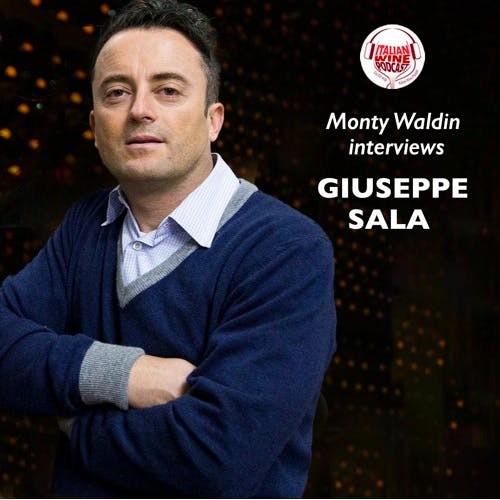
Ep. 510 Giuseppe Sala from I Selvatici Winery | Monty Waldin Interviews
Monty Waldin Interviews
Episode Summary
Content Analysis Key Themes and Main Ideas 1. The multi-generational history and evolution of I Salvatishi winery in Valdarno, Tuscany. 2. The winemaking philosophy that blends deep-rooted tradition with lessons learned from modern techniques (e.g., Giuseppe Sala's time at Opus One). 3. The unique characteristics and production methods of I Salvatishi's key wines: Vin Santo, Malvasia Bianca, Chianti Colli Aretini Riserva, and Capitolar (100% Sangiovese). 4. The importance of family legacy and respect for the land and grape varietals (especially Sangiovese). 5. Adaptations and challenges faced by small family wineries, particularly during global events like the pandemic. Summary In this episode of the Italian Wine Podcast, host Mark Millen interviews Giuseppe Sala, the current generation running I Salvatishi, a winery founded by his grandfather in 1953 in Valdarno, Arezzo. Giuseppe shares the intriguing family history, from his grandfather's transition from a flower business to establishing the winery. He details the initial vineyard plantings, including San Giovese, Canaiolo, and Malvasia Nera, and how his father, Fausto, expanded the vineyards. A highlight of the discussion is the family's renowned Vin Santo, a dessert wine, including a legendary 1958 vintage aged for an astonishing 40 years in Caratelli. Giuseppe recounts his formative experience working at Opus One in California, which, despite exposing him to modern winemaking, ultimately reinforced his commitment to traditional Tuscan methods and the unique characteristics of his land. He describes their dry Malvasia Bianca, the Chianti Colli Aretini Riserva, and the flagship 100% Sangiovese ""Super Tuscan"" called Capitolar, explaining their aging processes and food pairings. Giuseppe also touches on his views on natural wines and the unexpected success of online wine tastings during the COVID-19 pandemic, which allowed the winery to thrive even without tourists. Takeaways - I Salvatishi is a family-owned winery in Valdarno, Arezzo, Tuscany, with a history dating back to 1953. - The winery's name, ""I Salvatishi"" (The Wild Ones), comes from the ancient, pre-existing name of the location. - I Salvatishi produces a traditional Vin Santo, with some vintages undergoing exceptionally long aging periods (e.g., 40 years). - Giuseppe Sala's experience at Opus One in California taught him about modern winemaking but ultimately strengthened his dedication to preserving his family's traditional Tuscan methods. - The winery emphasizes minimal intervention in the cellar, especially for their 100% Sangiovese ""Capitolar,"" which is primarily aged in stainless steel before a shorter period in wood. - I Salvatishi produces a unique, full-bodied dry Malvasia Bianca, notable for its aging potential. - Online wine tastings proved to be a highly effective way for the winery to connect with private customers and maintain business during the pandemic. Notable Quotes - ""My grandfather founded the winery moving from Lake Como and sold the flowers business that they had there and move here in Tuscany and bought the property."
About This Episode
Speaker 1 and Speaker 2 discuss Speaker 2's grandfather's culture of producing high hand flowers and selling them in the fifties. They also talk about their learnings from wines and learnings from winemaking techniques, their favorite red wines, and their love for the Tuscany winery. They discuss their approach to aging wine, their favorite foods and wines, and their love for the Tuscany winery. They also mention their family winery and their love for the Tuscany wines. Speaker 1 thanks Speaker 2 for their time and plans to visit the winery again.
Transcript
Italian wine podcast. Chinchin with Italian wine people. Hello. This is the Italian wine podcast. My name is Monte Wallin. My guest today is Giuseppe Sala from I Salvatishi, a winery founded in nineteen fifty three by your grandfather, I think. Is that correct? Correct. Correct. And, yes, my grandfather found the the the winery moving from Lake Kammo and, sold the flowers business that they had there and move here in Tiffany and bought the property. Okay. So he wasn't, a sharecropper or a Medzadro. He was a businessman. Yes. Yes. They were in the flower business with many, you know, greenhouse around Lake Kammo. And he was, you know, growing flowers, especially, you know, very high hand flowers. He sold the business and bought here after, you know, they come to see in the fifties, but then he he really bought after, you know, the Medzadria, Okay? And actually our first workers, they were workers that they were working here has Medzadri. Okay? Okay. So initially, what was grown on your family estate? Was it, cereal crops, like wheat and cool. Mhmm. Was, principle was, corn. Okay. And, there was just a few. Mice. Yeah. Nice. And, there was some grapes, vines, but they were lucky, you know, like a little trees, okay, around the property. Yes. When he planted the vineyard then, how did in, how did he set the vineyard up? Did he plant SanJavezi? What did he plant? In the beginning, he plant, of course, San Jose Okay. And then, canayola and, Malvasia Neira. That's was the the beginning. But, really, the alta density of Venus, it's been my dad. And your dad is called fausto. Fausto, it's my father. When your grandfather put, planted the first, vineyard, how did he set the vineyard up? Okay. My grandfather planted the first vineyards in nineteen sixty, four. And, he planted mixed, you know, like it was, in the past, you know, typical in the past, with, one vineyard's mixed with Sanjay, Kanayolo, and Malvasia, Bianca, and as but my, grandfather unfortunately passed away very young, at fifty four years old. So it's my dad and then complete everything. What did you learn from your grandfather and father in terms of, Viticulture? Oh, for sure, the tradition, the tradition that, you know, we, we used to have, and we have for to make, the wine. And especially, one thing that we really are ready to take, and, we fall in the same rules is for to make our Vincent that it's really something that was featured to to him by them exactly that they were here. And then my, my father, you know, transmute everything to me. Yeah. I had a question about the, your your grandfather's first wine was the was the famous nineteen fifty eight Vincent. How much time did that spend in barrel? Yes. The first was the nineteen fifty eight, Vincent. And, it's been in the Caratelli for forty years. Nineteen fifty eight, we opened I opened the Caratello in nineteen ninety eight. Forty years in the Caratello. Yes. Yeah. I I had a I had a question mark about that forty years. I thought that must be a mistake. And, I mean, that's pretty unique, isn't it? Very unique. And if I have to tell you the truth is, one, when I went to open the barrel, the Cartelli, I was going there just for to see if something was good or not, but ready to trash. Everything. That's was, because I need this space for to put anywhere. And by chance, I found that is, nectar. Well, by chance, that's an incredible discovery. Oh, yeah. Oh, yeah. It's, it's been, something that that's the reason, you know, after, forty years, three caratelli, they were, like, approximately the thirty percent of the liquid inside because mostly it was the mother, you know, the sediments. So I need only one hundred and forty one bottle of two hundred milliliters. Why did you call, your family called the white, the winery, I said Vatishi, the wild ones? Why was that? Because it was already named the location where we lived because it's a location Okay? It's already already named it and we found, ma, met, from the fifteen hundred with the name. The board already named it like that. So my grandfather left it. It's the name the same name. So you worked in California for Opus One, and you were working there when that was really was one of the most famous wineries on the planet. How did somebody from really the kind of one of the least known areas of Tuscany end up in California at such an incredibly famous, winery. Oh, because, I had some go, you know, I was so young. I was twenty one years old. Okay. And, I had the the chance to have, a great harvest with them. Okay. And because, my, my father was exporting with a little company called back in the days in San Francisco in San Francisco. And, he was knowing the, you know, some, some people in the Mondavi, winery, that that's how, probably one of best experience of my life. So what did you learn from, I mean, what did you learn any new winemaking techniques? Or was it more about, styling, wines for, because at that time, consumers were really looking for softer softer wines with a little bit of oak. Yeah. Yeah. Because that's how, you know, this is the new word making wine and where they were completely totally different grapes. Okay. Like, Caba, Merlo, and all like that. Absolutely. They take knowledge in the cellar. What they still have in California, it's very difficult to get here. I mean, it's just only maybe big wineries that can maybe afford this kind of technology. And, when I come back, I was so excited when I come back home here and say, you know what? We need, to make, this kind of, you know, like, the famous Office one of Kain is, you know, like, the covered name, and then my dad told me soon. See, we just get the wrong things because here, you have to fall in your tradition, you know, what your land give the best. And absolutely he was right. That's for sure. How do you feel about alternative ways of making wine? Right, sort of natural wine and, no sulfite wines or orange wines. Do you have any strong opinions about those? Let's say, you know, I can tell you my opinion. Okay. My opinion is, So far, I think it's a little bit today, probably it's a little bit too early to say I wanna invest in that. K? Because, I really will never find something that kept my attention, like, to say, wow. And I bet because it's not easy. Okay. For sure, much more organic that we are in arms. That's for sure. But that's, you know, just my opinion. Okay. Because it it it's, it's too early because I'm saying, probably in the near future, the science is gonna find out probably something that, it's gonna help the buddha, you know, to stay away from disease. Okay. You did some wine tastings online, via Zoom. How did that go? Oh, amazing. I believe it almost at zero on that. And then, it's going very well also because, you know, most of my customers let's say, the eighty percent of my winery customers are private. So private means, that they are locked in the home and they have to do something. Okay. So I had a a gray feed. I already did, you know, I'm at home. I can't, go in the States and do anything probably until next year. So, and, I had a very good response from the customers. And, I have about twenty of, but one testing, already five already done. I do events also for many of foundations, you know, that are for children, so like that. So they are really very well organized, and, they wanna continue. I'm ahead. Okay. I'm gonna ask you a little bit about your, your wines. You make a Malvasir bianco lunga toscana, Malvasir bianco lunga. Tell me about the Malvasir wine that you make. Okay. The Maalvajir wine, we are talking about three thousand five hundred dollars in total. And it is the very ancient grape that that originally is Amal Vasia de Montegozi that is a little town happened the hill on my wine here that my grandfather got, you know, back in the days, make the craft with the with that cloned. And now we have about, one extra and a half of Margasiliente. Very full body. Very unusual, absolutely dry. It's not sweet. Okay. And, it's a new entry because it's about twenty years that we make, this one hundred percent Malvasia. I just fermented in the in the hope and got a very big response, in all my customer. It it's a it's really a white wine that you can easily age for two, three years and still keep the full body and the freshness very, very interesting. Unfortunately, we don't have that quantity now that, you know, we started as a, you know, a new wine just for to have a white. It's picked up very, very well. What's a good food match for the, Malagia? Okay. If we wanna stay with the Tuscany style, absolutely, eggplant parmigiana because it's rich, so it can handle also white meat And, of course, Kenah, you can have that with some fish too, like, many different ones, but really excel with some, just any tradition example. My mom, eggplants, parmigiana, it's perfect. That sounds good. Okay. Let's talk about your, red wines with the Canti Coliaretini, the OCG, Esverva. So we make two different, red. Okay. A Canti Resver, two thousand sixteen, that it's a planned made with still ninety percent in Sanjay, a five percent, canayola, and five percent Marmolo. Sometimes we put inside some Malvas, Malvasianera, okay, depends from the vintage, and, So this is something that it's only age in steel tank. Okay? And it's our, let's say, we produce about, you know, forty thousand bottles a year. Maybe something less of that. What is a good food match for that? You talk about the reserve, you're talking about it. Yes. A good food match for the reserve, but it's a good food match of that, I really love, tell you what polonieces, so because this is one of my favorite things. Yeah. Because you're not I mean, where you are in, Adeda. You're not exactly far from Amelia Romagna. Absolutely. Yeah. Yeah. But, you know, probably for it to be exactly, we call It's the same, but we call a ragu here. Bolonese sauce is something more, like, you know, immediate reminder. Okay. What we are close and that there is, some little difference on the on the ingredients in the making, but very lightly different Okay. So that was Titolato. What about, capito Lara? That's a red wine made from, I think, hundred percent San Giovanni. Yes. Always been one hundred percent San Giovanni. Most of the people, they ask me always why your super task, and it's one hundred Saint Sanjay, because in my family, it's always been fame of the Sanjay on and following the tradition about the one hundred percent San Diego. So, it's always age five years. And the last twenty four months in in, French, in American at the fifty percent. It's really our crew. We make something less than ten thousand bottles a year. And, it's our top of the the line. It's a very interesting way of aging the wine by leaving it two years in anaerobic, almost con conditions in the stainless steel, and then giving it wood at the end. Why do you do it that way? Can I do it that way? You can't remember. We have, very simple salary. It's very good for us. It's, this wine, especially the Sanjay, need really to the to the camp and the tank. It's really when it's clean, we don't use any kind of filter stacked, when we filter at the end, but you can imagine after five years, we just filter very, not tight. And, so that's the reason. The last twenty four months, I'm not a big fan of the wine that they have to stay too much in the world. Especially the sangiovese have to be light because, you know, sangiovese is typical from fruity flavor. If stay really too long on the wood or get the the the wood, I think, the wrong time, It's not really you're gonna cover the characteristic of the grapes. That's the that's my opinion. It's a very interesting way of doing it. I mean, you know, if you said to me Monty today, you're gonna be interviewing a guy that worked for opus one, you're kind of thinking, right, very modern, quite a bit of new obvious new o. And your winemaking style is kind of I just find that Yeah. Yeah. But it's, okay. When I was there, was like a kid, okay, Tony and somebody who sold a cab, absolutely with a lot of passions. But, you know, my family winery is just a little, you know, everything here. It's really we have, we don't have machines or, equipment, that, example, you can create some wine, like, you know, or something fresh or new. Okay? It's very important for us before to both win the wine to make all the chemical analysis for to see, you know, all the especially when you we go to both win the white wine of that, it's it's always because, you know, I have to do analysis and be sure that all the proteins are, gone, okay, because we don't want any problem in the ball. So, it's still expired. Okay. And that's really the whole stuff. So we have to be handled, with care, I think. And, the the work, our work in the cellar, there is much more work than, you know, to have all that the technology in the cell. Absolutely, the technology helps. But remember, we are just this is my little family winery that we have twelve actors, eleven and a half actors. Okay. So and we're gonna stay like that. And and, I really I really got all of that after came back from California for sure because, teach me a lot but, ultimately, friend way, you know. So that's just my So when you're in California, did you manage to visit any other wineries, around the mon around Napa or Carneros? Oh, yeah. Oh, yeah. Yeah. I really, I'm going also when I can, of course, not not easier. Okay? But, I'm I'm going every year. So I'm trying always to arrange some, my wine event in California just, you know, for to go around for some wine that he and discover some new because it's always growing. Now I have some friends there in Paso Robles, it's another great area. It's, you know, big, in the past, you know, I was, like, a big fan, you know, there was, when I was there, I know there was not so many in anyone. Like, now now there is the quality, first of all, went up a lot in many different, also, different parts of California, but not only in California. Think about, I'm a big fan of wine from Washington State example. It's, I think those kinds of wine are more close to us here in Tucson means the making than the telephone remains. Well, I mean, it's interesting you talk about Washington state. They they seem to make very direct wines, particularly varietal wines. Is that what you like about, the Washington state wines compared to Tuscany? Oh, yeah. Oh, yeah. It's, also because, you know, of course, outside Tuscany, you know, I'm a big fan. Always been a big fan of Kabaneufran, Kabaneux, New York. I think Washington State now. It's very close to California, and it's on case. I really appreciate more. Also, because I went around Alibaba. It's god. I don't remember the name, for Wallawala. Okay. Yes. From Wallawala. And, I went a little bit around, and they really see little family winery around, you know, California, you see more biggest states. Okay. And, or something like that, if you are liking, Huntsville. So, and, should we finish, have we said everything we need to know about the Vincent Yes. Absolutely. You wanna know. Yeah. We we talk about the the nineteen fifty eight that it was forty years in the battle, but the usual, Vincent that we produce, it's always, from thirteen to fourteen years old. Now we are handling the two thousand four, almost finished. And this is your, our, let's say, dessert wine, but, the third wine that they have very good combination also with flattera with a very different, you know, not only dessert. Absolutely. And, is the one that for sure is exactly the same wine that my grandfather was making. We exactly the same. You know, in the red and the we just, you know, we change some little quantity, you know, Sanjay Vazos, and, you know, like that. So we we just, you know, the Vincent is still exactly the same. Yeah. I think it's, I think it's wonderful that you make a Vincanto like your grandfather, would have made with, you know, the red variety in there as well, and the Treviano toscana, which everybody hates or just completely dispar disparages, but and, obviously, with the Malalvezia of Bianca, yeah, it's wonderful to see someone. I mean, you're still quite young carrying on that tradition and not only just carrying it on, but also doing it in a really accessible style with it, you know, technology, is one thing, and also with a with a lot of thought and respect to your to your family forebears. And I I really applaud you for that. And, I actually, if you won't remember this, when I just went to when I moved to Tuscany in about two thousand and four, two thousand and five, one of my first visits was to your, family winery. It would have been in, yeah, I don't know, I think two thousand and five at some stage. Yeah. I remember. I remember. It's long probably probably it's long ago because you came. I remember. You came in my testing room. And, my testing room was be is built in nineteen ninety nine. So it was just a few years that was built at the moment. It was not finished yet, completely. And, one thing that, I would like, to say about, you know, when I come back from the states last March, completely locked down here, I was very worried about the wine business because I will already, understood that everything was it's gonna be closed for months. Okay. And I was really, really afraid. Then the answer from the people, especially from the private, We probably did well last summer with no tourists here than the summer before with the tourists. It's it's weird to say that, but, that's what's really what's happening so far today. Okay. I just wanna say thanks to my guest today, Giuseppe Sala, from Yisez Vatici. And, it's been great to to talk to you after so many years. And, I do hope you can continue making the wines that you do in the way that you do traditional, a blend of traditional or modern, which is not always easy to get right. It sounds easy, on paper, but it's not. And it's great to talk to you again, and hopefully we can see each other face to face in, in Edettes or province at some stage in the future. It was, you know, I'm in Montecino, so. I'll drive over and come and see you, but you can have a good option. Absolutely. Hey, you have to go. My best friends. It's, Paulo. You know, Powell that owns Capriley winery. Caprilia. Caprilia, it's a dipal. It's a dear friends. We have the same importer in Japan, and, we are very close friends. Anyway, you are always welcome here, man. When, when you want to, you, you're gonna drink a glass of wine together. Yeah. But I'd love to try the Vincanto again and the other wines as well. Giuseppe, thank you so much, Giuseppe Sala from the Yis Salvatice winery, you know, that's our province. Thank you so much for coming on the Italian wine podcast. Today, great to hear. Your insights about winemaking and also your family history, which is, which is a a lovely story, that you're perpetuating via the wines that you make. Thank you so much. Thank you very much. Thank you, and I hope to see you soon. Listen to the Italian wine podcast wherever you get your podcasts. We're on SoundCloud, Apple Podcasts, HimalIFM, and more. Don't forget to subscribe and rate the show. If you enjoy listening, please consider donating through Italian wine podcast dot com, and the amount helps cover equipment, production, and publication costs. Until next time, Chinching.
Episode Details
Keywords
Related Episodes
Ep. 2644 Daniel Mwangi interviews Arber Shabani of Ridolfi winery in Montalcino, Tuscany | Clubhouse Ambassadors' Corner
Episode 2644

Ep. 2614 Mauricio de Chiaro IWA interviews Christian Carlevero of Marchesi Alfieri winery in Piedmont | Clubhouse Ambassadors' Corner
Episode 2614

Ep. 2607 Stephanie Johnson IWE interviews Matej Skerlj of Skerlj winery in Carso, FVG | Clubhouse Ambassadors' Corner
Episode 2607

Ep. 2479 Francesco and Santiago Marone Cinzano of Col d'Orcia winery in Montalcino | On The Road Edition with Stevie Kim
Episode 2479

EP 2316 Alberto Martinez-Interiano IWA interviews Emiliano Giorgi of Progetto Sete Winery | Clubhouse Ambassadors’ Corner
Episode 2316

Ep. 2299 Beverley Bourdin IWA interviews Grégoire Desforges of Baglio di Pianetto winery | Clubhouse Ambassadors’ Corner
Episode 2299