
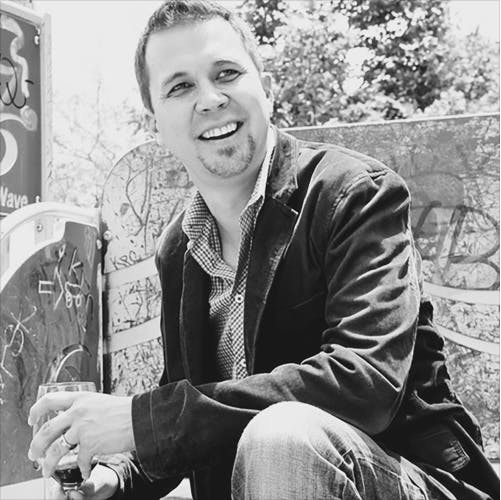
Ep. 110 Monty Waldin interviews Paul Mabray (Emetry.io) | Monty Waldin's Let's Talk Wine Biz
Monty Waldin's Let's Talk Wine Biz
Episode Summary
Content Analysis Key Themes and Main Ideas 1. The Inevitability of Digital Transformation in Wine: Paul Mabray, a ""digital futurist,"" argues that technology, e-commerce, and social media are no longer optional but essential for the wine industry's survival and growth. 2. Addressing US Wine Distribution Challenges: The discussion highlights the problematic three-tier system in the United States and how digital tools offer opportunities for wineries to overcome market access limitations and pursue direct-to-consumer sales. 3. Wineries' Reluctance and the ""Digital Darwinism"" Risk: A significant theme is the wine industry's traditionalism and slow adoption of digital tools, which Mabray believes puts them at risk of being left behind by more agile, tech-savvy competitors. 4. Technology as an Enabler for Human Connection: Despite the focus on digital, Mabray emphasizes that these tools ultimately serve to create deeper, more personalized relationships with customers, enhancing the inherently social nature of wine. 5. Paul Mabray's Pioneering Role in Wine Tech: The interview delves into Mabray's entrepreneurial journey, including founding WineDirect (first e-commerce platform for wineries) and VinTank (social media management for wine), illustrating his long-standing commitment to bringing technology to the industry. 6. Future of Technology in Everyday Life and Wine: The conversation touches on advanced technological trends like the ""internet of things,"" smartphones as supercomputers, and voice recognition, and how these might influence future wine consumer experiences. Summary In this episode, host Monte Warden interviews Paul Mabray, a self-described ""digital futurist"" in the wine industry. Mabray discusses the critical role of technology, e-commerce, and social media in modern wine sales and marketing. He addresses the significant challenges posed by the US three-tier distribution system, advocating for technology as a means for wineries to achieve disintermediation and direct customer access. Mabray emphasizes that digital adoption is not just a trend but an inevitability, warning against ""digital Darwinism"" for those who resist. Despite the technical focus, he underlines that digital tools ultimately serve to foster more human, personalized connections with consumers. The conversation also explores Mabray's background, including his founding of pioneering wine tech companies like WineDirect and VinTank, and his vision for future technological advancements, such as the internet of things and sophisticated mobile computing. He humorously recounts the resistance he faces, even from his own wife (a winery CEO) and explains how he deals with the traditionalist mindset common in the wine sector. Takeaways - Digital transformation is an unavoidable and necessary step for the wine industry to remain competitive. - The traditional three-tier distribution system in the US severely limits market access for many wineries. - Technology enables direct-to-consumer sales and helps wineries bypass distribution bottlenecks. - Many wineries are ""laggards"" in technology adoption, risking their future viability. - Digital tools should enhance, not replace, human connection and personalized customer relationships. - Paul Mabray's companies (WineDirect, VinTank) were foundational in wine e-commerce and social media management. - Future tech (AI, IoT, advanced mobile devices) will continue to reshape how consumers interact with products, including wine. Notable Quotes - ""I'm the guy it sees around the corner and what's gonna happen next for the Wind Street and, tries to bring that technology to the Wind Street to help them succeed."
About This Episode
The wine industry is undergoing changes and digital tools are becoming more popular. The use of social media and digital platforms like Twitter and Facebook creates connections with customers and generate business insights. The importance of the "ironic future" view of the future is discussed, along with the use of old commodity wineries and app and TV to communicate with customers and provide tips for looking more hipsterish. Speaker 1 and Speaker 2 discuss the use of Tinder and the "ironic future" view of the future, while Speaker 2 thanks Speaker 1 for their time and plans to do more about their business.
Transcript
Italian wine podcast. Chinching with Italian wine people. I My name is Monte Warden. This is the Italian wine podcast. My guest today is Paul Mabray. Paul is described by industry insiders as a digital futurist. What are they talking about? Well, that is the rumor. I'm the guy it sees around the corner and what's gonna happen next for the Wind Street and, tries to bring that technology to the Wind Street to help them succeed. Okay. So what is going on now, what are your predictions for the future? Yeah. That's interesting. There's, a lot more e commerce than we've ever seen in the United States market and social media is being used in ways that are helping the wine street leapfrog centuries of, bad regulations, or not centuries, but decades of bad regulation. So, yes, amazing new tools and technologies to to catalyze it. So you know what? About Regades, you talk about selling of wine. That's right. Yep. I am in the United States market, so that's where I'm particularly an expert in. Okay. So where you have this, three tier system of imported distributor and final setup with a, you know, retailer or a restaurant or whatever. That's exactly right to match. So how can you what is the reality now and the what are the challenges now for producers in that specific American three tier system? And what opportunities do you see arising for them in the future? Well, I think market access is clearly a problem. I mean, there's two thousand wineries in the world and the United States are seven hundred wholesalers, but there's really only five to ten of any means. So you have two hundred thousand producers trying to go through five to ten wholesalers. It's just it's not sustainable in that, you know, the market pressures will break that as they have done in every other market. So when you say break it, you mean that there will be more distributors that will will found themselves that will create themselves that will buy themselves a a phone connection and a internet site and a little brand name in a office somewhere and start importing and sending wine or No. I think the internet I think the internet, you know, nature finds a way. I think that all of the great innovation that's happened has been disintermediation. So there'll be some tech company of business to business platform form or wineries going straight to consumer using technical tools. They'll be leveraging that that technology to access the customer directly or to jump over the wholesaler, and that's inevitable. But aren't wineries often terrible self promoters I mean, I I live in Italy and finding Italian wineries that have coherent, just even a coherent website with a with a link that works or a phone number that somebody's actually gonna pick the phone up with. Isn't that just a a nightmare? It is the plague of the wine industry and it exists in the US as well. I'm but I think we're a more avant garde and we're teaching the world. There's a different way, and and that's why I'm here in Italy to to kinda share those insights. So how can digital help in tangible ways? Either a wine producer in a foreign country as a country outside of the USA? Sure. How could it help a producer within the USA? How can it help consumers and producers link whether the buyer, the end user, the drink, actually, has some kind of contact or knowledge of the wine that he or she is about to buy or has bought? That's a lot of questions. Yeah. I'm sorry. That's alright. I get paid extra for last couple of questions. Good. Good to say. Paid by the word that's amazing. So, digital is a big word, big, you know, it's a big bucket, my friend. So, saying digital, there's so much included in that. Everything from, you know, search engine marketing to, social media, to business insights to e commerce. So I I I'd say that let me put it a little differently. Everyone that's in a first world country buys e commerce. Everyone that's in a first world country, uses social media. Almost every single person in our first world country has a smartphone. We are a digital society. We are a digital community, and we use these tools every day in our basic existence. And to ignore them is that we are risking our own peril or own digital Darwinism. Okay. So basically digital is here and it's here to stay and it's up to everybody to get to accept that, not fight against it and use it. If you don't, it's inevitable. I mean, you've seen that in every other industry. In the United States, the Fortune one hundred companies over seventy percent of change in the last twenty years, and most of them would do due to digital disruption. Right? So whether you have Amazon and all these new companies coming in and taking out bookstores like Barnes and Noble, you know, it's just the change is inevitable. You just have to be there and do the hockey stick and and adjust with it. And some companies are great. Like Starbucks. They're amazing. They work really hard and they spend a lot of money in r and d. They spend a lot of money testing new things to learn about the customer. And as a result, they're very successful with. They were the first ones to implement mobile payments and speed up getting a cup of coffee. Right? They call their digital fly wheel. But you mentioned we're digital animals, but we are also social animals. We we evolved by eating and shitting and and shagging in caves and then confined basis. So the idea that we're certainly gonna live in our own Yeah, right. Well, I don't know about you. Cave, not already. Some odd places, but, maybe not on a cave. Only because caves are quite hard to find. Yes. But I mean, you know, there is that aspect that, you know, we love the digital to technology, but we are sociable animals. So when you mentioned Starbucks, people go to Starbucks for two reasons, you know, to get a cup of coffee or something to eat, but also to sit down and chat and either meet a stranger, strangers, or go there with your friends. So how does that does that digital mix work for wine, which is a social drink? Well, it's so funny you say that because, you know, all the the digital tools are just one part of the equation to communicate at scale with your customers and create lots of thin connections, but an ways to help you understand your customers better. Right? And the whole goal of this is actually to become more human and actually bring it down to more human experience. So while we have all these amazing tools, are actually helping us understand a way that I can learn more about you and be a better relationship, a sales relationship with you that I know you like red wines versus white wines. I know that you like pick pool as an oddity. I I know that you drink on Sunday nights with your wife or, you know, all of these different elements so I can help target you. I know it's your birthday via a Twitter and social media. I know that you changed shop is via LinkedIn. These are all small indicators to help me do a better job to say, Hey, you just changed jobs. Let's send you a coupon, you know, to celebrate your new job. But again, that is all I mean, that can be potentially very useful. The flip side of that is some people say, hang on. That's really in true use it. You know, but a lot of people still possibly don't understand just how much information, for example, Google or Facebook or Twitter, whoever has on you. Will there not be we love the convenience in Amazon, for example, buying whole full foods, a digital platform buying a Sure. Bricks and mortar Sure. Shop so they can combine, get best of both worlds is that it's just the purely digital route, maybe missing the physical human tactile side of the relationship. I I wouldn't say that I'm excluding the physical tactile relationship. I'm saying they want me to use those tools to create a better relationship. So when use a digital tools and understand your Twitter, I might be picking up the phone to call you and say, Hey, I know it's your birthday. I may be compiling a mailing that goes to you that says, Hey, it's your birthday. I'm I'm using these examples, but these are like very basic. It's not it's not one big but the digital amount of it and the ability to use that data, the ability to use those tools, whether it's email, marking, whether it's text, and get them in your phone, it's whether it's, social media targeting where you can say, I want people that look like you an act like you because we can tell that through algorithm so I can find more of you and I can get more more relationships of the people that I think like. Oh, I'd love to see the algorithm about me. Yeah. I would be pretty scary. So, I mean, when you when you I mean, how do you work? Do you actually go and pitch your your stuff to wineries in person? How does it work? How do you make money? How do you survive? Yeah. Yeah. So I'm I'm a software CEO. I founded two software companies, one called wine direct and one called Vintank. Wine direct was the first ever e commerce platform for wineries. And what I mean by that is whenever you bought wine from a winery, that's software powered it. So you go to Mendava and you buy the wine and that Vintank would be on the back end. Right? So that was a way to help them do a better job in getting. Vintank was a social media management platform. So anytime anyone said anything about wine on Twitter, Facebook, Instagram, foursquare, whatever it was the world, I would route those conversations to that winery like a phone. So they they knew that that customer was calling on that phone. That phone may have been called Twitter or that phone may have been called Instagram and they could choose to respond or not because I felt that they were missing out on these amazing chances to talk with customers. How did you I mean, how did you get the knowledge to develop the software? You were born in Washington state? Yes. I was born in Washington State. My parents moved, to Napa when I was very young. And were they tech techies? Yeah. My dad has he's he's he's an electric engineer. He'd bring home a computer and I got to nerd out. And my first job, when I went to college at UCLA was with a man called John Wright, who founded domain Chandon USA, and he saw me working on my laptop. I was, managing a restaurant going on my way to to college and he said, Hey, what are you doing? I said, oh, I'm working on these, equations in Excel and, trying to figure out my costs ratio and he goes, oh, you're you're a smart kid. I need a sales guy in LA. And I I needed a job. So I I I said yes, but I, was a horrible salesman and I knew it going into the job. So I actually programmed my own CRM, customer relationship manager. So it would tell me, by the way, hey, Paul's been to, this restaurant twice. They bought two cases they like cigars. So really simple CRM, right? But it was enough to make me the best sales guy in the region. Suddenly, the best sales guy on the West Coast and then vice president in twenty, twenty three, I think I was. And then I went to work for, Nebom Kopla, the winery because I wanted, I went to film school, so I wanted to get back into film, but I loved wine. I loved the money I was making. And I worked, directly for the CEO, Earl Martin, who was great. He he kind of made me his skunkworks guy, which is, you start these little projects that are supposed to become something amazing. Right? So you write the business plan in your operation. I got to work on the ERP system. Enterprise, the big the big software that worked on the back. I got to work on sales. And then he gave me this really ugly back then, which was called a wine club. And no one liked to do wine clubs back then. And I was like, oh, man, I don't want this job. Okay. But the wine clubs back then, hand people were hand keying in credit cards. It's ridiculous. Right? And and they hadn't sheets a paper who the wine club members were. It was it was obscene. And so I called that. I went to, a bookstore. Yeah. No. It's serious. I went to a bookstore and, the guy that wrote SQL for Dummies, and I called him. I said, Hey, I need you to program a wine club processing software. I'm gonna build a a wine club about experiences, not just about wine. And we were the fastest growing wine club at the time. I think we went to like three thousand, six thousand members in six months. It was just it was obscene. Right? We had to make a non wine wine club because we were not prepared to how fast it was growing. And then I became a dot communist like everybody else. I joined wine shopper dot com, which was a big, online sales figure which merged with wine dot com. And, they both, in the end, they they bellied up. So I rode the Titanic all the way to Didn't worry. What went wrong with those two companies? That wasn't your fault, though. Oh, no. No. I was they raised four hundred million dollars. I was, you know, one of four hundred employees or something like that. And, you know, it was no way fault. I was a young kid. I drank the kool Aid. I thought we were gonna sell every bottle of wine on the internet. The day it turned on and the day it turned on. It's like one. We're spending millions of dollars advertising. We're barely getting you sales. So that was the early dot com bubble. That's why it wasn't the problem that we wanted to have about distribution. So the early wine dot com problem wasn't it was as much about distribution as it was. All of those dot coms were really early about things that they were trying to do. And the markets, they had to build all this infrastructure. They spent all this money there to learn how e commerce worked, right, and how to sell it. And a lot of them failed pretty on pet food dot com. You can name all these men. And you see the second wave of these happening right now, and they're actually succeeding now because a, consumer behavior is better, b, the technology is faster, c, all of the infrastructure that was built by that first wave. We all stand on the the shoulders of giants even if they failed. Right? Stage three will be what? You know, I we're continuing to get better in the pocket. I think that all of the stuff that's happening in the pocket is amazing. What do you mean in the booking? You mean your cell phone, your your mobile phone, the smartphone. It's it's becoming a super computer. In your pocket. It's just it's unbelievable. And I think I I'm interested in how this internet of things starts to play with us, you know. It seems a little nonsensical now, but how does our sweater talk to us that, you know, when it's and I know that sounds weird or, like, how do I get, a lens in my eye, you know, that on my way like a contact lens and I get to see over the store. This one's on sale and this one's not based upon that computer. It's actually really amazing when you think about it. I'm struggling with the voice stuff, but I think that's also coming very fast too. Wish recognition. Yeah. You know how you to everything, your Alexa, your, you know, your phones, your Siri, your Cortana, whatever. So I think you're probably the first true kind of hipster computer geek dude that I've met. A real Westcoat. Yeah. You got all the, I mean, you're born in Washington, but you got all credentials. Just the way you're dressed, you kinda just look like cashmere sweet. Yeah. I think kinda just hips to geeky, you know, jeans and sneakers and and that kind of thing, you know. Yeah. And that's sort of, I don't want the bed, the chin bed thing, but a soul patch. Yeah. That was cool. That's what it is. It's all back. This is forty six years of growth, by the way. Really? Yeah. No. I'm I'm I yeah. I'm I'm struggling. Yeah. Yeah. Yeah. I can't grow very good facial. But you obviously love what you do. And, you know, you kind of are a sort of redlikable geek. Thank you. Thank you. I appreciate the l a. You can't keep a sheikah's when I told my wife. Right. Okay. You got a wife. I do. I have a wife. Right. That wasn't was even online, like, you didn't find each other online. Did you? No. No. We didn't. So there is a chink in your armor. You can't do everything online. Got him. I'm sure that I was I was older though, so I a lot of people use Tinder. So maybe I don't know. I don't. I don't. Yeah. I do. Yeah. Your wife is gonna listen to this now. You did use Tinder. I did not. No. I don't. I didn't and I didn't. Alright. Okay. We're gonna we're gonna put that one. We'll put that one in the deposition. I mean, you do make it sound inevitable and convenient and easy and sensible. And anybody that has any kind of two brain cells is gonna accept your view, the futurist, the digital futurists view of the future. What could go wrong? What could possibly go wrong? Where are the fault lines? The fault lines are actually our industry. It's the last industry, and it should not be changed by the internet. It really is it's it's actually wine industry. Isn't that because is heavy and fragile and subject to regulation. Oh, it's because we there's a lot of factors to it actually. Stobbery. With the, fears one, for sure. Tradition is another. Life, the life cycle, how we think of it. You know, we we we we operate in years. Right? And we're annually, right? And we're an annual thinker, and not in a bad way, but it we wait for harvest. It goes through that process. Right? We live in a very competitive set. I mean, it is the most competitive consumer goods product in the world. A consumable consumer rug. It's like two hundred thousand bran, you know, brands. That's a lot. And if you think about how many wines they make. Let's say they make five wines each. That's a million wines every year that are being made. Yeah. Or more probably. Probably more. Yeah. Just have different wines. Yeah. Yeah. Single video, like, one burgundy state may may make thirty five wines. Exactly. It's ridiculous. And I mean, I know scenes, but it's we have to figure out a better way, right, how to help get to the consumer. But it's really the winery's inability to move forward that's that's been sting. I mean, you say there was, you know, we talk about you at least thousands, hundreds of thousands of wines or hundreds of thousands of winery's rent. You can't actually physically go and knock on everybody stores high, you should redo your website. Think about e commerce, digital commerce, etcetera. So how are you gonna get stuck in the wall old fashioned farmers be they male or female to accept the inevitability, to accept the futurist view that you hold that is based, it seems on. I say on stage a lot. I stand on stage a lot. I stand on stage a lot. But these old old fart wine growers were gonna sit on the I think he got a chance of hearing some hipster dude from the west coast who quotes thinks he knows everything and I've got a lot of shit to do in my video. I I'm gonna spend my day plowing or spraying or what? Where are you gonna see see this good? There's a couple good things about that. So I come from a very interesting perspective. I think one of the reasons the wine industry trusts and believes me is because my wife's a CEO of a winery and if I wouldn't implement it on her winery. What's the winery? Her winery is called Cornerstone sellers. Well, I'm gonna go online when this is due to if I can't order at least four cases delivered within four hours, I'm calling you back and we're gonna redo this one. I will I will get you some wine. I I I Not allowed to do that. That's cheating. I have to convince her to change too. She's a traditionalist as well. So I have the same challenge at home. So I get practice at home a lot and then get to you. Do you not have a fridge where it tells you your tomatoes are gonna go rotten in two point three days? We have a lot of smart homes Yeah. But now when I what? Lou roll, you know, the beeper goes off, like the loo that in the John that Lou roll needs changing. So we have a couple of those, the dash button. No, you don't. Seriously. We have a couple of those things are like that. Yeah. We have too many kids. Here, we do have four children. So you obviously, obviously, the kind of contraception app didn't work with the old guys today. Or it did work, actually. You know, if the timing was right, you know, you're merging the time I or it did work. Right? The Glow app did work. Is that what it's called? Yeah. It is called What does that mean? It's it's a it's I can imagine. It's a woman's app that tracks all of her stuff. Yeah. Yeah. Logage and and ovaries. Yeah. Every game. Yep. Fantastic. Right. Well, that's it. That's it. That's it. That's it. We have actually got a ten o one POCos has got a sort of medical division and we'll we'll just spin one off to that one. Good. Okay. Paul, it's been great talking to you using both. I'd like to get you back on the show again in a couple of years to see how things are going and see if your vision is coming true. And I think it probably will. Yeah. So far, though. And some of us, traditionalists, I only got a smart phone about three years ago. Here here you are. You look through the look of horror on your face. You did. I did. I totally did. I I I was like, wow. Oh, but none of my friends could believe it. I can't believe it either. Yeah. You're like using a computer. You got a great Mac and you're like, you know, out of Mac in ninety four something ninety five. So why didn't you want a smartphone? Because I'm a stubborn I just didn't think I needed one. Okay. No, I just didn't think I needed one. Do you mind you? Now, they have one, or you feel, yeah, but it's fuck my eyes are. I mean, you know, you know, you know, you late, you can call someone and say, how am I going to be late, darling, you know? Or if you need the, any information you have in the library of Alexander in your pocket. Right. There's that. Yeah. That is that is true. No. Well, what you make what you say makes sense. But I'm a I'm a classic example of a reluctant adopter, when adopt. I I'd probably go for a hundred. They're called laggards. It took me ages to go. I only got my f-uh, I had film cameras until about four years ago. Really? Yeah. I loved to film film cameras. Yeah. Me too. I like I like the feeling of my life. And I thought I'd hate a digital all. And as soon as I set my first photo off to a magazine as a digital, I thought, oh, this is why didn't I do this before? Yeah. It's so much easier. I'd have to go to the post office queue up in Italy four hours at the post office to send it for get it printed and I'm fine. So, I guess get where you're coming from. I'm a luddite, you know, a luddite. I do. I do. Yeah. You're just gonna give me some tips next time, how I can look more hipsterish. You'd look hipsterish? Do you reckon anyway? Yeah. I think you look totally hipsterish. I've got a shirt on. You don't wear shirts? I don't wear shirts? You don't wear shirts? You don't wear shorts don't wear shirts? I don't wear shirts. I don't wear shirts? I don't wear shirts? You don't wear shirts. I don't wear shorts. Laid back, you're relaxed. You got, like, the good, like, grab here. Yeah. Let's stubble it. Yeah. I wanna what's that bad thing at the bottom of the screen? A soul patch. Yeah. S o l e. No. Soul, like, in soul music. Oh, isn't? Okay. Yeah. Like, is it? Yeah. That's just wanna say, thanks to my guest today on the Italian wine podcast, Paul Mayberry, the digital futurist. He's also an expert on facial hair. We'll do a little bit more about that. I can't wait to do that one. On the next show we need to get this. We've been a real pleasure talking to you. I've learned a lot. My brother. Thank you so much. Follow Italian wine podcast on Facebook and Instagram.
Episode Details
Keywords
Related Episodes

Ep. 2570 Promoting wine - achieving success in a hostile environment | wine2wine Vinitaly Business Forum
Episode 2570

Ep. 2561 An Inside Look into Wine Enthusiast’s 100-point Rating System, Upholding Blind-Tasting Protocols, and Scoring Non-Imported Products | wine2wine Vinitaly Business Forum
Episode 2561

Ep. 2402 Margherita Andrenacci interviews Erin Kirschenmann of Wine Business Monthly | Next Generation
Episode 2402
Ep 2332 Compiling a Vintage Report with Michaela Morris DipWSET, IWE | wine2wine Business Forum 2024
Episode 2332

Ep. 2239 What’s next for wine – What wine for what’s next | wine2wine Business Forum 2024
Episode 2239
Ep. 2033 How to make more money from your wine | wine2wine Business Forum 2023
Episode 2033