
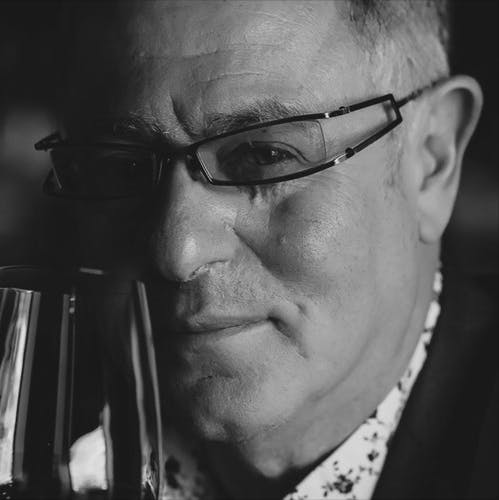
Ep. 90 Monty Waldin interviews Robert Joseph (Wine Writer & Consultant) | Monty Waldin's Let's Talk Wine Biz
Monty Waldin's Let's Talk Wine Biz
Episode Summary
Content Analysis Key Themes and Main Ideas 1. The imminent and radical transformation of the wine industry driven by technology and climate change. 2. The impact of automation (robots, AI, drones) on vineyard management and production processes. 3. The future of wine sales and consumption, shifting towards AI-driven recommendations and direct purchasing via smart devices and social media. 4. Innovation in wine packaging, exploring alternatives to traditional glass bottles like cans, biodegradable materials, and smart tracking chips. 5. Social and economic implications of automation, including job displacement and the changing nature of rural communities. 6. The role of climate change in necessitating new grape varieties and irrigation techniques. 7. The evolving perception of wine cooperatives, particularly among younger generations. Summary In this episode, host Monty Waldin interviews Robert Joseph, a prominent figure in the wine industry, about the profound changes anticipated in the coming years. Joseph, who shifted from wine writing to production and business analysis, asserts that ""extraordinary changes"" are emerging across all levels of the wine industry: production, consumption, marketing, and sales. He elaborates on how climate change is pushing innovations in vineyard management, leading to increased automation with robots, drones, and AI for precise tasks like irrigation, pruning, and pest control. This shift also encourages exploring new, more resilient grape varieties, including potential genetically modified (GM) vines. Joseph also highlights significant developments in wine packaging, foreseeing a move away from traditional glass bottles towards lighter, more sustainable options like cans, returnable containers, and even biodegradable materials, alongside the integration of smart chips for tracking. On the consumer front, he predicts a future where wine purchasing is driven by AI-powered recommendations through smart home devices and social media platforms, fundamentally altering retail. While acknowledging the social challenges of automation, such as job displacement, Joseph also suggests potential positive outcomes, like increased leisure time and renewed interest in local food production. He notes a fascinating trend among millennials who view wine cooperatives positively, contrasting with traditional industry perceptions. Takeaways * The wine industry is facing unprecedented technological disruption, impacting every aspect from grape cultivation to consumer purchase. * Automation, including robots and AI, will become central to vineyard operations, optimizing efficiency and resource use. * Climate change is a critical factor driving innovation in viticulture, pushing for adaptable grape varieties and advanced water management. * Future wine packaging will prioritize sustainability, convenience, and potentially incorporate smart tracking technology. * Consumer purchasing will evolve with AI-driven recommendations, voice commands, and direct mobile buying from social platforms. * The widespread adoption of automation will necessitate a re-evaluation of labor roles and community structures in wine regions. * There's a growing acceptance and even preference for wine cooperatives among younger consumers, signaling a shift in industry perception. Notable Quotes * ""We are about to see or we're beginning to see some extraordinary changes at every level, both in production, and in consumption, and in marketing, and sales."
About This Episode
The wine industry is undergoing changes and the potential for automated vines and the use of AI to predict wine production. The Mexican workers and people employing them are not the best friends to use, leading to the need for social animals and the importance of privacy in the industry. The use of smart phones and the potential for artificial intelligence to help with wine purchasing and communication with customers through social media are also discussed. The importance of automation and robots in the industry is emphasized, along with the use of media and buying healthy food. The use of technology to buy wine and privacy in the wine industry are also discussed.
Transcript
Italian wine podcast. Chinching with Italian wine people. Hello. This is the Italian wine for cast. My name is Monty Walden. Today's guest is Robert Joseph. Robert welcome. It's great to be here. So, Robert, you have many, many titles. In a few short words, how would you describe your activity in the wine industry at the moment? I used to be a full time wine writer. I wrote a number of books on a newspaper column, wine international magazine, got involved in wine competitions, and the international wine challenge, which you should have created. I did. Actually, twelve years ago, I changed track completely, and my son was born took a fresh look at the world, and I thought right now, I want to do two things. One is I want to look at the way at the business of wine, more than the consumer end of it, don't you think so? And secondly, I wanted to produce wine. So I'm now with two partners. We produce wine in Longedog, and learning how people buy and sell wine is fascinating. I didn't know about that as a as a journalist. And secondly, I've become more and more focused on the way the wine world is changing. So the book that is coming out in March two thousand and eighteen is called the Future of wine has changed. So what do you mean by that? The future of buying has changed? I think the future of everything has changed. The future of cars, if you go back to the automobile automobile industry, go back a few years, and cars just kept on looking the same. If you were making cars, you'd make them faster, a bit more fuel efficient or whatever, suddenly electric cars changed everything. Hotels, you know, bigger beds, smaller beds, suddenly Airbnb changes things, Uber, etcetera, etcetera. In wine, I think that we are about to see or we're beginning to see some extraordinary changes at every level, both in production, and in consumption, and in marketing, and sales. So let's do the production side first. Is that just climate change you're talking about, or What climate change is going to make us look at things differently? But when you say climate change, what does that mean? It means more forms, and so on. It also means potentially more drought. It means more extremes, but water is going to be huge. And how do we deal with water? Well, we're going to be irrigating in places that we didn't used to irrigate. That's the first thing. Secondly, we don't have enough water to irrigate with. So how we do it we are gonna be starting to irrigate essentially almost individual vines. We're not gonna be blanketing it. Blanketing the vineyard in the way we did. And that how are we gonna do that? Were we gonna be using drones? We're gonna be using satellites. We're gonna be using robots that go through to tell you which vines need the help. And that's not just irrigation. That could be in terms of pesticide, that can be in terms of fertilizer, etcetera. That's a big change. And of course, those robots that do that, okay, be accompanied or followed on by robots that do the work. We go to the states now, and, yes, Donald Trump hasn't exactly been the best friend to either Mexican workers or people employing them. But, actually, the young Mexicans didn't wanna work the vineyards anyway. So and in New Zealand, they don't have any Mexicans. They don't have any cheap labor. So New Zealand is is leading the charge with other places as well, towards totally automated vineyards, with possibly five, an ex CEO of Captain Jackson said we're five years off a fully automated vineyard. We have vine. We have robots now that can learn how to to to train and to prune vines. And if when they get it wrong, they're taught to get it right. So that's a huge, huge change in the way that we're gonna be making wine. Those for communities as well. I mean, what are people gonna do if they don't have any jobs set at home watch TV? I have it at home and go online. Let's just say that But watch the robot doing the work that they used to do. Well, to be honest, I think what's happening in the vineyard is only going to be nearby what's gonna be happening in so many other factors of our lives. So I went into a supermarket in Amsterdam last week, where there are no people. You It's a family share, Robert. I don't know. No. No. No. No. No. No. No. No. It's quite literally. It's it's an Albertheim shop, and it's not just like the shots I'm used to where you've got the choice of going to somebody on a on a checkout or the machine. Here, there are just self checkouts. And that's, you know, we're heading in that direction, and it's a whole other conversation. I don't guess we got time for here, but the vineyards, and it's going to mean that the cheap wine that we're buying today will continue to exist potentially because we're gonna go on doing that. And back to your climate change, very essentially, we're going to be growing different vines. Will they be different clones? Will they be on different rootstock, quite possibly? We've got two fascinatingly opposing tracts. On the one hand, we're moving back into old indigenous vines because they seem to work better in various ways in some places, which it, not maybe not surprising. But we're also looking at new vines. So we've got Marcelyn, which is a modern cross, and that is not only is it being flourishing in places like China and all in Russia now, but it's being tested in Bordeaux where they're saying we're already beginning to have problems with Murlough. So that's another big change. And then before we go any much further, we'll start to look at whether we do accept GM or not. And maybe we will. And those GMVines will be producing wine in theory that's got less alcohol or less alcohol than we might have with more warmth, maybe need less water, maybe, need fewer treatments. So that's the the next big leap, but that's all just production. And that's before we start looking at everything out. What about winemaking? Can we automate the winemaking side of things? Not only can we automate the winemaking side in all sorts of which is already almost there, but the AI, which is going to be telling us what to plant, what, when to pick what and so on. The AI is artificial intelligence. That is going to be doing the same thing in terms. We're not gonna use I mean, some people thought I'd do it the way I did it last year plus or minus. Now we're going to be taking the temperature. I mean, it's fascinating listening to Graftnet yesterday, talking to, say, well, we don't test anything. We let God do it. And it's terrific, and the wines are brilliant, but that's not gonna be what most people are doing, and most people are gonna have just as they've now got temperature control. They're gonna have things saying that I would suggest that you do this, which is something which is a major leap. Talk it just talking going getting back to the robot thing. I mean, a, there will have to be people that maintain the robots, put oil in their legs, or whatever it whatever it is. But also in terms of social, the social impact of I mean, I honestly can't see rural communities just saying, right, we're actually not gonna do any. We're just gonna sit and watch sit at home and and watch TV all day Well and and have robots going through our family vineyards that my grandmother, grandfather, grandmother planted x hundred years ago. Well, I'm very carefully not talking about Italy in a way because I think it's easier to to to talk about a neighboring country here, but I've got a, some statistics. Bordeaux had twenty thousand chateau in the nineteen eighties. It's down now to under seven thousand. The average site size of a border chateau is twenty two hectares. At the prices they're charging, which is at between two thirty and three eighty a bottle. Yes. That's not sustainable. The sustainable size is between fifty to eighty hectares. So you could say, well, we've got six thousand whatever it is now, we will end up with fifteen hundred logically. Unless, of course, they actually say, well, we're gonna charge more than three eighty, and we can survive as a twenty two hectar vineyard because we're getting ten euros, but it's gonna be a change. We cannot just draw a line from here to there. So your alcoholic village with all these little landowners going out and not making enough money is not gonna be sustainable because the sons and daughters are not gonna wanna do it. What about technology in terms of packaging? How can we kind of reach the end of the line in terms of packaging? Now, let's go back. Fat packaging is one my absolute obsessions because we use most of the bottles in most of the countries we're talking about, which is not true in, by the way, places like, Sweden and indeed Australia where roughly half the wine is in bag and box, but in most of the place, that we can think about in terms of where wine is wrong, rows and rows of seventy five CR glass bottles. Some of them are lighter glass, some of the heavier glass, but they're all that size because that was the lung capacity of a French glass blower in the seventeenth. So entry. And seventy five centimetres is not necessarily the right size for an Amaroni or Ricciotto and an eight and a half percent riesling from Germany. There's not no logic. So I think we're gonna see, a great move towards single serve smaller packaging, and we're gonna see cans, which fit into a different form of of, lifestyle. But we're also gonna see, returnable bottles, which is last takes a lot of work to to to recycle. But then we look at some other interesting things. We've had PET. Coca Cola's PET was actually the the it actually is it was a plastic bottle, so you know. And those when they're recycled brilliant because they're light because they are very, very recyclable, but we're not recycling them, and they're ending up in the sea with all the results that we we know about. Coca Cola, Heineken and company are looking at alternatives to their plastic bottles and the water manufacturers as well. They're looking at biodegrad The problem with that is unless you do the biodegrading, you still got bits ending up in the sea. There's a fascinating icelander who's come up with something made from Agar. Okay. And Agar is is is a sort of seaweed, and it's a bottle that doesn't look very nice, and this is very prototype at the moment. But when you it's when it's full of liquids, it's a bottle. And when it's not full of liquid, it actually turns into a little lump of stuff that you could eat. So it literally biodegrades into something that is not going to affect the environment. And I think we're gonna do an and in the end, the wine industry may benefit from Coca Cola, actually having to do this stuff, but I don't think we necessarily gonna look at glass bottles for the next ten twenty years, and while we're talking about the bottle of fascinating new development, is the idea of a chip that goes into the screw cab or the cork, which will tell potentially, which will tell your phone or indeed the producer when and where the bottles opened, and whether the wine has actually been damaged on root. So there are things that that sound like science fiction, but actually a satnav, when you think about it, sounded like science fiction. The idea of your mobile phone, which we've, you know, you have a smartphone, which is only ten years old, is science fiction if you turn the clock back ten years ago. You can kinda see the divorce rate increasing when somebody opened a bottle of wine in the company of heat or something that they shouldn't be Well, I but then we move on to the way we're gonna buy wine because you you you you you've essentially moved into that area. We've already quietly begun to have these devices in our homes, Amazon, Alexa, and Google Home, and there is the other sender, by the same token, our smart phones are getting smarter, so we've got Siri and Bixby and so on. And there are changes there that we're not really or not all of us are are paying attention to. So we're not going to be using our little fingers, typing things out on those little screens. We're talking to them now. We can talk to them now, and we can tell them things that they will remember they will actually react to. So I will be in my home saying, Alexa, I want a bottle of wine, and Alexa, because Alexa is part Amazon and Amazon knows the stuff I bought last week, etcetera, etcetera. Amazon will say, do you want the one you had last week, or I recommend you one. But that's Amazon, if you like, is the an Amazon then will deliver it to me very efficiently. But Amazon is an infographic, China would be Alibaba or or a similar organization, but that is the the obvious gorilla There are the other ones. We don't we're not normally thinking of Facebook, Twitter, those kind of, of platforms as buying media. We think of them as communication media. Firstly, their income at the moment is coming largely ninety nine percent, actually from advertising. And we've seen all through the last elections. We've seen all sorts of, questions over how they're getting their money and so on, and they may well be restricted. They are moving into retail, and the Chinese Tencent through WeChat have, what led the charge to that. Now, that doesn't mean to say that that Facebook is gonna have a warehouse full of stuff. It means that Facebook and Google will earn money through directing you to people who will sell you stuff and deliver stuff. And that's interesting because they know more about me than I know about me. And they know what my friends like, they know what I like, and when I don't like something, they'll learn through that. And that's a huge jump forward in itself. Meanwhile, actually one of these wee wine people, you and I, you know, give us half an hour and we'll wander around a wine shop. We'll love it. We'll pick up all the bottles. Most people don't like doing that. And in anymore than they like doing, spending time in bookshops. So how do they choose a wine? They're reliant on some critic or someone telling. Actually, the best way to choose a wine is when a friend or family gives it to you. Then you gotta write it down and remember it and go to the shop. No point your camera, put your phone, sorry, at the label, and hit the buy button. And as a presentation, giving out the the wine to wine conference, I've got a a video I shot in China of somebody a bottle of wine in thirty four second, including looking briefly at the reviews of it, but it's not just wine. And that's a very important thing. In another little video clip, I might buy, I used, by Samsung for its new galaxy phone, the big screen. It shows the character there walking past a poster in which he sees a pair of shoes. He points his camera at the shoes in the poster, goes bang and buys the shoes. So we're not just gonna buy wine this way. We're gonna buy so many things. So Yeah. Just go quickly back to the the way we started, which was in the vineyard. Well, I I see what you're saying about automation and robots and things like that, but ultimately, people have got to we are we are social animals. We'd like living in communities, and I would say that my alternative vision, probably never come about would be seeing people working together to grow really healthy food and living getting much closer to the land rather than sitting at home or anywhere else just staring into a smartphone and seeing the world through a a cipher. Look, I think there's all sorts of social questions. The first thing is, and it cruelled out. I don't see why the row the electric robot will not produce as healthy food as the lazy, peasant, if you like, and the lazy peasant who at the moment is spraying also of stuff on to save him from having to go out in the vineyards or whatever the field it is. So I'm not sure if the health thing is there. I do think that there will see two things, because I do actually fundamentally agree with you. One is that at the the luxury food, food, and luxury. I mean, not necessarily money, but it will cost more. We will buy things that have been handled by human beings because we want to, and we will know that they've been handled. And if we buy meat, we will know where the cows were and how they were looked after rather than anonymous meat. So we'll probably have artificially created protein protein from insects. In our sandwich that we don't pay very much for, or we'll have a really good steak from a cow that's had a good life. The other side of it, which we don't think about, is actually because we're gonna have more time. Maybe I will have an allotment, you know, maybe I will maybe my my friends and I will share some land and I'll grow potatoes and he'll grow carrots or whatever. I don't think there's any reason why we can't if we've been given the leisure time, why would we not do more of creating our own food? And it may be, you know, they're talking at the moment. If we start going down as we are going to, the shared car route. We're gonna have a lot of car parking space that we don't need anymore. We have a lot of road space. There's a lot of things that we may not need. And, hey, you know, that's gonna be I saw some some something in Germany recently where they're turning areas of a town into allotment land, and where people in a block of flats have got that little area. You don't need very much land. So I I'm not entirely negative about this, and I don't think the the picture that you've just drawn of Italian wine or French of all being little peasants growing out, but actually in a lot of countries, it's not Italian peasants. It's peasants from another country who actually haven't been brought in to do it, and it's a big factory where the wine is made pretty industrially. Don't think today's picture is all that beautiful. Why should why should the future picture be necessarily worse? But something I heard today, which I really at that the wine to wine conference, which stuck in my mind, I liked, was a young and he was talking about millennial subjects, talking about something in the states where he said actually young his cohort of people, in their thirties, if you like, they like the idea of a cooperative. When they hear that a wine, that a wine, or anything's been made by fifty or sixty families who've got together to make it. That's a plus. Now my generation, everybody I've I've ever had anything to do within wine has always seen the world of wine as being a pyramid with the the grower, the little family is top, the family owned merchant business comes next, and the coop is is at the bottom of that pile. And I find it fascinating to hear a young American say, yeah, we embrace the idea of the cooperative. And so, and I'm producing wine in France months at at a set of cooperatives in in Minovar. And I love that idea. Great, Robert. We could talk about this for many, many hours. I'd like to get you back on the show at some stage. I would love to love to do it again. Thank you. Yeah. Thanks, Robert for coming in and, explaining to us some of the things that the future may hold, not just for, us in the wine industry, but for us as human beings on the little planet, we inhabit in general. Thank you very much. Follow Italian wine podcast on Facebook and Instagram.
Episode Details
Keywords
Related Episodes

Ep. 2570 Promoting wine - achieving success in a hostile environment | wine2wine Vinitaly Business Forum
Episode 2570

Ep. 2561 An Inside Look into Wine Enthusiast’s 100-point Rating System, Upholding Blind-Tasting Protocols, and Scoring Non-Imported Products | wine2wine Vinitaly Business Forum
Episode 2561

Ep. 2402 Margherita Andrenacci interviews Erin Kirschenmann of Wine Business Monthly | Next Generation
Episode 2402
Ep 2332 Compiling a Vintage Report with Michaela Morris DipWSET, IWE | wine2wine Business Forum 2024
Episode 2332

Ep. 2239 What’s next for wine – What wine for what’s next | wine2wine Business Forum 2024
Episode 2239
Ep. 2033 How to make more money from your wine | wine2wine Business Forum 2023
Episode 2033