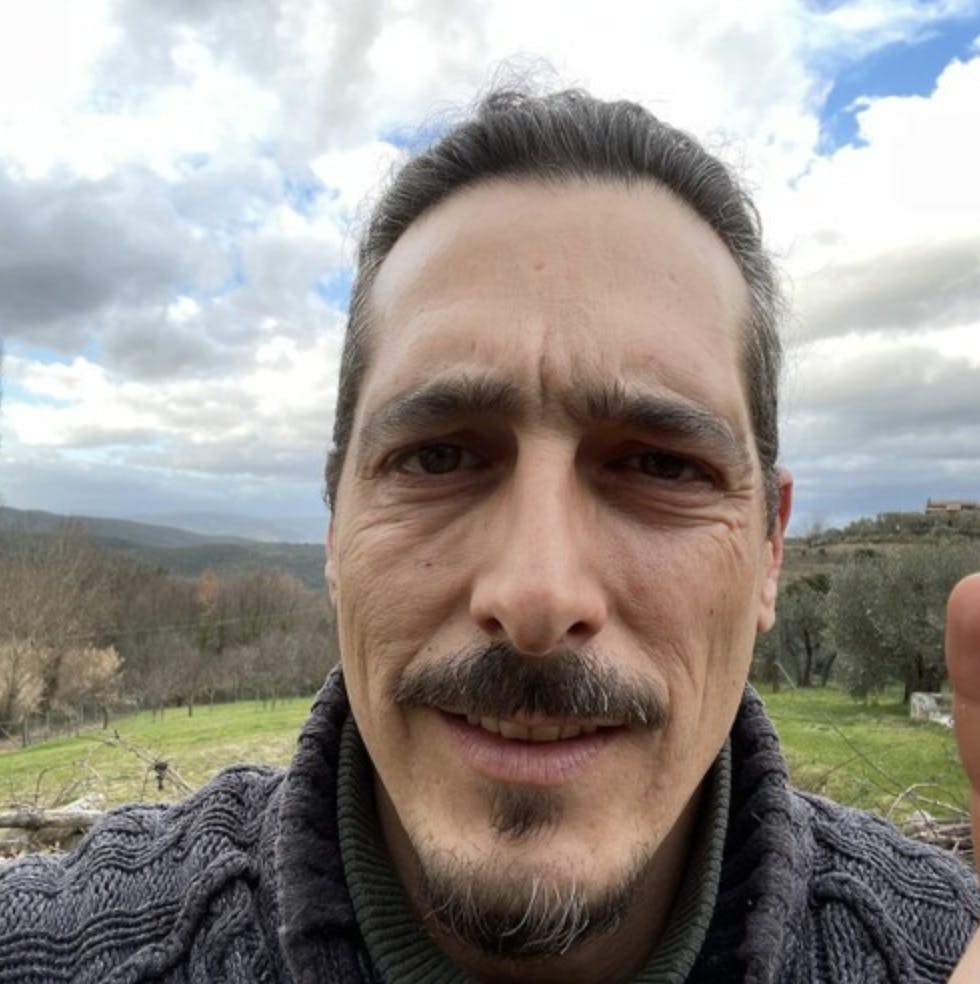
Ep. 255 Giovanni Luigi Brumat (Cantina Toblino) on Trentino wines, Nosiola, Schiava, and Rebo
Storytelling
Episode Summary
Content Analysis Key Themes and Main Ideas 1. The history, structure, and cooperative model of Cantina Toblino in Trento. 2. Focus on indigenous grape varieties: Nosiola, Schiava, and Rebo, including their characteristics and winemaking. 3. Commitment to organic farming, sustainability, and continuous improvement through consultancy (Luca D'Atoma) and grower education. 4. The importance of wine tourism and local gastronomy, highlighted by the on-site restaurant, Osteria Toblino. 5. Addressing the challenges of ""extreme viticulture"" in the mountainous Trentino region. Summary This episode of the Italian Wine Podcast features Giovanni Luigi Blumatt from Cantina Toblino, a cooperative winery in Madruzzo, Trento, established in 1960. Giovanni explains how the cooperative has grown to include over 600 growers, with nearly one-third of their extensive vineyard holdings now certified organic. He details the characteristics of their key indigenous grape varieties: Nosiola, used for versatile dry whites and the acclaimed Vino Santo, and Rebo, a crossing known for its complex red wines. The conversation emphasizes Cantina Toblino's deep commitment to organic and sustainable practices, including collaborations with consultants like Luca D'Atoma for vineyard management and ongoing training programs for their small-scale growers. Giovanni highlights the crucial role of wine tourism, with their restaurant, Osteria Toblino, offering authentic local dishes paired with their wines. Despite the challenging ""extreme viticulture"" conditions on steep slopes, the cooperative model fosters a strong community and allows for the preservation of traditional methods alongside modern innovations. Takeaways * Cantina Toblino is a successful and expanding cooperative winery with a strong historical foundation. * Nearly one-third of their vineyards are certified organic, demonstrating a significant commitment to sustainability. * They champion indigenous grape varieties like Nosiola (used for various whites, including an award-winning Vino Santo) and Rebo (a unique red crossing). * Expert consultants (like Luca D'Atoma) and continuous education are utilized to enhance vineyard practices and quality. * Wine tourism and culinary experiences, offered through their on-site restaurant, are integral to their business and regional identity. * The cooperative model supports numerous small-scale growers, allowing for meticulous, often manual, vineyard work in challenging terrains. * Cantina Toblino balances tradition (e.g., pergola Trentina) with modern viticultural and enological advancements. Notable Quotes * ""Nowadays, almost one third of our total hectares are certified organic, meaning that we have around three hundred hectares of organic production."
About This Episode
The speakers discuss the Italian wine podcast, a cooperative venture funded by the European Union to promote European wine in Canada, Japan, and Russia. They discuss the importance of diversity of varieties and certification, local dish options, and cheesy options. They also discuss their experience with their own wines, including their own crafts and their interest in tourism and local products. They mention their own winery and their interest in tourism and local products, as well as their own winery and their history with organic farming. They also discuss their projects with local tourists and their use of biomass and natural resources. They explain their projects with their own winery and their focus on well-being and sustainability.
Transcript
Italian wine podcast. Chinching with Italian wine people. This podcast is brought to you by Native Grape Odyssey. Native Grape Odyssey is an educational project financed by the European Union to promote European wine in Canada, Japan, and Russia. Enjoy. It's from Europe. Hello. Thanks for tuning into the Italian wine podcast. Our channels are SoundCloud. ITunes, Spotify and Himalaya FM. Also widely available on other podcast apps. Our official website is italian wine podcast dot com, and that's all one word. If you're using iTunes, feel free to rate the podcast or write a review. Thanks. Hello. This is the Italian my podcast with me, Montewool, and my guest today is Giovanni Luigi Blumatt from the Cantina Toplino in Madruzzo, in the province of Trento in Northern Italy. Welcome. That's right. So Giovanni, the how big is the, when was the cantina Toplina the cooperative established? The cooperative was established in nineteen sixty by a small group of wine growers. Actually, at the time, there were almost thirty one Grow was there. And they tried to develop this winery. And at first, only about table wines based on local grape varieties that were Nazzula for the whites and Skala for the rats. So it was quite an interesting story than in the next years, decades, it developed, and the number went up to six hundred. More than six hundred, actually, right now. More than six hundred growers. Yeah. Wine growers. And then we have more than eight hundred hectares, but, particularly of our cooperative is that we have also a privately owned winery of forty hectares in front of the main building that is forty hectares in just one block and is totally certified organic. And that allow us to develop a kind of innovation system also for our wine growers and to start the organic conversion back in two thousand twelve. Yeah. You've actually got my figures have got you. You got ten percent of the organic vineyards in Yeah. Toronto province. Yeah. That's right. That's right. Nowadays, almost one third of our total hectares are certified organic, meaning that we have around three hundred hectares of organic production. Okay. Let's talk about the wines. You mentioned two varieties in Nossiola, which is why what are the characteristics of seola from your cooperative. Nozoa is a very nice, variety in my opinion because even though it's, neutral game variety, it allows us to do different kind of files starting from an easy to drink time that is quite fresh from the previous, harvest. Meaning that it undergoes only still refining, then we have two other selection wise. One of them is, put in, oak barrels for six years, which is quite interesting, but the the thing is that the parts are very big. So, thirty tortoise bars, meaning that the impact of the wood is not too strong. This is a dry white Nocceola. Yeah. It is a dry white. Then we also have a kind of late harvest, New Zealand based, but is still, dry white. That undergoes one year in Acheshotonou, and two years in stainless steel to stabilize the wine and to bring it and make it more integrated. But that's not the VIN Santos. Is it? No. It's not. Okay. Tell me about the Vincanto. Yeah. That's great wine. Great sweet wine. That's this year was named the best sweet wine in Italy by Gamparo. So it was kind of a really nice award for us. Vino Santo history star shots in the early twentieth century, but continued to be no at the beginning. So back in nineteen sixty five, they started to make the first keynote to continue to be no. And they brought it to the market seven years later. So in nineteen seventy two, which was great, great video sante, and we still have some batteries in our, winery. But the good thing about video sante is that in recent years, the technique to produce it developed. In fact, nowadays, it's harvested usually in the first of October, then the grapes are put on the gratings for six months. So they're dry air dried. Yeah. They are dry. Natural air dry usually because we have chew ins that are very important for us, one from lake Art that is called Laura and the other one called Peller from the dolomites. So that one is a cool wind from the mountain, and one is a warm wind from the lake. That's right. Well, the thing is that Laura is a softer wind that gets strength when it goes to the strength of Vale and Dan Bolzana Valle. When it comes to the Valle de La Giso, our place is kind of soft wind soft breeze that brings even a little bit of fresher sometimes. Whereas, polaris has stronger wind, and, it is very important because some of our solace are clay soil. So they are not too good for drainage. But the good thing is that wind brings dry hair and so on. So It allows it to dry out a little bit. Yes. What do you what would you eat? What is the typical local dish for the Vincanto, Nocioza. For the Vigno Santo, it can be paired with almost everything because we also have tried it with, a scallop of foja, with some truffle, and, it's quite, quite nice to, like, to make pairings. But on the other end, we it can also be paired with, sweet dishes, so desserts, like walnut or nutty based, desserts, which is very, very nice. And even with, some cheeses. So what do you have any local cheeses? Actually, we have some local cheeses, but the thing is that with with Venus something, we look more to, like, herbal based cheese or blue cheese, which Blue cheese. Yeah. Blue cheese or gray cheese. Yeah. That's right. So, like, Gorgonzola or Rockfort or, something like that. You can't name a French cheese in the Italian. I know. Of course, you get you get told off of that. Okay. So you mentioned Scava. Scava is called Vernache or Rienga. Tell me about your red wine made from Trebo. What do you wanna start with? Chicago or Trebo? Tell me about your red wine. With Trebo. I will start with Trebo, which is quite important for us. Yep. Meaning that, we have two different kind of Trebo based wines. One of them stays in Oak barrels for just twelve months. So it's kind of easy to drink red wine, not too complex. And whereas on the other end, we have another product, again, late late harvest first week of October, with a very particular tour. Actually, it is not totally rebel because it's ninety to ninety five percent rebel and five to ten percent other crossings from Reborigotti. Reborigotti was somehow linked to valid Elagi, producers and Turwar because he was from a small village there. And then you worked for a long time in, Samikla Ladej and also in Conoyano. So you worked there as a researcher, professor. Botenist. Yeah. Yeah. Botenist and Genatist. And he, so he created this crossing Yep. Called, you call it Rebo. Rebo. Yeah. It's a crossing between Toronto and Merlo. Very nice varieties. Also, very good variety to make both dry w rats and also sweet rats. Because in our area, we do, like, this kind of, dry red, and we also do, rubato. There are some wine growers, some wine producers that do rubato, which is kind of sweet wine. We can say liquor's wine, but actually it is very, very good. It's an amazing environment. How is it how is it sweet there? Is it just did you stop the fermentation, or do you pick the grape a little bit shriveled in the liver. Right? In our case, we just do to try. Right? Okay. Yeah. But the thing is that it's late August, then we do a maturation of twenty two days in, trunk, conical, trunk conical. Eight, yeah, vests. And then after that, it is it stays in the strong clinical vats and in small parts, so in a smaller tunnel of six hundred liters, for at least three years. So it's a wind that develops with time, without too much tannins because a rebel is a grave variety that can give tannins, but if you're careful during the maturation and during the contact with oak, you allow a better structure, but not as strong tennis, very soft, very smooth. Our entry level, Revo is easy to drink not to be kept too much in the bottle, whereas our premium Revo can be kept in in the bottle for decades as it a really nice structure, really nice body. At itself, it's quite unique because it's a little bit of oxidative character. So it's very complex in terms of primary, coloring, tertiary aromas. Very nice flavors, spiciness, and, chocolate aromas. So So how important is tourism to you in your area? It's very important for us because, for instance, we are very close to Lake Arta and to Malona de Camillo. So skiing areas also Lake Arta is for, like, tourism and everything. But the good thing for us is that we also have a restaurant in, in our winery that is called Osteria tobrino. Therefore, we can give our guests a unique experience, tasting wines pairing with really nice local products and foods. So give us give us some local dishes that your restaurant serves the binary restaurant. So For instance? You're by the he's, Duane is a tall and slim, but I bet you love your food. Right? Yeah. I love food. It's fine. I love food pairing with really nice wines. Oh, good. So the best dishes in my opinion is like a rice risotto cooked with, a little bit of trento docks, so sparkly wines from our winery. Really? Yeah. With some local herbs that are produced by, a company called Gua. That is a really small company that produces herbs and mushrooms and other stuff. And then, you add a little bit of trout, fresh trout, small pieces. Pieces of fresh out, and it is perfect. And you finish it with a little bit of balsamic. That's it. So you you put it on the plate and a tiny bit of balsamic. Everything in that city. Yeah. Just some drops of. Did you used to work in did you used to work in a restaurant? No, I don't. But I really love food and, I really have very nice relationship with some chefs because I love eating, like, simple local products, but prepared in an innovative and modern wine. Go on. Give me another of your favorite dishes that you What would you pair it with, with the wines from top line or coop? I would say that this resulted that I've just described goes well with our Nasula La Gillette, the the one that stays in six years in the boat, in the the oak vests. And whereas for, the rebo based wine that is called the limero. I would say, kind of, Brazato, but we call it, Capello, Capel de Preta, which is the name for Brazato in Tarantino, we can say. It's a Rosato is a stew, isn't it? Yeah. It's kind of fresh meat. Braced meat. Yeah. Braced meat. That is, cooked for two or three hours. And On the bone. No. Not on the bone. Okay. Not on the bone. It's on. Yeah. Okay. And the thing is that the the meat then is very, very soft, but kind of sweet spiciness, juicy. Yeah. You see very nice pairing with, rebo. Do they when they cook that, do they add any herbs to it, or do they just leave the meat in its juice? And that's it? They leave the meat in the edges, and they get kind of sweet spices just develop a little bit of more flavor, and then they prepare the so called brown sauce to, like, make it even softer. So in the brown sauce, is it, like, a reduction? Or Yeah. It is. It's kind of reduction. They have the juices that come out. Okay. And then our chef does, kind of, topping number, mashed potatoes, meshed topping number. I don't know. It was The topping number is, a Jerusalem marketer joke. Yeah. And then we add also a little bit of vegetables that are cooked in the slowly in the honey. So they kind of disconnect kind of Kind of an example. Spooky bitterness with some sweetness coming from the honey. It's very, very nice plate. It's it sounds, delicious and also very sort of simple, you know, not not not dishes that have required millions of different stages to do. It's just you get agents. And once it's prepared, do you heat it up? And that's pretty much it. And and then just presenting them to our customers in the very nice way with a really nice, plate and, and things. So So in terms of the region, as a how important is tourism? Because you've got, you know, you got the France is very close. Germany is very close. It's very important because the land is fairly close. Yep. We're a very wealthy city. So how does that work? It's very important. Fact, every year, we have more than thirty thousand, people in our winery for lunch or dinner or even just to visit and have a tasting with us. But the good thing for us is that we work closely with some, local tourist emergencies, hotels, and so on. And we are also, friendly with, bicycle tours, and so on, which is very important, the Valle Delage, and Lake Garda. There are lots of tourist intelligences that, allow people, especially German speaking people that to rent a bike and then to have a really nice tour, but for beginners or for experts, meaning that we have a huge passage of bicycles and cars salsa and so on. You've got a couple of projects going on at the moment in the cooperative. One of them is with, Luca D'atoma Yeah. That's right. Consultant. And the other one is to do with training. Yeah. Your great brother. So can you just explain the project with Luca first? Who is Luca, and what is he helping you with? And then talk about the vineyard training. Okay. So, look at the Toma, it's a project that, has been created two years ago. Actually, he's working closely with our agronomists and Nargis So it's a project that starts in the vineyard. So choosing the best grapes and the best vineyard's places, parcels to select the best grapes and to bring them to the winery and then to make outstanding wines. So, basically, what he's it seems like he's doing is is that almost tear wall mapping. Yeah. The wall mapping and also doing something in the vineyard with our neurologists choosing the best bars from France and then, trying to make some experiments because we also use, for us that are made by Tava, which is a local producer of Pampros. Then we, we do this these wines. That will be five wines, three whites and Churats. The thing is that the whites are made for seventy or eighty percent enough for us to to twenty percent in Oak, and ten percent is still. So they are very, very nice, very they will be very complex wise. And the good thing is that ampharos is, used for by house not to make natural orange wines, but just to have longer administration pro processes lasting for seven months or so just to bring more complexity and this kind of, mineral this stupidity to the wine, but not, changing the color of the wine. Okay. That's interesting. So you when you get a little bit more color, they won't you on the skins because Yeah. A little bit. You're not you're not going for full orange? No. Not full orange. They just turn a little bit more golden in color. In terms of Luca D'atoma, what's give me some examples of what's changing in the vineyard? Is it you're changing the pruning, or you're changing the leafing, or what's going on? Yes. It's changing also the the approach to the to the organic farming that we already doing. But the thing is that is, trying to make our agronomist and also wine growers to use other products that that can be also used by biodynamic producers, not only organic, to have a more environmental friendly and sustainable approach in the vineyard. So you're using, like, herbal teas, like, yeah, the Tisane, things like that? No. It depends because we mostly use the cover crop and, other stuff because luckily, we have a really nice climate there. Thanks to the winds and to the presence of the takes that brings a really mild climate, very, very nice. So, therefore, we don't need to use too much copper or sulfur in the vineyards even though it's allowed for the organic production. And so the do you know what kind of cover crops you you're so at the moment? Yeah. We use different types of cover crops, so legumes, and, even other kind of flowers just to increase, two things. So the nutrients for the device. To mainly nitrogen with legumes? Yeah. And on the other side, to allow a better structure of the soil. To organic matter. So it stands organic. So to build soil structure, and these legumes are very fine roots, and they, create a nice texture in the soil, which is easier four vine makes it easier for vine roots to go dig a little bit deeper. Yeah. That's right. Because and this is especially important in our both in our valley side and also on the ely side because on the valley side, we have an alluvius soil. So, carcharas bay or even clay and sand based soil. Whereas in the yieldy side, on one end, so on the east side, we have more clay and more also, which is a very soft rock that can easily be cracked by hand. And on the side of the dolomite, so going we have porphy and granite. So we have different kinds of neutrality and and different types of soil. And all your cover cropping is adapted to which soil type. Yeah. And we change the crop. Yeah. Every time. And we do an analysis of the soil, and then we choose which type of crop to use. So all Lucadatome is helping you with that. Yeah. So, Luca, just if those of you today, he's got his own winery with his wife on the Tuscon coast, it's called Duimani, two hands. Tell him too pairs of hands. He's a top guy for sensible, so organic and biodynamic consultancy keeps keeps them really simple, very, very cost effective. Common sense solutions to easily resolvable problems that, it's like a stone in your shoe. Take the stone out and you get you get ten percent more quality for minimal effort. Yeah? Sounds good. Yeah. That's right. And the good thing for us is that he's also working closely with our wine growers. So going back to the second project that we have about training and formation of our wine growers, it's very, very nice because, we usually bring, different experts and professionals and professors from, university and so on to talk about different topics starting from the Viticulture, going to the agronomy, analogy, and talking about also innovation. So ITech and so on, just to bring some new things to our winery and to develop our quality because we are very focused on quality and respect for the environment, which is a very important topic nowadays, and we invest also lots of money on it. Yeah. I mean, a lot of people come on this podcast and talk about sustainability, etcetera. But in this case, Cantino has been doing it for a long time. You're just fine tuning now, aren't you? Yeah. That's right. Because the thing for us is that we care about people as a cooperative, we are very focused on the well-being and of our people and the well-being of our vines. So that's a good thing for us is that our wine growers have less than one point five vectors each of veneers. So they care about it by hand, and they choose even during the green harvest. So, like, choosing the best leaves and the best grapes during the maturation and so on. So But the average size is small, but that's on some quite sometimes some very steep slopes. Is that right? Yeah. That's right. Because our vineyards goes from one hundred meters above sea level on the valley up to seven fifty meters on the hilly side on both Eastern West. That's extreme. That really is extreme Viticulture in terms of, you know, the soda effect and the drainage, obviously, on the hillside wind, very dry, arid, difficult conditions. I mean, perfect for vines, but tricky for humans. I imagine a lot of the work is done by hand. Yeah. That's right. That's correct. And the good thing for us is that we also want to keep the tradition alive. So we still have, some pergolas, pergola Trentina, which is the most common was the most common system for vineyards back in the fifties, I I would say, then it changed a little bit in the seventies and eighties, thanks to the introduction and success of international grape varieties. So, nowadays, we use the Guyo for the new vineyards, but we still kept some New Zealand and Scava, vineyards with the Good. Okay. So I wanna say thanks to my guest today, Giovanni Luumat, from the cantina Toplino, in Madruzzo in the province of Trento in North and Italy. A lot of little stories that the food and the the sustainability and the organics and the I think the social side has come through very clearly, in what you've been saying and the importance of, I mean, corporatives are often disparaged, and sometimes rightly so, but, in if you think about what's happening with our planet at the moment, having a group of people around you that can offer advice and solidarity, can be very reassuring. So, and yours is a is a small cooperative, but a historic one that has got track record of working really well. Yeah. Thank you a lot. Yeah. Yeah. You invite me to say that. That's what I think. And that's and your wines do very well in our, five star wine tasting. Thank you. And, they're winning prizes because they're good wines. Thank you. Yeah. Thanks love. Yeah. This podcast has been brought to you by Native Grape Odyssey, discovering the true essence of how high quality wine from Europe. Find out more on native grape odyssey dot e u. Enjoy. It's from Europe. Follow Italian wine podcast on Facebook and Instagram.