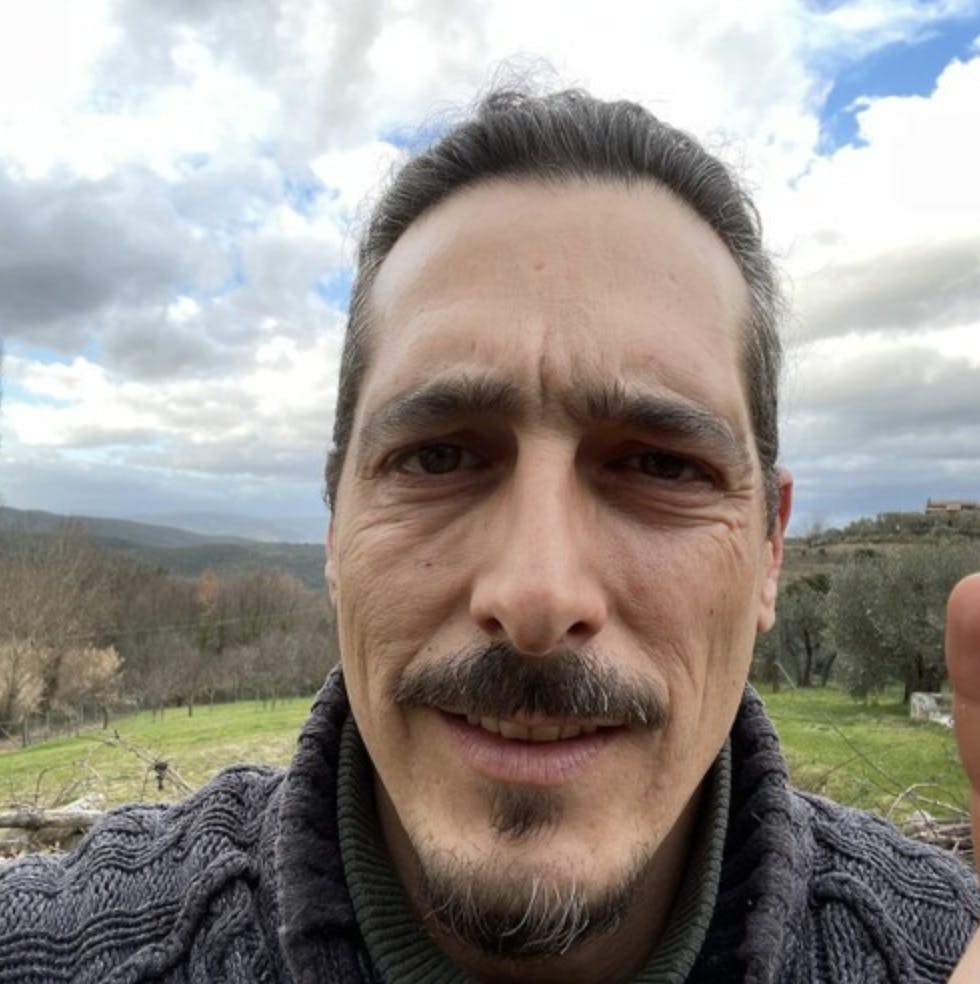
Ep 565 Carlo Cignozzi | Monty Waldin
Storytelling
Episode Summary
Content Analysis Key Themes and Main Ideas 1. Pioneering Spirit and Evolution of Montalcino: Carlo Cincini's personal journey from a lawyer to a key figure in the Montalcino wine scene, witnessing and contributing to its significant growth since the 1970s. 2. Innovative Music-Enhanced Viticulture: The unique and patented method of playing Mozart's music in the vineyards to influence vine growth and wine quality, based on the principle of resonance. 3. Commitment to Organic and Natural Winemaking: A strong advocacy for organic practices, condemning chemical use and emphasizing the importance of natural biodiversity in the soil. 4. The Philosophy of Personalization in Wine: Carlo's belief in imbuing wine with a unique story and personal identity, exemplified by his ""Twelve Grapes"" blend named after his daughter. 5. Biodiversity in Grapes and Life: The broader philosophy of embracing diversity, both in grape varieties (as seen in his complex blends) and in personal pursuits and career paths. 6. Historical and Cultural Significance of Wine: Reflections on wine's historical role as a fundamental beverage and its contribution to the rise of empires like the Roman Empire. Summary This episode of the Italian Wine Podcast features an interview with Carlo Cincini, owner of El Paradiso di Frassina, located in Montalcino. Carlo shares his unusual journey from being a lawyer in Milan to becoming a significant, pioneering figure in the Montalcino wine industry, beginning in the 1970s when the region was still nascent. He recounts his early involvement with prominent wineries like Altacino and Caparzo before establishing his own El Paradiso di Frassina. The core of his unique approach lies in his patented method of playing Mozart's music directly to the vines, believing it enhances their metabolism and grape quality through resonance. Carlo passionately discusses his commitment to organic winemaking, stressing the negative impact of chemical use and advocating for natural processes. He introduces his ""Twelve Grapes"" wine, a complex blend named ""Gia"" after his daughter, which embodies his philosophy of personalization and the musical concept of semitones. Cincini also reflects on the importance of biodiversity, not just in agriculture but in an individual's life, pursuing various interests beyond winemaking. Takeaways * Carlo Cincini played a foundational role in the development of the Montalcino wine region, which grew from a handful of producers to a major industry. * El Paradiso di Frassina is renowned for its innovative and patented technique of using Mozart's music in the vineyards to promote vine health and wine quality. * Cincini is a fervent proponent of organic winemaking, viewing the use of chemical ""poison"" as a ""crime"" and advocating for natural, spontaneous growth. * He strongly believes in ""personalizing"" wine, giving it a unique narrative and identity, as exemplified by his ""Gia"" (Twelve Grapes) wine. * Biodiversity – in grape varieties, winemaking practices, and personal life – is a central theme in Carlo Cincini's philosophy. * The interview highlights the dramatic transformation of Montalcino's wine production from producing thousands of bottles in the 1970s to millions today. Notable Quotes * ""Music is the frequencies... When two frequencies meet... What happened? Resonance. Resonance increase metabolism."
About This Episode
The speakers discuss their experiences with wine winery and wines, including their own wines. They also talk about personalization and the importance of organic growth in the wine industry. They emphasize the need to produce organic wines and the history of the wine. They also discuss the importance of trust and pushing energy to grow in the industry. They thank their audience for their passion for music and their creative/aterpIC wines.
Transcript
Italian wine podcast. Chinchin with Italian wine people. Hello. This is the Italian wine podcast. My name is Monte Walden. My guest today is Carlo Cincici. Carlo is the creator and proprietor of the El Paradiso de Fracina, winery in Montalcino. Welcome, Carlo. Can you tell us, you're from Milan, originally. When did you first arrive in Montalcino and why? I was Okay. Many, many decades ago. And, random, I arrived here because a friend of my friend, they stopped from Milan here to meet friends, a military friends. So for that reason, always, one time, in two or three months, we arrive here with this, with this friends, Julia, we stopped there in this marvelous place. I, like, lawyer, I create the Altezino because, Altezino was, in a back group, you know, like a lawyer, I in the course of Siena, I both completed, last time, auction, auction. And, the the first step here was to manage Altacino. It was seventy. Seventy five, seventy seven. After I buy with the friends, Caparto. Caparto, now another very important, estate but when I arrived at Capasso Health, you know, nothing. You know, you can't find nothing. No one vine. So I create the seller. I created the divine. In Altezino at the both in and in Caparso. So when I arrive here in seventy nine, since seventy, Altezino is Caparso was a wreck. Destroy. To to restore how to see, we spent two two years to restore capacity over one year and a half. No wine. Only wild field. So for this reason, I spent a lot of time a lot of money with the partners, no alone. Was a good lawyer because, the lawyer is very important to to make the money. Without, my proficient lawyer, it was difficult. I I arrived here to spend a million million error. Okay. Or or billion or or the liras. So anyway, I'm very so I'm very happy to to to be here since the seventy. Okay. Seventy here, there is only five, six widery or Bernelo. No overcame thirty thousand bottles in all montalcino. I so grow montalcino. Wanna start with Altacino and after Capacao. We were ten. Widery. We produce no more than a thousand bottles. Now, ten million bottle. We are a about three hundred producer. So it's changed in in forty in forty here. When I start with Altezino, and after I bought the capacity, I manage Caparto with the with the partner for thirty year. And after I stopped. I changed my life. I changed my wife. I changed all the thing. I discovered this, nice place, Paradiso Difracina. When arrived the first time with the Cabrio, I I run with this, with this, the car, and I have the radio. I have the requiem Mozart in high volume. I stop the car. I stopped the the the audio always maximum volume, and I lie. I lie. I lie at the board of the road. It was monsters. And I said, I want to spread mother on the vine because a mother is more fantastic musician in history of the music. Joe Matrical? In the modes of wine, in modes of music, there is a fibonacci sequences, be careful. Fibonacci sequences, is very precious to number sequences after models are top of the music because it's geometrical, harmonic, door repeats, but is a like a different flower, the The piece of music changed, like the flower, you are, is, another thing. But the the great musician was the most unfortunate reason, I want to spread the the the music on the vibe. Why? Because I know in orient, in China, South Korea, in Japan, they grow the plants, no vine, with the music. Music is the frequencies. Okay? When what frequencies meet at the frequency inside the plant, doesn't matter what kind of plants, vine, apple, soil, grass, went to frequencies, they meet. What happened? Reasonance. Reasonance increase metabolism and crump metabolism increase the and make better the leaves. And the, and the great. The secret is a resonance, two fragrances, meeting, and resonance, and memories. I, I don't discover it. Because Japan, in China, in, in anti, an anti, in in the Soviet Union. So, once they consider the the frequencies, a power to increase the life, not only the human for the animal and for the plants too. The first to study very bad, very, very much the this, phenomena is a Stefano mancuse or University Flores, is the big, botanic, you know, in Italy, is always in a television in Italy and abroad because he studied what happened with the with the plants, basically the vine, with the fragrances. When I knew, Stefan O'Mancus or university of France, you don't trust a lot. The music can improve the life, metabolism and the health of the plants. But, I make this experiment here in Paradiso, and it's a stefano. So I put in here under both both speaker Royce because Professor Marce is so mean television. I don't know, CNN and ABC. Old television of the United States arrived here. In the last decade. So Professor Bose, the, Massachusetts in MIT, it wrote me because, I understand I I support the the grow. Of the divine. We we with the music with the speaker, but Spanish speaker, very cheap. Professor Bose Lately, and he sent me a letter. It's a Carlos was a genius, nobel prize. I appreciate your idea to to grow with the speaker, with the music. I want make a gift. And the twenty case, speaker arrived both free. Professor Amar Bose, no, and understand my idea was fantastic. Is the most marvelous gift I received by United States by professor Amar Bose MIT Boston. So it's no water. Okay. So if you want I go home with my history here, I start with Artesino after I I buy with the partner Caparso. But when I arrive here, I sold that my share in Artesino Caparso, I want for me, not partners alone. So I I saw this place, Paradiso de France, and the pump is lost. Very whole. Five hundred years old. But there is an utmost for magic because it is something different. So whenever I be with the I repeat with the Cabrio, I shot the music directly on the model. I lied. And I said, here I walk, grow the vine with Mozart. It was two ninety nine. So I was the first in the war. I patent. I patent in Europe. It's not here easy. The system, I know patterned the music. I patterned the frequencies. How many digital? How many hurts? No? To grow better, the plants, I, with the engineer and the physician. So we refinish the the patent. Italy Italian patent, European patent. For this, I I pay a lot of money by I am very happy to be the first to patent the concept of the music and the vine in a somewhat won't imitate me. I remember once I'm, someone in French, another in Swiss, lemurs lack, you know, in the vineyard. So I, I am loyal. I stopped this, initiative. You know, I I owner of this joint venture music and vibe. I've got a question for you. Can you, Carlos, can you tell us about the wines that you make You make a brunello, Roso, and, EGT. Can you explain the wines, please? Paradito diffraction is very small. Three actor, a brunello, one actor, Roso de Montecino, here. Okay, embodied in this place. And after I bought twenty five years ago, a field at the at the border of the Maranma, you know, near the I discovered place fantastic. It's like microclimate and the the winds and the soil. It's an area to the museum. They're near to the sea. So in this land, I want plants twelve kind different of grape. Six bordeaux style, a six tuscany. In this six actor, no, I produce I start to produce the the famous wine twelve grapes. Six bordeaux, a six tuscany grapes. It is a this bottle. Nobody makes so crazy blend. So, Why twelve? Because twelve are the semitone of the musical stare. What grapes one note. This is the slogan of this of this of this this bottle. This, I want to change. I have carponeer, and another another grapes. And after three kind of sangres, Angelo six French grapes, six from Bordeaux, and not only Bordeaux because of pinot noir too. And the six Italian grapes. Why? Because, nobody makes so complex beer and so complex wine. And at at the at the beginning, it was very difficult to buy this wine because what is that? So not a multichiro because, is, in, the border of the multichiro in Groseto area in Marema. What means, six Hector, I produce about this, thirty, thirty five thousand bottle. But now I won't personalize because the first, the the stupidity of the white maker, it's late. Don't personalize is why. So this is What is Jia? Jia is a it's a fantastic, description. Jesus, my last daughter, you have to personalize in the front label, like, to our grades, and like Bronello, mozart wine. Nobody show in the fraud label this is stupid that they produce all the wine because they need no fantasy. You have to personalize. Give me the Give me you add, you miss one bottle, some bottle of the twelve grapes? Oh, mozart y. No, brozart y. All the stupid the producer here in Monteaccino. So they started you know, don't personalize. No. Jia is my fantastic last uh-uh daughter. I dedicate, and this, this design was made by one of the most important design in Milan. And, look at that. Why? I make the in the front label a grape in the pentagram. This is a personalized what mean personalized the bottle. White fragrpes. It's a twelve. No. Six six six two. The second of the, my winery and the second of twelve, the success that you have to personalize. No. I don't understand. You owe them all okay. How many? It is at two hundred, fifty five to under. When arrived here, they will we we were ten. Okay. I'm gonna give the audience the the names of those twelve. Correct. The names of the grapes that go into the twelve grapes wine or the. So you have San Giovanni. Cabernet sauvignon, cesena, Zyda, Puttiverdo, Mar Marcelaan, Ancelota, Aricante Buche, Carbonaire, Tanat, And it's actually a really good wine, this wine. It's a very rich. It's a it's a it's a very, it's a dark colored wine. It's a very rich wine, very soft, really nice structure. And he's going to put a lot of work into this particular, wine. Obviously, could be a little bit angular because of all the different varieties in it, but it's a very, very harmonious blend. Carlo, what is your next project? What is Carlo's next project? At the project when you are about eight years is, to to transfer my idea, my emotion, my project in my son. In my doctor. Okay. I have threesome, Jaya, and, I hope they they won't go home in this project because But you have to trust to push all the energy in this project so you have success to grow because without you are a number two fifty five anonymous or less or more anonymous, brand. But nobody when arrive here on the road, there is the label. Mozart, be of winery. Oh, it's great. I I I won't translate the mozart in the label on the road. Modzart with the with the Biscromat note. And, be you, winery. You, now, it is locked out. No, of COVID, but I have three, four thousand people every year. It's not many winery here. We receive four thousand people. Only because we use the the the the the the the the marvellous winery where to grow with the music, with the mozart. So when they they they saw the, in the label on the on the road, now the Casia, and the mods are be a winner. It won't they arrive. Thirty five percent of my volume is made by private people. Nobody. Yankee bumpy. The bumpy is mafia. Deep, nobody. Nobody have so many people, thirty five to forty percent of my volume is a private or by online. Okay? It's difficult, but it's important to understand in in Sweden. There is a friend you know, who make the, the movie, stay here for many, many months. They make, as you can, taste, egusto demoders in, next year, because now it stopped for the lockdown COVID, etcetera. But, the next year, we assure this, director, I I don't stop to only to make the wine, divine, no, I have the fantasy. I wrote a comedy at play. The name is Great, Barbatella. And in this comedy, you know, who became opera, symphonica, by Louis Buckle of the musician. In this play, in this comedy, the the star was the the grapes. The cabernet sauvignon is the Duke. Who overcame the empire of the, and, bordeaux, empire, soccer, empire, bordeaux, and the the the stupid brother, Capernet Frank, The jealous causing the the super figure. Is a is a is marvelous girl in this comedy, no, I show all the grapes who fight against what? Poet, one romantic grape, pinot noir. Is it low? And the Pordeaux empire will destroy pinot. Because it always in the world around the pinot noir. What is the word of pinot noir? Pinot noir. No. We are, we are, we are destroyed, you know, so, right, in support Italian grapes. This is the history of this, comedy. Now, at the hand, the duke cabernet sauvignon to be in prisoner, to offer the biodiversity, Italian grape, French grape, Spanish grape, the the world of the biodiversity. No one. In the word, you know, the man used, a vine is a is a true. A is a is a in the in the United States, in California, is in the all the Europe. So in Spain, they have the tempranillo as a all their kind of grapes in my the the the capitalists, you know, all the French. They have, now in in in many countries in, in bulk and they, they use the cabernet. Cabernet is stronger. No. It's stronger. I resist, better. SanJobenz is very delicate. I try to to taste San Jose in California in Australia. Nothing. San Jose is difficult. Only here in Italy is it possible to grow better a middle italy, toscary, Bria, Lasio, Tibarca, because, scientists are very delicate. In California, I know the, many, many, many analogist, And they said, Carlos, how is it possible you, which side of it is to make the fantastic wine here is nothing. It's water. No color. No power. No stress instance in mouth. No. They decayed a few second. No. Why? So the biodiversity is no water. Mediterranean, Italy, entry, Italy, Tuscany is the best place for the San Jose. For that reason, is and useful to to go in California to to produce the signs of this. California, California, California, Maryland, because it's better to the pin on y is better to to arrive at the border Canada, you know, right? Because the pin on y in United States is, in the west coast at the north. So anyway, is, is a fantastic the y I repeat always. Nobody made the history of the wine. Why? The people drink the wine. Because the the wine is the first drink who make many, many good effect. First, the army, at the start with Alezandro mayo, at the San doctorio, person, after further Roman Empire, to win the battle and to win the empire to overcome the era. They have they need a beverage, the wine. Why the the Roman Empire when in Europe because they have a shortage full of wine. No. Dirty beer. Dirty beers, like in the in the in the French in Germany, in grape braiding, in a age or Roman Empire. Roman Empire over k because they use the white like beverage. If you use the beer, they lose who would drink a beer in, this age, lose the water because the water was a poison because the enemy put the poison in the water. So the people can drink the water by the river. Because they die. So they have the courage full of wine for that reason, the coronav Empire overcame all the Europe. Thanks to to to the wine. Okay? But the wine is very old. Is, ten thousand year old. So the, when he bought El paradiso Difracina, was it called El paradiso Difracina, or did Carlo give the name El paradiso Difracina to the, to the estate? And what does the name mean? There is a five paradise in a paradiso, is a magnificent, fantastic place, and of the frost, you know, when I have the people, you are mister frost, you know, the frost, you know, is the tree. Fraschino, once here, four hundred years ago for whether a public casino in a renaissance, is it the forest of the tree or the Fraschino? Fraschino is very flexible. Wood to make the, arc arrow. They make the flaccino. Fracino is a fantastic, flexible, gold, and tree. But the Republicans Sierra destroy all the forest of the flaccino. And now, remain all the the name, Farasina, Farasina. Farasina, but in mean always the three, someone arrived. Your mister Frasina. Oh, thank you. I in all three. No. I have another question for Carlo. Why did Carlo go organic? Always, when I travel with the with the carparcel, I try to be, organic but in my part, is not con convinced, because, to be organic, it's important. I am more than organic because I have four no organic because he used to to improve the vibe, the music too. But the basic always must be organic. You like the poison of the chemical addition when I arrive here, forty five years ago, fifty years ago or forty five years ago. All divine was red. Why? Why? Mati? Red? What is in the surface? They use a substance they use in United States in Vietnam to destroy the forest to discover the the the the viet cong. The same year, forty five years ago, all divine world cover of this powder red. And I said, what is that? To kill the grass, to kill the grass. Why? What is, is innocent to the grass? Why are you killed? Because, always, is, is difficult to work with the grass, very high, here, all the people in Montalchino, and not only in Tuscany, in Italy. They cover always this poison red to keep the grass because the grass is a work cost. Because you have to cut, by hand or with the machine. No. It's better to kill. They kill. They kill the soil. They kill the the root, the true, the root. They they kill the plants in in a fifty years ago, We drink the wine full of this substance. Remember why to be organic is necessary. You have no organic. You are a crime. Because, you can put what we want. Okay. So stamp organic, and be careful, follow natural as continuous, grass. Don't kill the grass. Okay. No chemical. No. More expensive for demand who have to cut the grass or or because, you have with the drug to go many, many, many gadget to cut the grass in here, the the point. So, okay. It's, expensive, ma, organic, natural spontaneous. I hope this, philosophy go on. In Old wine producer. God, I've got another question for you. When you when you first arrived in Monteaccino in the early nineteen seventies with the Julia Conssono and, who created the as you said, the various wineries like Artizino, for example, did you did you think you would still be Montecino forty, forty years later? I by profession, but the lawyer is a very fantastic because you can divide your life. Fifty percent I was here, fifty percent I was in Milan to make the court. I ever know, I have a small study with, want to collaborator. It's enough for me to be free. I sometime, one week every mouth, I jump here in Motagino to follow the divine, the wine. So to diversification, the life of the man need to be biodiversity to to found biodiversity corner. It's a no. Good for one man to make one fake. No. I was a lawyer. I was a good musician. I could I I play. I write a book. I play the the opera. I now I I wrote the the the the shell the machine to make the mozart taste, this, dock feel. I hope the Netflix bar. So and music, vine, lawyer, book, opera, and many other things. The first to join the music with the vine, including wine. Two is a creativity. More creativity. Okay. Don't make only the lawyer, only the one maker, only the so the the the manager. No. No. The life of one man is the best if you if you discover the biodiversity, many thing. On that note, we will leave it there with Carlo. And I just wanna say thanks, Gaurav ginochi of El Padidito Difracina, who is absolutely unique in Moltellino with his love for music and how he's combined that with with his great growing and his organic, winemaking. And his, extraordinarily creative, dorish Yuvre wine made from twelve different grapes. Thanks, Carlo, and, see you soon. I hope. Ciao. Listen to the Italian wine podcast wherever you get your podcasts. We're on SoundCloud, Apple Podcasts, HimalIFM, and more. Don't forget to subscribe and rate the show. If you enjoy listening, please consider donating through Italian wine podcast dot com. Any amount helps cover equipment, production, and publication costs. Until next time.