
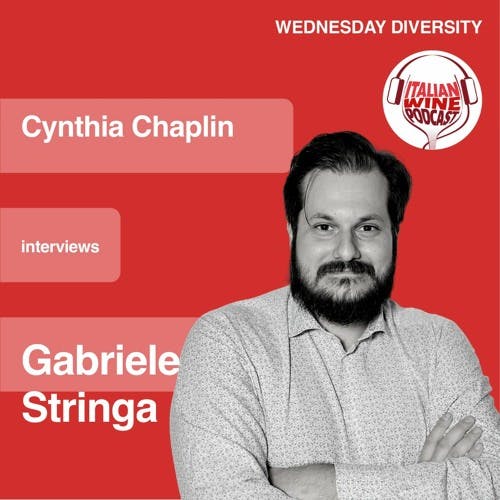
Ep. 1135 Gabriele Stringa | Voices With Cynthia Chaplin
Voices With
Episode Summary
Content Analysis Key Themes and Main Ideas 1. Innovation and disruption of traditional wine business models in Italy. 2. The growth and future of e-commerce in the Italian wine industry. 3. The rise of canned wine: addressing sustainability, portability, and new consumer markets. 4. Creative marketing and branding strategies for wine, exemplified by Zai Urban Winery. 5. The importance of quality assurance in modern wine production, regardless of packaging. 6. Navigating international markets and diverse consumer preferences for Italian wine. 7. The value of collaboration and community among Italian winemakers (e.g., Agivi association). Summary This episode of the Italian Wine Podcast features host Cynthia Chaplin in a rare in-person interview with Gabrielli Zringa, co-founder of Ferrow thirteen, Zai Urban winery, and Wines On. Zringa discusses his unconventional journey into the wine business and the innovative approaches his companies have taken to challenge traditional Italian wine models. He elaborates on Wines On, an early online wine marketplace, and the contrasting philosophies behind Ferrow thirteen (traditional bottled wines with a modern twist) and Zai Urban winery (canned wines). Zringa champions canned wine, highlighting its benefits such as sustainability, portability, and appeal to younger, more diverse markets, while emphasizing a steadfast commitment to quality, overseen by their enologist Marco. He shares insights into their extensive international export markets and praises the collaborative spirit of organizations like Agivi (the young winemakers association). The conversation also touches on Zai's unique, futuristic ""character""-based branding and the impressive reception of their canned wines, including a 91-point score for their Garganega. Takeaways - E-commerce for wine in Italy was challenging in 2014 but has gained significant traction, especially post-pandemic. - Canned wine, initially met with skepticism in Italy, is gaining acceptance and achieving high-quality recognition globally. - Zai Urban Winery's canned wines emphasize sustainability, low alcohol/calorie options, and convenience for on-the-go consumption. - Innovative marketing and storytelling (e.g., Zai's futuristic characters and video game aesthetic) can effectively attract new wine consumers across various age groups. - Quality control, often through dedicated enologists overseeing the entire production process, is paramount for modern wine producers, regardless of packaging. - Italian wine companies like Zringa's are finding significant success in diverse international markets, sometimes exporting up to 90% of their production. - Collaborative industry associations like Agivi foster progress, networking, and a less competitive, more supportive environment among Italian winemakers. - An ethos of ""inclusivity rather than exclusivity"" is key to appealing to a modern wine audience open to new experiences. Notable Quotes - ""We are now two thousand twenty two after two years of pandemic, everyone realized that there is something, outside from their winery."
About This Episode
The speakers discuss the Italian wine industry, including the importance of sustainability and the use of canned wines as marketing messages. They emphasize the need for a one-stop-shop approach for wine sourcing and the success of their own brand. They also discuss the use of packaging and the importance of the quality and storytelling of wines in the industry. They emphasize the importance of being a hipster and building a story for future reference, and their plans to expand their business and meet customers. They also discuss the potential of cans and wine to serve as an opportunistic way of experiencing wine and the importance of networking with other wineries. They express their commitment to bringing free content every day and their efforts to improve their presence in the industry.
Transcript
Welcome to the Italian wine podcast. This episode has been brought to you by the wine to wine business forum twenty twenty two. This year, we'll mark the ninth edition of the forum to be held on November seventh and eighth of twenty twenty two in Verona Italy. This year will be an exclusively in person edition. The main theme of the event will be all around wine communication. Tickets are on sale now. So for more information, please visit us at wine to wine dot net. Welcome to the Italian wine podcast. I'm Cynthia Chaaplin, and this is voices. Every Wednesday, I will be sharing conversations with international wine industry professionals discussing issues in diversity, equity, and inclusion through their personal experiences, working in the field of wine. If you enjoy the show, please subscribe and rate our show wherever you get your pods. Hey. Welcome to voices. Today is a special day because it's our four million listen day. So we are here celebrating at the Italian wine podcast. Our amazing day of four million listens. And I have a special guest today, Gabriela Zringa, who's coming here from very nearby. He's actually my neighbor, and it's great to have him here for my first ever in person, interview. Normally, everybody's on Zoom cast and Zenn cast and all different things. But this time, I've got Gabrielli sitting next to me. Thank you so much for coming. Thank you for inviting me. My pleasure. Gabriela has his companies here in Verona, and he's the co founder of Ferrow thirteen. Zai Urban winery and wines on three really different businesses that are completely bucking conventional wine business models in a region that is really known for a tradition. So this is gonna be a fun conversation. And the first thing I've gotta ask you is the heck did you get into wine? So to be, completely honest, my full name is Gabrielle Marco Binua Adri Amostri. Oh my goodness. I'm glad I didn't I didn't I didn't advance. So, my first name, declared that I'm also Affra French. So Okay. Now now we're getting to the real secrets here. So in a short way, I saw wine too many times since childhood, but, I don't come from any family physician winery. Instead, I come into the wine business, thanks to my friends, that then we created a company. But before that, it was, was a brand ambassador for GH Moon. Oh, okay. From two thousand twelve, two thousand fourteen. So, less before starting, all the wine business that, I've made the sense that you started then. Yeah. Yeah. Well, that's you've just opened the door for my first question because I know you started Weisan in two thousand and fourteen. Yeah. And I'm guessing that it's kind of a take off on Amazon, from that name. So an online wine marketplace. What was the business plan? How how has it panned out over time? And what do you think about sort of the future of online vendors? So, we set up that company, at the beginning, where me and Albert Zompini, that also is probably, the guy that allow us to create thirteen. So, if you enjoy, you can have to thank Alberto for, for that. Gabriela has very kindly brought some line today for us to try. So we're gonna we'll get into that later. At least we are from Verona. So I think it's, the best, I don't know, business card for any any meeting for Absolutely. For the people. Since then, our idea was to, because we we get into the wine business. I was working as a brand ambassador two years for GH Moon, primarily abroad in France. And, Alberto has traveled, a lot from US and other places. So we saw that abroad, the, e commerce, as a completely different implementation that, had in Italy. Absolutely. It's still better outside of Italy than it is inside. So as you can see that, we are now two thousand twenty two after two years of pandemic, everyone realized that there is something, outside from their winery. But, in two thousand fourteen, it was very, a very difficult things, but we were, completely focused there to help wineries to sell online. Directly from the winners. That's that's perfect. I think that's really what we need in Italy. There's still a lot of help that's needed. So how did you choose the wines for wines on? Primarily by our choice, our our taste, So And that's the best way. If you like it, it's easy to sell it. Yeah. Everything. And and that that's something that we we brought also in, in our company, because, there is a way of saying from our other partner, Alberto, that he comes from the wine business. Since a long time is, you can sell it only if you love it. Exactly. Exactly. Now I know you started your company with some really good friends. Yeah. As you said Alberto and and other really good friends you've had since you were a young kid. So I think having wives that you like and friends that you like in your business definitely helps get things going. So you've now got two other really different businesses in terms of ones that you are producing. Yep. So you've got Fair thirteen, which was the first one starting in two thousand and fifteen, and it's a more traditional bottled wine portfolio with some really cool labels. I'm looking at them right now. I'm sorry all of you missing can't see them, but we'll talk about them and Zai Urban winery that you started in twenty twenty, and it's a canned wine portfolio. Which is super interesting at the moment, really important in terms of sustainability and attracting a younger market. So how did your vision change from two thousand and fifteen with faro thirteen to twenty twenty with Zion Urban winery. What what prompted the move to canned wine? How'd you get that idea? It never changed because, to be honest, in two thousand fourteen, before creating, a winery itself, So becoming, producer itself, we were very, intrigued by the can itself. But, of course, we we we saw that it was usually, we work, and, we saw what happened in the US. And, if something works very well in the US in three, four years, usually cancels to Europe, in terms of, of, of, of course, on consumption and other things. So back then in two thousand fifteen, was too early stage. Or Yeah. I think Italy was not gonna look at hand wine in two thousand fifteen. Also, if you if you, look at, the first, the kind of wine in Italy, was in nineteen eighty four from Jacobati. Exactly. So so and, from nineteen eighty four, since then, There were no other kind of wine, working, as the bottle itself. And looking for quality too. Yeah. Of course. No disrespect to Yacavathi, but No. No. No. But Very different, very different from then to now. So Yeah. They they also improved the, their self, but also, the packaging, improved since then. Extremely. Extremely. And we'll get to that because I'm I am a a person who has taken a long time to bring myself around to can wine, but now I have six children. They're very into sustainability. And so I'm coming around to this, and I I focus on the quality and the storytelling. So we'll get to that. But I just wanna talk a little bit about sort of the background because you you started these two businesses with your good friends. Yeah. And now Fairo thirteen has vermouth, a white in a rose, a percent go, a sangiovese from Tuscany, a sauvignon, a negronaro, a narrow dabbana, a pinot grigio, and Zai has Corvina, organic, glieta, a merlo cab sauvignon blend, and a pinot grigio, and a Moscato. So clearly you don't have vineyards in all of these places. So how do you source the wine? Who makes the choice of where you're getting your base wines from? So, yes. We don't own This is so much of it. It's a shame, unfortunately, but it's a a really good, assumption. Of course, we are lucky because one of my, partner is also anologist, which is, Oh, okay. The son of, Franco, Bay. So, of course, all the wine, are provide from, is knowledge. But we work with, a huge amount of partner all around Italy. So we source, the grape from directly after the after, the harvest. And Marco, follow all the process, until the VINification then to the bottle. That's fantastic. So Marco is actually going and participating at the vineyards. He must be a very busy man. It's good to know that he's dry he drive a lot. I bet. My gosh. I can't even imagine. But he's had he has his eyes on the process. He's there. He's barrel tasting. He's doing all the things. He couldn't do nothing without looking at all the things because, my role for him, the quality is the best, and is the most important things. I'm so happy to hear this. I there is a lot going on right now in wines around the world trying to catch a younger consumer Yeah. And bring them in, and I I love that. But sometimes we lose that quality idea when we're trying to get together. So I'm really happy to hear that you have your own analogist who's actually going for Marco bless him. We must, yeah, never seen it. But, Zai in particular is really interesting for me. Gabriela and I were chatting before we started the interview. These wines are are referred to as characters on his website, not as wines, and the whole portfolio is based on a futuristic sort of video game style backstory where climate change catastrophe has overtaken the earth, and these characters are living in two thousand one hundred and fifty. So where did you come up with this idea? It's it's really cool. The the graphics are amazing. The design is very thoughtful. What made you head this way? Because the packaging is awesome, and definitely would catch the eye of a younger consumer. I'm old, and it even caught my eye. I think that you are not old, but you're wise, which is quite different. And, of course, it it bends. As for federal thirteen, we try to put our knowledge, our way of, express the wine in a different way. There is a way of saying that people from Verona are crazy. So we try This is true. I've lived here here. I've discovered that. We try to bring our craziness, as much as possible. Of course, the idea to, this packaging is completely different. So we had to, do something that is not typical related to wine because, In a bad way, people related the canada itself, because I don't know, for Coke, for beer, for everything, except wine. Yeah. But it's it's just a packaging. It doesn't matter, the most important things is what is inside. This is so true. That that we, we focus the ourselves. Of course, a fancy label, a nice label, it helps. You usually, people say, oh, it's only marketing, say, okay. Have a sip, and then we can discuss. It's not a problem. While we're on that subject, just, again, our our little chat before we started the interview, one of Zai's wine, which is a garganaga, the grape that makes Swave here in Veneta. Correct me if I'm wrong. Ninety one points from five star ones. Ninety one. Yeah. Ninety one points from five star ones. So this is what blind tasting does. It eliminates the packaging. It eliminates any kind of prejudice it makes, the experience of blind tasting really inclusive. And a can wine, that, you know, that is packaged, let's be honest, like a video game, was scored by some very old white people for the most part, a ninety one. So that that really tells a story in and of itself. And I think that's interesting. I'm I'm also interested in sort of the price point and the fact that this this canned wine is vegan. Yeah. It's low alcohol. It's low calorie. Yeah. And the can is sustainable. It's a very lightweight aluminum. It can be recycled. Yeah. These are things that young people are looking for. Except probably for, the low alcohol that the it's, the only thing that we saw all around because also as for Ferro thirteen, quite ninety percent of our market is, is a broad. Is not the Really? I didn't realize that. So Merrily, Italy. So You're ex you're exploring it. Yeah. Where is it going to? What's your primary market? We don't have this, the same market. Of course not because pharaoh thirteen is much more of a traditional with a twist, but bottled. And Yeah. Obviously looks like a different level of quality, although you and I But also countries is completely different. So, for example, for, the Kenneth wine Mhmm. We had, we had a really huge heat in, Israel. Wow. Amazing. And, but we are not with a fellow thirteen in Israel. Well, of course, Israel also has a very vibrant wine industry of their own. Yeah. For sure. That's quite traditional. So potentially, the younger people in Israel are going for the camp. That's fascinating. Yeah. So ninety percent is leaving Italy. Where else are you selling? We are selling, for, primarily. Ferrottina, we are now in fifty two country. Holy cow. That's great. Yeah. Thank you. In with Zai, that is really young because we're starting selling it in two thousand twenty one. And we all know what happened then in COVID? Yeah. But we are at least in fourteen company. Wow. That's amazing. But this is an incredible success story. So I'm I'm just kind of getting into the the background here. You know, aside from selling it into all these countries, and the consumer base, we know for Zai is younger than the consumer base for for Fairum thirteen more. This is Marjorie sometimes is quite the same because we see younger. Our our idea, was related to the younger generation for the canned wine but, we saw it was really incredible that we we see over sixty, over seventy, drinking with, Canada wine with no problem. This is fabulous. Pouring on the glass. Fabulous. So what what wines have you got in the cans? I said the garganica, and what else have you got? We have a Corvina, pinobrillo, Merlo cabernet. Then we are also Moscow. Sparkling white wine. That's it. And and and and also we had, primitive. Oh, fantastic. Okay. How's the feedback? I mean, what are people saying to you? I mean, the the same with canned wine for people who aren't able to see this because obviously we're not doing video. The can is two hundred and fifty millimeters. Yes. So about two glasses of wine. Two glasses is, one third of, normal, both. Yeah. So we're looking at something that you open you drink it, there's no waste. You're not gonna seal it up. You're not gonna put it back in the fridge. So portable is lightweight. You can take it on a picnic. Yeah. What about other places? Like, are you selling these sorts of things into? Stadiums or places that are typically beer experience. No. But we we are selling on a airplane company. Amazing. Which one? Is, from here is the air dormitic. Oh, wow. Fantastic. I fly AirDolomiti all the time. I haven't seen it. I'm gonna I just have to ask it. I think so. Italian wine podcast, part of the momo jumbo shrimp family. No. We had a really interesting, feedback for the Kenneth wine itself. I was, two weeks ago. I was, for one month in Asia. So I traveled from South Korea, Australia, Singapore, Philippines. So I I traveled to follow-up our importer nearby. Both for Ferro thirteen and anxiety. And the feedback were very, interesting about, the product also for the quality itself. Yeah. This is this is something I know you keep mentioning it, and I I wanna point this out too. The quality is far better. And I think canned wines when they started in the States had a reputation for being sweet, lower quality. And now that we've got companies like yours that are focusing on making sure that the content of the can really exceeds people's expectations. It it makes a huge difference. I'm looking at the labels of Ferrow Y too, which are based on your friends. So Yeah. You're the hipster. I'm deep, sir. One world is called the hipster. That was the narrow dabbana, I believe. Nero di Nigramaro. Nigramaro? When we got also the nerd. Nurd. NERadabala. The NERadabala. So that was another one of your partners. At that. Yeah. Yeah. And we have the lady. Well, it is dedicated to two older lady of the team. All the ladies of the team. Okay. I like this. So the other interesting thing, because we're neighbors. I know Xai, z a I stands for the industrial agricultural zone where we all work Yep. Where Veronica is, and your offices are near here too. You're located right here. Did you choose the name because of that, or were you aiming at something else? No. It was, it was for that, but we, change the meaning. It's not the same in English for Italian, so I that before in a in Italian and then in English, we change Xi in Zona, Temovativa. Oh, I like it. Mhmm. So highly innovative, zoom. Highly innovative zone. So it was, to to express that was something, not so traditional and to try to break something. Yeah. Absolutely. Bucking bucking the tradition, we all know the Benito is very steeped in tradition, Amaroni, cal polychilla, classico, swave, lugana, all of these days. I promise that I I I will not put any amaroni in the can because I I received I received the many, many warranty about that. But I I think that, of course, it's, it's, packaging. So is, is, like, to discuss, like, is, useful or not a distributed cap? Of course. It's the same thing. And it has to do with aging potential. And, you know, cans cans have a finite light. I'm not against the cork. So, I I think that, any customer need the potential for for theirself. Exactly. Everybody has their own way of drinking. Yeah. Their own way of whether they're gonna store wine, whether they're going to invest in wine. Amarone is expensive, let's be honest. And I think wines and cans serve such a great purpose. They they don't take up a ton of room in your house. You don't have to have a cellar. They don't take up a ton of room in your refrigerator. Exactly. Especially when you open it and you finish it. So you're not gonna have to put it back in there. There's a lot of good reasons behind this. As well as having pharaoh thirteen behind it to back it up with, as you said, more traditional glass bottles company, but still with a twist. So I'm gonna quote you. You you said one time, and I really liked this quick. The peculiarity of our wines is that they are easy to drink. Even people who are not wine experts recognize that the taste of our wine is not institutional, but is a more accessible way of experiencing wine. We aim for inclusivity rather than exclusivity. Our audience is millennials more than in mindset rather than in their actual age. People who may be twenty years old or even fifty, they want something new and they're curious. And I I think this is a fantastically open way to approach having wine business right now in twenty twenty two and going forward and approaching your customer base and your exporter base because obviously you're exporting so how does this ethos guide your business? Or how are you getting your message out to your customers? Luckily, we are traveling, and we are selling by ourselves. So there is no brand ambassador except us. But the So you all are on the road. No matter. You had to dedicate a wine. Yeah. Of course. Your lines may never see you. Yeah. We don't have time. But, the real Brandon Ambassador for us is our final customer. So, of course, we we we try to, for example, Alberto Buratto, the other my partner, last week was in, Bulgaria. Wow. Okay. And, is a a really vibrant scene for one business. And, luckily, we have a a huge partner there that, totally believe in us and and so the potential of working together So we try to express it to, to to show people how or why. It's probably something that is really wonderful because, you can like it or not. But it give you, the way to open a conversation. No matter what. Yeah. So Absolutely. It's the the story, behind the side characters or the side lines. So as I said before, is this futuristic story, but each character has a role in the story. The website is is very brief, it just builds a story that almost lets you continue to play as you drink them wise. It it will be, evolve, in the future, in also other, in other places. So it will be quite, interesting to, to see the evolve of the story. Yeah. Exactly. And are you going to add more lines to the line, do you think? We don't know. It's it's we try to express this type of, kind of, win winery as a TV series. Right. So, we assumption with the story So we we don't know where the story goes. I like it. It's open ended. People can contribute. Are you getting reviews and people We we we are starting to to have reviews. We with the Kenneth wine, we won also, the Kenneth wine competition back in the US. We received the decoder medal from, when was that? Last year. Wow. Okay. Twenty twenty one. Yep. The gold medal for canned wines in the US, and you're not a US wine company. Of course. I'm so happy. That's amazing. Okay. So while we're sitting here chatting, I think we should crack these cans open. This is the gammea, the garganaga that got ninety one points. Very cool female graphic. Sixty calories. Alright. We're gonna give this a try. Cheers. And we are pouring it into glasses because we we have good manners. We don't need to drink it from the can, but we could. I I think, it's it's it's quite is quite rude drinking immediately. I I don't know. I think it's way better on the glass because it's it's I think so too. And I think, the fact that you could drink it from the can with a straw or something, it makes it useful and fun and useful and portable. But it is a quality wine. I think decanting it from the can into a glass reminds you that this is a quality wine. It's it's not code. So Chaching, let's give it a taste. I'm excited. Okay. I'm impressed. I'm impressed. Definitely. We we chilled it briefly, but thin material of the can means it didn't take long to chill. So if we wanted to chill one of the bottles, it would have taken a good hour. This has only been chilling since we started talking. Yeah. And it's definitely Garganica. It comes straight through to me. So Yeah. And, also, for that, we we took, for Just only for this wine. So, we try to express all the foundation or the minerality of the Garganaga. So when people, it is very recognizable Garganaga. Absolutely. You you don't have to to try to guess the wine? No. But I think it's impossible on a blank taster to to tell that it comes from a kind of Clearly. Clearly. Our five star judges to help and we have masters of wine in that judging panel. So, three of them this year. So, that's a that is a big that is a big kudos about this wine. And now that I have it in my glass can also smell it now as it's opening, and it definitely has all the notes of the territory. The volcanic soil is there. It's it's clearly garganaga, and it's really fresh. It still has that acidity to it. So canning to anybody who is a naysayer about canning is is clearly not something that really affects the outcome of what's in there. So, I wanna ask you another thing. You're a member of Agivi. Yep. And we work with them. They are the sort of young winemakers of Italy association to give it a brief twist for for our listeners who aren't from Italy. Their website says that what is needed in wine right now is creating a system adopting a collective communication that increases the voice of Italian wine. So your Zai wines are modular, like all six of them fit together. And they're part of this coordinated marketing project based on this single story. Are you modeling a GV's philosophy on purpose? Is it something that you are really connecting with? What's what's going on with that? We are connecting with, unfortunately, I arrived in a GV Very late, unfortunately. I I think it will be much more, better to go, since, from the beginning, but we were focused in, other things. A GB, I think, is probably one of the best association that I have ever met. They're very dynamic. We work with them for our wine to wine business forum. They're they're a very dynamic group of young, dedicated, passionate winemakers in Italy. And also because, if you go abroad and you see how, other wineries work together, I think about, some champagne companies that they they are working together to go on the market together. So, usually, in Italy, my wine is better than yours wine, and we we can't relate together. Instead of this new generation, I'm not any more new generation. It could be a mentor now to be a worvature. I could be a mentor. It will be it will be fine. But, This idea, this, this association can, it lead us to try to, improve ourself, to create connection. So when when I saw, young people working in the wine business, my first thing, you have to join a GB because, we do seminar. We are working with, in Italy during the wine to wine that, it will be held up very soon. Seventh the eighth of November. Exactly. Go online now, wine to wine, and buy your tickets. Yeah. I think it's it's it's very important to, working together, because, there is an assumption that, my, concurrent Yes. Is not, goes against, but it means, goes with. So, of course, if you are my competitor, for me, is a is a way of thinking to say I have to improve myself. Yeah. Absolutely. Is that same thing, and with this association? So I was in Singapore for a provine. But, of course, in other occasion, I was in Vineetale, Hong Kong, before, we are allowed to have it. Hopefully, we will have it again soon. We hope so. But, of course, I was there, and there were other people from Agivi. So for us, it was also a way of, try to, do networking together. So And it sounds like a much more collaborative environment in ITV and normally in the world of Italian wine as you said where competition is is not so collaborative. It's a And this way is a little more aspirational. Yeah. You you enjoy your competitors because they make you work harder. I think that's a brilliant way to to face the future of wine, especially in Italy where we have a lot of challenges in front of us. Yeah, we won't go down that route. But before I let you go, you're a super busy guy. You are a self described hipster. I wanna know what's coming next for you and for your business and and where are you going with Fair thirteen and Wisai? So, we will presenting tomorrow. Sorry. I haven't, the opportunity to bring you, a new wine from Faro thirteen. What is it? We would call it the karma. I'm gonna pay with a k. Exactly. Because, of course, we had, free difficult, and we still have difficulty years, but we think that, what goes around comes around. So we hope that we have put, a good seeds on the soil, and we hope that, it will grow back, with, highly potential things, for everyone. And what is what is karma? What region is it from and what grade? It's still from Puya. So it will be a primitive Excellent. Excellent. As you can imagine, I I I really loved it. That region, I'm I'm not from Puya. We will get my Julian colleague in here in a minute. That would be would be nice. So Of course, our idea is to try to improve our presence, everywhere. But, now I'm very busy and very happy because I become father for the first time. So Congratulations. I think it's the best job for now. So When when was your baby? Born? It was born in November last year. So we are pretty close for the first year. So it's And, and you need to stay home. You're not meant to be traveling more. I think I will try to travel, take care with with me. It's the best way to do it. Children learn on holiday. So, well, I'm really excited for the future of Fair thirteen and Si. I'm so glad you took the time to come in today. Your products with us. We will put some photographs of this on our social media. So our listeners can see what I'm talking about because graphics are great. Thank you again. Thank you for coming in. Thank you for inviting. And, Talk to see you again. We hope you enjoy today's episode brought to you by the wine to wine business forum twenty twenty two. This year we'll mark the ninth edition of the forum to be held on November seventh and eighth twenty twenty two in verona Italy. Remember tickets are on sale now. So for more information, please visit us at wine to wine dot net. Hi, guys. I'm Joy Livingston, and I am the producer of the Italian wine podcast. Thank you for listening. We are the only wine podcast that has been doing a daily show since the pandemic began. This is a labor of love and we are committed to bringing you free content every day. Of course, this takes time and effort not to mention the cost of equipment, production, and editing. We would be grateful for your donations, suggestions, requests, and ideas. For more information on how to get in touch, go to Italian wine podcast dot com.
Episode Details
Keywords
Related Episodes

Ep. 2542 4th Anniversary Special | Voices with Cynthia Chaplin
Episode 2542
EP 2323 Shayla Varnado l Voices with Cynthia Chaplin
Episode 2323
Ep. 2223 Gary Saperstein | Voices With Cynthia Chaplin
Episode 2223

Ep. 1745 Ikimi Dubose - Woodson | Voices With Cynthia Chaplin
Episode 1745

Ep. 1416 Cristina Mercuri | Voices With Cynthia Chaplin
Episode 1416

Ep. 1290 Alex Schrecengost | Voices With Cynthia Chaplin
Episode 1290