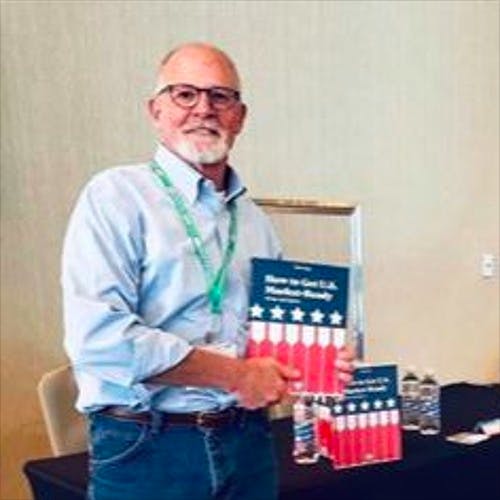
Ep. 439 Steve Raye U.S. Market-Ready | Americans Part 1
Americans Part 1
Episode Summary
Content Analysis Key Themes and Main Ideas 1. Understanding core American cultural traits and values. 2. Navigating interpersonal behavior and social etiquette in the United States. 3. Practical advice for international individuals interacting with Americans in business and social settings. 4. The importance of efficiency, punctuality, and directness in American culture. 5. Bridging cultural gaps to foster successful relationships and avoid misunderstandings. Summary In this episode of the Italian Wine Podcast, host Steve Ray, author of ""How To Get US Market Ready,"" discusses ""What makes Americans so American?"" The segment offers an in-depth look at American cultural characteristics primarily for international individuals aiming to understand and work effectively with Americans. Ray highlights key values such as individualism, self-reliance, a strong drive for success, and the belief that ""time is money."" He provides practical guidance on various aspects of American etiquette, including punctuality (15 minutes early is on time), personal space, tipping norms (20-40% post-COVID in hospitality), and appropriate conversation topics (avoiding race, gender, politics). Ray also touches upon common perceptions of Americans as pushy or loud and emphasizes the importance of clear communication, firm handshakes, and responding to RSVPs. The overall goal is to help listeners better understand American motivations and behaviors for more successful interactions. Takeaways - Americans highly value individualism, self-reliance, efficiency, and success. - Punctuality is extremely important; ""15 minutes early is on time."
About This Episode
The seventh edition of Italian wine podcast is the first full digital edition, with the speakers emphasizing the importance of understanding the motivations and behavior patterns of Americans in the wine and spirits industry. They stress the importance of work ethic and art forms in the industry, as Americans value facts over theory. Interpersonal behavior and political correctness are also emphasized, with advice on handling requests for restaurant and bars, and caution against smoking and insulting people. The speakers provide advice on how to handle requests and provide advice on fasting seat belts, avoiding tip or tip too much, and reminding people to fasten their seat belts.
Transcript
Italian wine podcast is a proud media partner of wine to wine twenty twenty. This November twenty third and twenty fourth is the seventh edition of the business forum wine to wine. Featuring seventy sessions dedicated to the wine industry. Normally held in verona Italy. This is the first ever full digital edition of the forum. On November twenty first, wine spectator will kick off the proceedings with a free to register opera wine presentation. Featuring the hundred best Italian wines of the year. Wine to Wine twenty five. Tickets available at wine to wine dot net. Thanks for tuning in. I'm Steve Ray, author of How To Get US Market Ready. And in this podcast, I'm going to share with you some of the lessons I've learned from thirty years in the wine and spirits business helping brands enter and grow in the US market. I've heard it said that experience is what you get when you don't get what you want. My goal with the book and this podcast is to share my experience and the lessons learned from it with you so you can apply those lessons and be successful in America. So let's get into it. Welcome back. This is Steve Ray with the Italian wine podcast. How to get US market ready. And this week, we're gonna be talking about What makes Americans so American? The idea of this section came up when we were doing some consulting for a region in Spain, and we did some research in advance and asked the producers what information they most wanted to learn about. And this was the one that came at the top of the list. Wanna understand why Americans act the way they do. They wanted to understand what defines Americans and how to work with them. Here's a little background story of kinda how I began thinking about this chapter. I was in the bar at the Montalioni Hotel in New Orleans, during tales of the cocktail, talking with Bob De Keiper, who's the tenth generation head of the Skiedam, Netherlands based. To Piper spirits company. Now as an American, I'm always amazed at the long history and heritage of the old world. And Bob told me his company was started way back in the sixteen hundreds. And, of course, not to be outdone, I offered up that, well, Interestingly, the town that I live in is one of the oldest in the United States. And he asked, oh, how old is that? And I replied, it was founded in sixteen seventy. After a pause and a haram, he responded with this perspective on my statement. My sync is older than that. I think the significance of that story is more in terms of perspective than anything else. And the point I'm trying to get to with this chapter is the more you under stand Americans, and certainly there's no one definition of Americans. But the more you understand the motivations and the behavior patterns, I think the better it is that you're gonna be able to interact with them in business situations. So let's get into it. What defines Americans? Individualism, self reliance, and the drive to be successful. We believe that anything is possible if you work hard enough, and that getting things accomplished and getting them done on time is a primary goal. We believe that the future is more important than the present. And we don't like to waste time. We're always in a hurry, and we think time is money, time is kept, time is filled, time is saved, used, spent, wasted, lost, gained, planned, and sometimes even killed. Competition, we love it. It brings out the best in any individual and system. And as I said, we like to do everything fast, and I'm reminded of a statement from a former boss of mine who said patience is a waste of time. We believe there's a difference between confidence and cockiness. What you've done matters, not what you say you're going to do. Education, incomes, awards, popularity, are all highly valued and rewarded. Continuing on on what defines Americans. We value facts over theory, and especially when combined with knowledge, experience, passion, and or commitment in others. We appreciate polite persistence. I'm reminded of a story a buddy of mine said, who's a sales guy and asked, you know, how do you deal with rejection? And he said, well, I don't really notice it for the first ten or fifteen times. Don't take it personally. We believe that change is good, that new and innovative is prized. Old has a very different meaning to Americans. If it's old, it's probably not good. But then again, historic, that's okay. And I think that thought really carries forward into millennials that the idea of heritage, and legacy rooted in some sort of older value has currency to the younger generation and certainly to my generation as well. I hate to say this one, but we're generally ignorant of other countries and languages. Now That may be true for the rank and file of Americans. But in the wine and spirits business, I would also add that the exact opposite is probably often the case. The the trade values and respects, the countries and cultures that produce imported brands. And and most of the time, that's because they've had a chance to travel to and meet with in person in place, the people behind those brands. We realize Americans are perceived by others as pushy, abrupt, inconsiderate and loud, and you probably have a couple of more words that you can put in there. And while I agree that, you know, that may describe the average American in a small city or town, but as a New Yorker, I'd like to think that we consider these as art forms. That was a joke. So let's move on and talk about work ethic. Just a couple of points here. Success is the highest value in American life. It's the American dream, you know, money, status, possessions, fame, respect. We like to say that rules are meant to be bent, but we never say laws are meant to be broken. When it comes to interpersonal behavior, this is kind of words to live by. Punctuality is expected in America irrespective of your home culture. We think that fifteen minutes early is on time. On time is late and late is unacceptable. Certainly with COVID nineteen, the idea of social distancing has become very important. I look forward to the day when COVID nineteen has been resolved, And those social distancing restrictions are no longer required. But the reality is that Americans like some space between us and the other person. And there's a comedian in the US named Jerry Seinfeld that made a big joke out of what we called the close talker. You don't wanna be a close talker. So, allow for a meter, meter and a half distance between someone when you're talking to them. It's not polite to ask someone's age, income, or weight. And when it comes to politeness, please thank you, and you're welcome. Should be part of most conversations. And it's rude not to respond to or at least acknowledge every thank you. Regarding smoking, don't, don't smoke. If you must ask permission first, go ahead, I suppose, But don't be surprised to hear. No. It's really taboo in America these days. And last in terms of interpersonal behavior, don't be insulted if someone calls you by your given name. Especially if they find your surname too hard to pronounce. And, basically, if your surname is not Smith or Jones, it's probably too hard for us to pronounce. Let's move on to political correctness. I've learned the hard way that you don't wanna talk about race, gender, or sexual orientation, or god forbid politics in this day and age. Americans will say pardon me or excuse me if they touch someone by accident or get too close, or if they do not understand what someone has said. Chissing is always a problem, especially, internationally. An air kiss is a greeting only if you know someone or if they initiate it. And we tend to be, I tend to be a little bit confused as to how many. I know it's one kiss on one side in South America, generally, two in Europe and three in Russia. But it also can vary in terms of country and social class. Also, which cheek to start with, I always find confusing because sometimes you end up in the middle, which isn't appreciated by most people. Hand shaking is a big communications tool in the United states. Make sure to have a firm grip. Give it one to two shakes. And if you really want to communicate deep personal connection and sincerity, hold their elbow with your left hand as you shake with the right. But, reminder, do not do this the first time you meet someone it will be considered disingenuous, not serious. When introducing colleagues, it's helpful to give a little information. Hello. Hey, this is John Jones. He designed the cell sheet I just gave you or This is Addie Smith. She looks after our business in Scandinavia. Tipping is often a confusing issue in America. We're in the hospitality business. So restaurant and bars, it's wise to tip well. I think certainly in this post COVID era. Twenty percent is an absolute minimum and doing twenty five or thirty. And sometimes even forty percent, depending on the structure of the restaurant is certainly appreciated by the help. That's basically the way they make money. Generally speaking, though, doorman will get one to two dollars for getting you a cab, one to two dollars a bag for the bellman. Cabs, generally, fifteen percent, the twenty percent really doesn't apply to them unless you're feeling generous. And a reminder to those in Germany, we sit in the back, and don't forget, remember to fasten your seat belt, especially in New York City. A good rule of thumb to follow is that the person who extended the invitation is expected to pay for the meal. Sometimes it gets confusing and uncomfortable at the end of a meal when everybody's reaching in their pocket or not to say I'll take care of this. And so the rule of thumb I follow is the person who extended the invitation? Is expected to pay for the meal. Another one that I use, not everybody follows it, but I think it works. When I'm in your country, you pay when you're in my country, I pay. And that's for entertainment meals, drinks, and the like. RSVP is kind of lost its meaning in America and certainly with the internet and email and social media. But generally speaking, if you get an RSVP, it means somebody needs to know whether you're coming or not so that they can do the planning for food or seating and whatever. So Even though a lot of people don't, you will gain respect. If when somebody asks for an RSVP, you let them know whether you're coming or not. And also, if your plans change, let them know early. Do not worry about hurting someone's feelings by responding no to an invitation. But I can guarantee if people are gonna be offended, if you say yes, and then you don't show up or attend. So the the issue here is less politeness thing than it is a courtesy thing. If you can't come say so. Times for events are important. Let's say it's a six to eight PM event. I would say get there at six or six fifteen and leave very close to the ending time stated. It's considered rude to get there early and overstay your welcome. This is Steve Ray, saying thanks again for listening on behalf of the Italian wine podcast. Imagineation is only intelligence having fun.