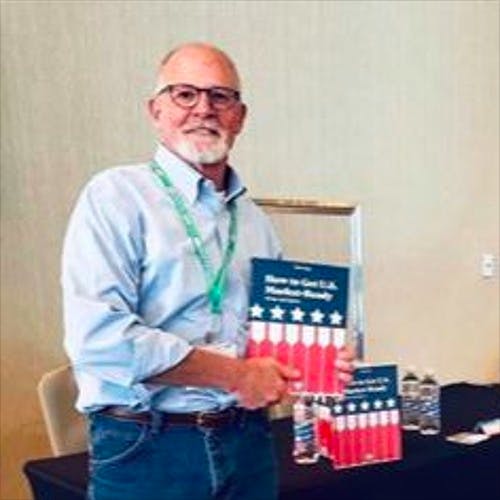
Ep. 424 Steve Raye U.S. Market-Ready | Franchise States
Franchise States
Episode Summary
Content Analysis Key Themes and Main Ideas 1. The definition and implications of ""franchise state"" laws in the US wine and spirits industry. 2. The extreme difficulty of terminating distributor contracts in franchise states due to strong distributor protections. 3. The unique landscape of distributors in franchise states, often populated by smaller, single-state entities. 4. Strategic advantages of entering franchise states early for new brands seeking distributor attention. 5. Tactics for managing underperforming distributors in franchise states, such as ""dualing"" or creating parallel brands. 6. The importance of proactive planning and preserving options when entering the US wine and spirits market. 7. The distinction between ""franchise states"" and ""control states"" in the US. Summary In this episode, Steve Ray, author of ""How To Get US Market Ready,"" delves into the complex topic of ""franchise state"" laws within the US wine and spirits industry. He clarifies that these laws are not related to typical business franchises but rather act as ""monopoly protection laws"" for distributors, making it extraordinarily difficult for suppliers or importers to terminate their contracts without specific ""good cause."" Ray explains the historical origin of these laws, tracing back to Henry Ford's car dealerships, and discusses their practical impact on the distribution landscape, which often features smaller, single-state distributors instead of national giants. Paradoxically, he suggests that starting market entry in a franchise state can be a strategic move for new brands, as they may gain more attention from these localized distributors. Ray also outlines potential strategies for dealing with underperforming distributors, such as ""dualing"" (appointing a second distributor) or launching parallel brands, emphasizing the critical need for experienced legal counsel. He stresses that understanding and strategically navigating franchise states is essential for US market entry, as avoiding them entirely is often impractical. Ray provides a list of common franchise states, noting that the specifics of these laws vary by state and product type (wine, spirits, or both), and differentiates them from ""control states."
About This Episode
The speaker, identified as the author of How To Get US Market Ready, recommends starting a US market entry in one or more franchise states as it gives the potential for problems to be solved. They suggest preserving options for potential importers and distributors, as it is difficult to manage a brand in many states. The speaker advises against creating a parallel brand name and appointing a new distributor to handle the wine and spirits business in the US, and recommends starting with a starter importer and working in a different market to avoid antagonizing importers and distributors. The speaker also recommends preserving your options as part of your go-to-market strategy and provides information on franchise states and strictures for each state.
Transcript
Thanks for tuning in. I'm Steve Ray, author of How To Get US Market Ready. And in this podcast, I'm going to share with you some of the lessons I've learned from thirty years in the wine and spirits business, helping brands enter and grow in the US market. I've heard it said that experience is what you get when you don't get what you want. My goal with the book and this podcast is to share my experience and the lessons learned from it with you so you can apply those lessons and be successful in America. So let's get into it. Hi. This is Steve Ray. And this week, we're gonna be talking about franchise states in the US. We're gonna do this week's segment as a q and a question and answer. So let's get started. First question, what does franchise state mean and why should I care? To start off with, I'm not talking about McDonald's type franchises. Instead, I'm talking about franchise state laws. And you should care because understanding the concept can have a profound impact on your business, both positively and negatively. Okay. You got me. So can you clarify what you mean by franchise state laws? I'm going to first skip the legalese and cut to the chase. Maybe a more useful, but less accurate term would be monopoly protection laws. It basically means that if you hire a point, engage, or ship, to a distributor in one of the twenty one or so US states with franchise laws, you can't ever fire them. Well, that's not a hundred percent true. You could fire them. But it would have to be for something that particular state accepts as, quote, unquote, good cause. Recognize that just you thinking they've performed poorly is not generally considered good cause. The industry insider joke is that it's easier to get a divorce granted by the pope than it is to fire your distributor in a franchise state. Now here's the legal bit. Because of the higher appoint engaged ship to, just cited, you are in effect creating a franchise between the supplier or importer and the wholesaler. The concept of franchise law applies beyond the wine and spirits industry in any given state as a way of protecting a class of participants in a given business category. The interesting thing about franchise laws is they actually started way back with Henry Ford and his concept of authorizing car dealerships in defined geographic regions. And that's kind of the basis for the whole legal definition or issue of franchise state. And what we're dealing with in the wine and spirits industry is a variation on that history. So next question is, what's the practical issue that's involved here? The answer is franchise states have a very different lineup of distributors instead of being dominated by the big boys, such as Southern or breakthrough, They are often populated with distributors that only operate in one state. And sometimes, like Tennessee or Georgia or Connecticut, only in one region of that one state. And that's good because it gives you a lot more choices and options. But it's also bad because when you make a decision, you're basically stuck with them forever. So you wanna make sure you're making the right decision. In fact, one of our non intuitive but creative recommendations to clients is to explore the idea of starting your US market entry in one or more franchise states. Usually, people avoid them as a market entry state. Specifically, because you will be dealing with distributors that have completely different business objectives than the big ten. More chance you'll catch their ear and their attention and their cooperation, less chance you'll get rejected outright. Now that's oversimplifying you quite a bit, but the point being, franchise states certainly operated under the three tier system, but they're sufficiently different enough that they need to be dealt with in a unique way. So the next question is if I can never fire them and I was unhappy with their performance, do I have any options? Good question. And the answer is, yes, you do. You can, what we say, dual them, dual, d u a l, dual them. Meaning appoint a second distributor and invest your time, support and attention behind the more cooperative one. It's not allowed in every state, and it is a very tricky path to navigate. And before you embark on this journey, you absolutely need to have an experienced beverage alcohol attorney helping you. I can't stress strongly enough that it needs to be somebody who is thoroughly familiar with the wine and spirits business in the United States. There are a few other options that are similarly not ideal, but possible. For example, you could create a parallel brand name and appoint a new distributor to handle just that brand. So that begs the next question. This sounds pretty complicated. Maybe I ought to stay away from franchise states altogether. My answer is that doesn't make a lot of sense either. It's pretty tough to manage a brand if you're not being sold in Massachusetts, Connecticut, New Jersey, Georgia. And so on. So our recommendation is to think through the franchise state issue as you are planning your go to market strategy. So instead of reacting to problems as they develop, as I've been stressing throughout this whole podcast series and the book, is anticipate the problems before you face them, and you'll be able to deal with them much, much better. So given the challenges of finding importers and distributors, the driving issue you need to be working on is preserving your options as much as possible. Let me repeat that. When you're entering the US market, you wanna preserve your options as much as possible. That's why we recommend a starter importer. The same thing is true here when you're talking your full time importers. If Southern Glaser says yes to national distribution, the issue isn't even going to be significant. But if you start with a competitor to Southern in another open market state, that may make you less attractive. Should they be interested in growing with you nationally? Case in point, We were working with a rum company from the Philippines. Had a project started with Southern wine and spirits. We were doing a test market in Tampa, but then when we wanted to expand markets, The owner always wants to expand faster than the distributor does. We were blocked by Southern. So our answer to that was, okay, then let's go to franchise states where Southern isn't. So that would be Massachusetts, New Jersey, Connecticut in the northeast, and work in that market. That way, we won't be antagonizing them by working outside of their sphere of influence, but we will be able to make the kind of headway that we needed to to satisfy the needs of the owner. I can't show it to you obviously on a podcast, but in the book, you can buy the PDF for twenty dollars, the hard copy for, I think, it's thirty five. We have a map of franchise states and two pretty yellow and purple colors to show you which ones are which. So which are the franchise states? Well, note that the name or the term franchise state is a relatively general term. Each state has individual and in some cases unique definitions and limitations. And by the way, do not confuse franchise state with control state. Those are two very different terms. They mean two very different things, and you can check out the definitions in the glossary associated with the book. Transrise states, the list that I'm gonna share with you vary depending on whether it applies to wines and spirits, just wines, or just spirits. And because of the podcast, I'm not gonna go into the detail of those. Again, reference the book for more detail. These are the franchise states, Arkansas, Connecticut, Georgia, Michigan, Minnesota, Missouri or Missouri, as they'd like to say there, Montana, Nevada, New Jersey, New Mexico, North Carolina, Ohio, Oklahoma, Tennessee, Vermont, Virginia, and Wisconsin. And as I said, they vary whether it's franchise for wines, franchise for spirits, or franchise for both, and the structure and strictures for each state is going to be different. But the point is it represents an opportunity for adding a level of strategy to your US market introduction and expansion plans by capitalizing on the unique things that define each particular state. This is Steve Ray saying thanks again for listening on behalf of the Italian wine podcast. Well, like Napoleon said, the strategy lasts until the battle starts.