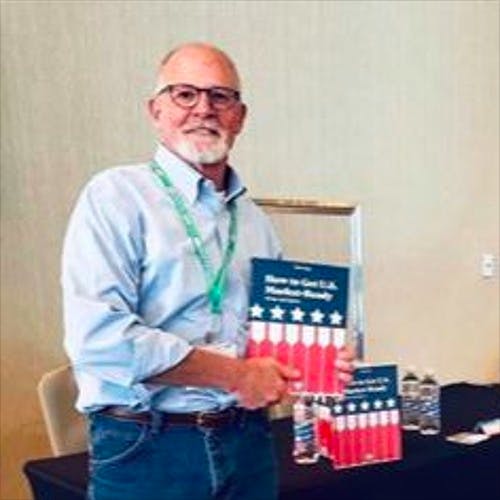
Ep. 444 Steve Raye U.S. Market-Ready | Americans Part 2
Americans
Episode Summary
Content Analysis Key Themes and Main Ideas 1. Understanding and adapting to American business communication styles. 2. Navigating US meeting etiquette, including punctuality and agendas. 3. The critical importance of written agreements in US business dealings. 4. Effective email communication and negotiation strategies in the American context. 5. Specifics of the US beverage alcohol industry culture and jargon. 6. Managing relationships with US importers, distributors, and retail accounts. 7. General social nuances influencing American business interactions. Summary In this episode of ""How to Get US Market Ready,"" host Steve Ray provides a comprehensive guide to understanding and navigating American business culture, particularly for those entering the US beverage alcohol market. He stresses the American preference for direct communication, encouraging non-Americans to ask clarifying questions and speak up if they don't understand, as silence implies understanding. Ray highlights the importance of punctuality (15 minutes early is on time), adhering to meeting agendas, and getting all agreements in writing, even if just via a confirming email. He offers advice on email etiquette (short, clear, personal addresses, prompt responses) and understanding US-specific industry jargon (e.g., 9-liter cases, Fahrenheit). Furthermore, he delves into managing expectations with importers and distributors, emphasizing that foreign suppliers must articulate ""what's in it for them."" Ray also covers best practices for account visits, the general informality of American business dress and interactions, and the nuanced meanings of common phrases like ""how are you"" or ""let's do lunch."" He concludes with tips on brand positioning (focusing on market advantage rather than just product quality) and recognizing the decision-makers in negotiations. Takeaways * Americans expect direct communication; it's crucial to ask questions and seek clarification. * Punctuality is highly valued in the US; aim to be 15 minutes early for meetings. * Agendas are essential for meetings; create one if not provided. * Always get agreements in writing, as verbal agreements hold little value. * Emails should be short, specific, clear, and responded to within 24 hours, ideally by a personal email address. * Be prepared to negotiate from initial ""unacceptable demands,"" which are often just starting positions. * Understand and use US beverage alcohol industry jargon (e.g., 9-liter case equivalents, Fahrenheit). * Importers and distributors will prioritize their own objectives; demonstrate how selling your brand benefits them. * When visiting accounts, be prepared with homework, printed materials, and a clear brand message focused on market advantage. * American business culture tends towards informality in dress and interactions, which should not be mistaken for lack of seriousness. * ""How are you"" is typically a greeting, not an invitation for a detailed personal update. * Phrases like ""let's do lunch"" are often pleasantries, not firm commitments. * Silence can be a powerful negotiation tactic in the US. * Identify the key decision-maker (""the one person who can say yes"") early in negotiations. * Never get involved in retail pricing conversations during work-withs; this is the distributor's role. Notable Quotes * ""I think Americans will assume that you understand something if you do not tell them otherwise."
About This Episode
The Italian wine market forum is a place where customers can speak at a virtual forum and create verbal agreements. The importance of communication and negotiating in a clear and specific way is emphasized, along with the use of specific industry terminology and giving customers materials. The speakers provide guidance on various topics, including the importance of showing attention to customers, negotiating with specific parties, and being prepared for meetings. Small talk and positive responses are also suggested to avoid negotiating hard, and advice is given on how to deal with customers and visitors, including not bringing up old ideas and not giving too many follow-up tasks.
Transcript
Italian wine podcast is a proud media partner of wine to wine twenty twenty. This November twenty third and twenty fourth is the seventh edition of the business forum wine to wine. Featuring seventy sessions dedicated to the wine industry. Normally held in verona Italy. This is the first ever full digital edition of the forum. On November twenty first, wine spectator will kick off the proceedings with a free to register opera wine presentation. Featuring the hundred best Italian wines of the year. Wine to Wine twenty five. Tickets available at wine to wine dot net. Thanks for tuning in. I'm Steve Ray, author of How To Get US Market Ready. And in this podcast, I'm going to share with you some of the lessons I've learned from thirty years in the wine and spirits business, helping brands enter and grow in the US market. I've heard it said that experience is what you get when you don't get what you want. My goal with the book and this podcast is to share my experience and the lessons learned from it with you so you can apply those lessons and be successful in America. So let's get into it. Welcome back to how to get US market ready presented by the Italian wine podcast. I'm Steve Ray, and previously we talked about some of the quirks or qualities that make Americans so American. This week, we continue on the same theme. However, focusing on how it applies to business situations and the beverage alcohol industry in particular. Let's talk about business meetings. I find this to be true a lot, and it kinda makes me uncomfortable. But I think Americans will assume that you understand something if you do not tell them otherwise. So even when you acknowledge, did you understand that in the chance someone's gonna look kind of baffled but say yes to be polite. Don't be uncomfortable in saying, I didn't understand that. Could you repeat that again or say it in other words? Or you might even say, you were speaking awfully fast and my English is not that great. Can you say that again and do it a little bit more slowly? I wanna understand what you're saying. That's okay, especially because they get to continue talking. And don't be afraid to ask questions if you do not understand things. And even if it's not a conversational thing someone was speaking too fast, or you didn't understand the jargon they were using, we ask a lot of questions to get down to the specifics and we affect you to do it as well. And if you don't ask the questions, the assumption is you understand everything that we just talked about, and that could lead to a whole lot of problems. And that's especially true dealing with Asian cultures. If we're speaking too fast, usually this refers to me. If I'm speaking too fast, it's okay to interrupt and ask us to speak more slowly, please. There's a real tendency for people in New York to speak very fast. I recognize that. But at the end of the day, especially when we're dealing with people where English is at best the second language, being understood is more important than getting things done quickly. So don't be afraid to ask. Hey. You're speaking really fast. Can you slow down? I wanna make sure I understand what you're saying. Here's rules to live by. In the US, fifteen minutes early is on time. On time is late, and late is unacceptable. Talking about business meetings, agendas are critical. First of all, have them. And second of all, stick to them. And if one isn't provided to you, it's incumbent on you to create one. There's a famous saying. It's not American necessarily. This is kinda universal, but it goes like this. Never attribute to malice. That, which can be adequately explained by ignorance. Don't make the assumption that someone is being nasty, disagreeable, or obstinate. They're probably just busy. So swallow your pride and follow-up repeatedly with consideration. Chances are if something is not happening is because they didn't understand it was their task to do it. Exchanging business cards is casual, and granted it's becoming less and less important these days, but expect that yours will be accepted, not looked at, and just put in a pocket. Don't be insulted if that happens, and that's especially true. I know that's a ritual when it comes to people in Asia. It's just not recognized in America that much. In America, yes, means yes, no means no, and maybe really means maybe. More information or time is needed. So pay attention when people are giving you an uneasy yeah. Or I don't know. It probably in that case, it means the opposite, and I think it's very, very helpful to force the conversation, say, okay. I wanna be very clear on whether a you understand this and b, whether you agree with it, and we'll follow along with it. So when you say, yeah, does that mean you really agree with this? So maybe not those words, but push to make sure that there's equal understanding of how a decision is left and who's to take the next step in response. This one's really important. So listen carefully. Get it in writing. A verbal agreement has very little value. A confirming email is a bare minimum to any agreement. I deal with a lot of people looking for import and distributor solutions, and they hear somebody say, yes, or yes, we'll work with you on that on the phone. I wouldn't count on that at all. Even if it's in an email, it's okay, but I would still like formal communication, not necessarily, a physical letter, But whether it's a letter of agreement, a memorandum of understanding, so that would be LOA letter of agreement, m o u is memorandum of understanding as to what was agreed upon. Doesn't have to be a formal contract, although those are good. When it gets to really important details, that must be identified specifically with definitions agreed upfront. Make sense to hire a lawyer when you're making important agreements. There's a whole wealth of lawyers who specialize in the beverage alcohol industry in the United States. If you need a referral, email me at steve at bevology inc dot com. And, I'd be glad to schedule a phone conversation to have discussion with you on who might be the right person. But this is especially true when it comes to distributor agreements and importer agreements. We'll be talking about those contracts, importer and distributor contracts in a later culture, but Basically, the point here is get it in writing. I find that Americans commonly begin negotiations with unacceptable demands or conditions. I think it's important that you recognize this as just a starting position from which they have room to negotiate. It is not meant to be insulting. It's just a place to start. Also, you'll find the pace of negotiations in the US is usually fast. We're not as comfortable dickering. We call that bargaining for terms. Kinda makes us uncomfortable. One of the most disliked experiences in America is buying a car because one person has all the information and the other one feels at a disadvantage. So we'd like to get things down in writing. Have a chance to think about them and not do back and forth verbal negotiations. But if we do, it's probably gonna happen fast. I believe strongly emails should get answered in no more than twenty four hours, but certainly the same day. But equally important, you should keep it short, specific, clear, and focused on one subject. Include your contact information on your signature line with your personal email address, not info at. That's a real problem for Americans when we see contact at or info at or sales at. That's not really a person's email. It makes us uncomfortable. That it's not necessarily going to go through. And never write emails in all capitals. It reads like you are shouting. Let's move on to a few Bev elk cultural things. And in fact, start with Bev elk. We talk about the wine and spirits business within the business, but outside the business, we talk about the beverage, alcohol, or bev elk business. But here are some guidance, words of wisdom I suppose. Don't be intimidated, and absolutely don't be unprepared. That is, unless you wanna be intimidated. Common, big companies can equal hubris. While they deliver mass and momentum and perceived safety, small companies may be more associated with innovation, creativity, nimbleness, and risk taking. And, yes, I realize this is an un oversimplification, but I think you'll have more room to move when you're negotiating with someone who is an independent winery or a craft distillery than you would be with Gallo or Diageo. Highly recommend that you talk in our terms. We talk about nine liter case equivalents, not bottles. We also talk in degrees Fahrenheit, not Celsius. It's really critical that you understand the jargon, the terms that we use, which are often shorthand. So, DA, Belment, POS, BTL for below the line. And the best way to accomplish this is to subscribe to US trade newsletters and magazines and read them regularly. I think in three months, you'll be speaking our language. But just in case you don't right away, further in this book, we will be covering a an updated glossary You can also find a copy of that glossary at w w w dot get us market ready dot com. Just put in your email address and you can download a bunch of free tools, and the glossary is one of them. When we're talking about dealing with specifically importers and distributors, which is often the first contact export suppliers are making in the United States recognize that your objectives are not your importers' objectives. We commonly get asked by suppliers why don't they just sell our brand? And the answer is because they're making more money selling other brands that you need to have a case that you're making that selling your brand will make them more money or gain them some advantage. That's the what's in it for me idea. So thinking that once you sell your brand to someone in the United States, whether it's an importer or distributor or retailer for that matter, that they're going to sell it without your assistance is probably not gonna happen. And when you visit accounts, off premise accounts, and on premise for that matter, introduce yourself to the manager as soon as you walk in. Remember, you're in their home, Let them know why you're there, who you're there from. They're gonna know as soon as you walk in the door that you're from the trade. There's kind of a look about us, I suppose. And when you visit, make sure that you come prepared. Have done a little homework. Check out the account on their website or on LinkedIn or something like that so that you're familiar with the name of the account, who the people are, how many stores they have, where they do their operations, it'll make the conversation go a lot easier. And when it comes to visiting accounts, make sure you have at least a couple of copies of all your materials available in print form. Yes. You can certainly email it at a later date. Yes. You can give them all the information on a thumb drive. By the way, don't expect to get the thumb drive back. But generally speaking, if you want them to have some information and to react to it, you're gonna have to physically hand it to them so that they can look at it. Yes. It will get thrown away right away, but at least you've given them something and you know that they've seen it. And lastly, be ready with the answers to the questions you expect, but there's a great saying in America, expect the unexpected. Don't be surprised If you get an off the wall question and having visited a lot of stores, I think you'll get a much, more comfortable feeling about the kinds of questions you might get asked, so you won't be thrown off when they get asked. The chapter we're in is what makes Americans so American, but I thought I'd give you this quick list of tips on how to deal with this. Number one, show them that you're listening by asking if you say things like, can I take notes? Let them see you taking notes. They're gonna perceive it as very flattering. You can respond by saying, so help me understand. Or what I'm hearing you say is if you repeat back to them what they're saying, there's more confidence on both sides that the communication is getting through. We believe deadlines and commitments are really important. So if one has been set, make sure you meet them. And if you haven't, acknowledge it. Do not get involved in pricing conversations on work withs or with retailers. Price structures are set by the importer and distributor directly with the retail on and off premise accounts. And the distributor salesperson is not generally empowered to discuss this. They're given a discount structure, but that's about what they're limited to talk about. In fact, in some states, it's even illegal for them to do so. So when you're on a work with, don't be pushing on the retail price. You're there to gather information not to convince someone they're wrong. Remember that your brand is more important than the liquid in the bottle. The first question you're going to get asked by anyone is generally tell me about your product. And the first response that most suppliers give is I make a really great whatever vodka, Bruno, whatever it happens to be. The reality is they're really asking, what is it about your brand that is different and unique and which gives me some advantage against my competitors in this marketplace. What's in it for me is basically what they're asking. So when someone asks, tell me about your brand, the first thing that should come out of your mouth is what you're delivering, and it may be something like we've structured our price to give significant margin to retailers, or we have fabulous promotion programs that we can do on an account specific basis to help move the product in your store. That sounds so much better than saying, my Grooner Velteliner is great. It's hard for us to say anyway. When it comes time for meals, I know it varies all over the world. And sometimes I'm surprised at, starting dinner at ten or eleven o'clock in Spain, but generally in America, we start lunch between twelve thirty and two. And dinner between six thirty and eight thirty. Maybe to nine, but not much later than that to start. We tend toward informality in dress and interactions, and that's more and more true every day. The day of everybody in the industry wearing a suit or long gone. But even if someone is looking really slack, you know, dirty jeans or an untucked shirt, do not mistake that for impoliteness or lack of seriousness. It's just the business culture in America allows for that. Lack of deference to age and authority is not disrespect. It's rooted in the American tradition of equality. So if you're not shown respect because you're older, don't be insulted. Also, try not to be insulted by our directness. We think it's a virtue. And one that I use a lot, and I get a lot of laughs from, but it absolutely works, is to signal the end of a conversation, we often say, well, I don't wanna take up any more of your time. It's a nice phrase. It's a nice way of saying that you have been giving something to me, and you're being polite in not taking more time. And frankly, it should be said more often and more importantly for most people earlier in the conversation. Small talk is important as a prelude to any conversation. Of course, it's important to show interest in the person and their life before getting to the point. But get to the point. A good subject for small talk include weather, traffic, movies, music, hobbies, food, restaurants, sport, and work. And here's a good tip from a sales friend of mine. Go online, check out the sports section of the local paper that day and see who won or lost. It can be an icebreaker even if you don't follow the sport. One of the nicest things you can say about Chicago in the summertime is how about them cubbies? And the second example is recognize that English is rich with polite conditional verb forms. So using the words would, could, can, may, and might. Try and use them in the conversation. It comes off as softer. Recognize that how are you is not a real question. It's it's really just a phrase. And respond to it with fine, great. When you really get to know somebody, they may be seriously interested in your health, but generally speaking, it's just a cultural thing. When Americans say we'll have to get together or let's do lunch sometime or see you later, recognize that it's not an invitation or a commitment to a next meeting. It's just a friendly gesture. If no date is specified by the other person, or if you don't say it and they acknowledge it, it's more than likely just a pleasantry, and nothing is committed to. I think this is true not only of Americans, but most people. We don't like silence, but because of that, it's a great negotiating tool. Think about using it, but use it wisely. And lastly, meetings usually end with a summary, with action plans, and assignments by person, and follow-up is mandatory. And I find that if the other person doesn't do the verbal summary at the end of the meeting or say I will type up my notes, and I will send you a follow-up with tasks. It's best that you do it yourself as soon after the meeting as you possibly can. And finally, recognize that in any given business meeting, there are many people who can say no, but there's only one person in the organization who can say yes. So when you're negotiating, make sure you know who that person is and determine if they are in the room or not. And that'll help guide you during the negotiating phase. So that's it for a quick list of tips in dealing with Americans in business situations. I hope you find some useful tools there. And until next week, this is Steve Ray for the Italian wine podcast. The difficulty lies not in embracing new ideas, but in escaping the old ones.