
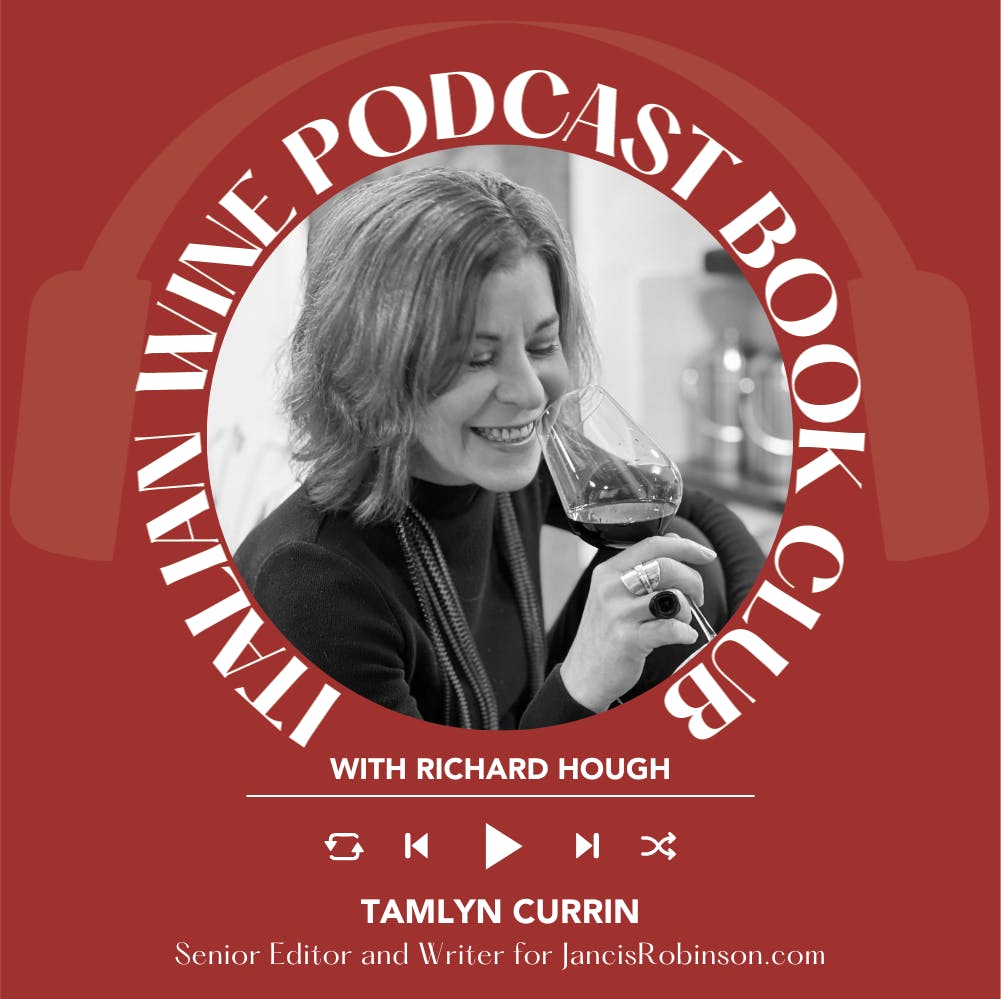
Ep. 2184 Tamlyn Currin | Book Club with Richard Hough
Book Club
Episode Summary
**Content Analysis** **Key Themes** 1. **Wine writing and communication evolution** – The shift from traditional, pedantic wine books to diverse, inclusive, and innovative wine writing that reflects changing audiences and media formats. 2. **Bibliodiversity** – The importance of diversity in wine literature styles, genres, voices, and formats to engage a wider, younger, and more varied readership. 3. **Sustainability and resilience in wine culture** – Sustainability as both an environmental concern and a cultural one, linked to diversity and community in wine writing and wine drinking. 4. **Community in writing** – The concept of “writing as a tribe,” highlighting the need for support networks in the solitary process of authoring wine books, especially amidst the rise of self-publishing. 5. **Wine industry networking and learning** – The role of events like Wine to Wine, which focus more on communication, networking, and intellectual engagement than on tastings alone. **Summary** In this podcast episode, award-winning wine writer Tamlyn Currin discusses her experiences and perspectives from the Wine to Wine festival and her work in wine writing. She underscores the concept of *bibliodiversity*—the call for greater variety in wine literature to reflect changing communication styles, audiences, and cultural backgrounds. Tamlyn highlights the challenges the wine book industry faces with shrinking readership and the loss of younger drinkers, advocating for more diverse voices, innovative formats, and inclusive narratives. She criticizes the solitary nature of book writing, especially self-publishing, arguing that writing as a community or "tribe" is essential for producing quality work. The episode also touches on the intellectual nature of wine events focused on communication and networking rather than just tasting and judging wines. Overall, Tamlyn emphasizes sustainability both environmentally and culturally as critical for the future resilience of wine culture and its storytelling. **Key Takeaways** - Wine writing needs to evolve beyond traditional, prescriptive formats to embrace *bibliodiversity*—a range of voices, genres, and formats that resonate with modern readers. - The wine book industry faces a crisis of engagement with fewer readers and younger wine drinkers, requiring fresh approaches to content and outreach. - Sustainability in wine writing parallels environmental sustainability, linking cultural resilience to diversity and innovation. - Writing wine books is often a solitary endeavor, but community support (“writing as a tribe”) significantly improves quality and reach, particularly in self-publishing contexts. - Wine to Wine events exemplify a shift in industry gatherings toward intellectual discussions and communication rather than solely tastings. - Emerging technologies and creative formats, like AI-generated characters in wine books, can expand the accessibility and appeal of wine literature. **Notable Quotes** - "Bibliodiversity for me is a diversity of styles, genres, formats, and voices in wine books." - "Diversity... is one of the most important elements of resilience." - "Writing a book can sometimes be quite a solitary experience... I led a networking session called ‘It Takes a Tribe.’" **Follow-up Questions** 1. How can wine writers effectively engage younger drinkers and readers to sustain interest in wine literature? 2. What specific new formats or technologies hold the most promise for expanding wine writing’s reach? 3. How can wine industry events better balance tasting experiences with intellectual and communicative engagement?
About This Episode
The speakers discuss the challenges of the wine industry due to lack of diversity in writing and narrative flow and editing, as well as the shift towards environmental, social, and economic justice. The book "sounds good" is a one-stacking playful and structured book with a focus on the feeling of the wine, and they express excitement for the book's approach to the natural world and its potential for more interesting books with interactive QR codes and live interactive art books. They thank the audience for their time and invite them to subscribe to the show notes. They also discuss their writing and where to read, expressing excitement for the upcoming book and their love for the region.
Transcript
But it was only when the plate arrived, it turned out to be a plate of raw pig snout. So this it's like the there were four of us. We each ordered it. So we had these massive plates of raw pig snout. And there was just no way we could eat it. So I think we had to order another couple of bottles of Beaujolais and drink the wine and discreetly put the the pig snout to one side. Go more wrong. Mhmm. Disaster. But, but it was only been the plate Hello, Lan. Welcome to book club with the Italian wine podcast. I'm your host, Richard Hoff, and I'm delighted that you're joining us as we get between the vines with some of the best wine writing out there. So sit back, pour yourself a glass, and enjoy the show with the Italian wine podcast. This month, our guest is Tamlin Curran. Tamlin is slightly different to our other guests in that she doesn't have a book to sell at the moment. Is that right, Tamlin? You're not selling a book. You've not republished a book. But she is nonetheless an award winning wine writer. Hi, Tamlin. Good morning. How are you? Hi, Richard. How are you? I'm very well. Thanks. Good. Good. Thank you for for joining us this morning. It's greatly appreciated. Now, we first met Tamlin at Book Corner at Wine to Wine in Verona in November. For those of our listeners who have never been, could you tell us a bit about your experience of Wine to Wine? What were your impressions of the event? And and why were you interested in attending the event? I'd actually never been before, and I came because Hermione, Ireland, who, is the CEO of academy Devon library contacted me and said she couldn't go. Would I be prepared to go in her place? So I kind of had zero expectations and I'd just come back from Georgia. So I was I was busy and slightly distracted, and I had a couple of things to talk about, but I had almost no expectations, really. I I loved it. It was completely different. Normally, when I go to events, everything is focused around the tasting. You visit vineyards, you speak to producers, but everything is about, wine and tasting wine, you know, especially for me in my job. This time, it was really all about communication and communication around wine and the whole, the buzz, of energy was brilliant, but it also, for me, it was a chance to think differently and think perhaps outside of the, the bubble as a wine writer, spending time listening to and talking with people who come from different parts of the wine industry, whether it's marketing or, you know, having to sell wine or sell books. Or so I think it was really refreshing for me. And, provocative, as in thought provoking and positive. And I met people that I've I've seen their names, but never met them face to face. So that was a great thing for me as well. Just good for a networking point of view. Yeah. That's a that's a really interesting perspective. There there were some tastings at at wine to wine. There are some tastings at wine to wine. But as you say, it's it's more about communication and networking and and interaction. Absolutely. And and the tastings were great because they were all blind and there really wasn't a reveal afterwards. But each tasting had a purpose to make you think and consider different things. So it wasn't about judging the wine, which is how I normally approach it. It was kind of sitting back and approaching this from a completely different point of view. So I actually found it a very intellectual couple of days. Mhmm. Good. That's interesting. And you spoke at Book Corner on the topic of bibliodiversity. Could you explain what what bibliodiversity is? Is that a a word that you invented, or is that is that one that is in common parlance? I wouldn't say it's in common parlance, but I I also can't claim to have invented it. One of my roles is, sustainability. And it's something that I'm actually doing a degree in at the moment. And and it's something that is on the lips of everybody. And and one of the things that we're all talking about is biodiversity. Diversity, I have come to believe, is one of the most important, elements of resilience. And, in the in the wine writing industry, but particularly when it comes to books, we're facing quite a few crises. People are reading less. We people have got shorter attention spans. We're reading more and more online, more and more digital stuff. And biblio diversity for me when especially when it comes to wine and and and the other the other crisis that we're facing in the wine industry is that we, are losing younger drinkers. So the the there is not a generation of wine drinkers that seems to be coming through. Biblio diversity for me is a diversity of styles, genres, formats, and voices in wine books. Because for many years, there's only really been one kind of wine book. That was fairly pedagogical, quite often pedantic. It was telling people about classic regions and telling people what they should know in a particular way and very often aimed at a certain audience and written by a particular group of people. And, so much has changed over the years in the way that we communicate. And I really believe that if we're going to go forward with a resilient, healthy, thriving wine book community industry audience, then our wine books need to reflect that communication has changed and the way that we're communicating has changed. And that also the audience has changed and the writers have changed. It's a much wider audience than it was before. So I would just love to see people looking at different book formats. I'd love to see, more younger people writing about books, people from different backgrounds. I love what Robert Joseph is doing at the moment, with his book, The Wine People, which is using AI. AI generated characters to reflect people who are not not wine trade people, but people who just drink wine in their in their everyday lives and the different ways that they drink wine. And it's quite an interactive book, which crosses the boundaries between digital and and print. And I think that that's a very exciting thing to do. So it is about more voices, more formats. Yeah. That's very interesting. And what really resonates with me there is this idea of people having shorter attention spans and people reading less. I know from my own personal experience that that is absolutely true. I guess the one area where I'm bucking the trend is this idea that people are drinking less. That's certainly not that's certainly not my experience, but but in terms of reading and concentration span, yes. And you you also led a networking session writing a good book, It Takes a Tribe. And again, speaking from personal experience, I know that writing a book can sometimes be quite a solitary experience. So can you expand a bit on this concept of writing as a tribe? It's slightly a soapbox issue for me. That's okay. I get I get to review a lot of book because one of my roles in the team at @jl.com is that I write pretty much all book reviews. So every year I can be sent up to 50 books, related to wine in one way or another. And I plow through them every year. And I've seen an increasing trend, towards and it it is based on self publishing. And I think this is because it's very, very difficult to get into publishing houses, you know, because things have changed, it is very difficult to get past the doors of the publishing houses. They've got, you know, they're real big gatekeepers. So I understand the reason for self publishing. And I'm not saying that all self published books are terrible because some of them are brilliant. Some of the best books I've reviewed are self published. But the the challenge with self publishing is that very often, the solitary exercise and process of writing a book, which is very solitary, stays solitary all the way to the end. And some of the in fact, the worst books that have come across my desk have all been self published. Two reasons people do this. One is because they're trying to cut costs and get it publis
Episode Details
Related Episodes

Ep. 2787 Prosecco Superiore by Dr Susan H. Gordon | Book Club with Richard Hough
Episode 2787

Ep. 2763 An Italian Dream by Alec Ross | Book Club with Richard Hough
Episode 2763

Ep. 2739 A Bite-Sized History of Italy by Dr Danielle Callegari | Book Club with Richard Hough
Episode 2739

Ep. 2703 How to Sound Wine Smart with Maryse Chevriere | Book Club with Richard Hough
Episode 2703

Ep. 2666 A Valpolicella Masterclass with Elisabetta Tosi and Giampiero Nadali | Book Club with Richard Hough
Episode 2666

Ep. 2608 Pub Culture, Natural Wine & Island Terroir with Katie Mather | Book Club with Richard Hough
Episode 2608