
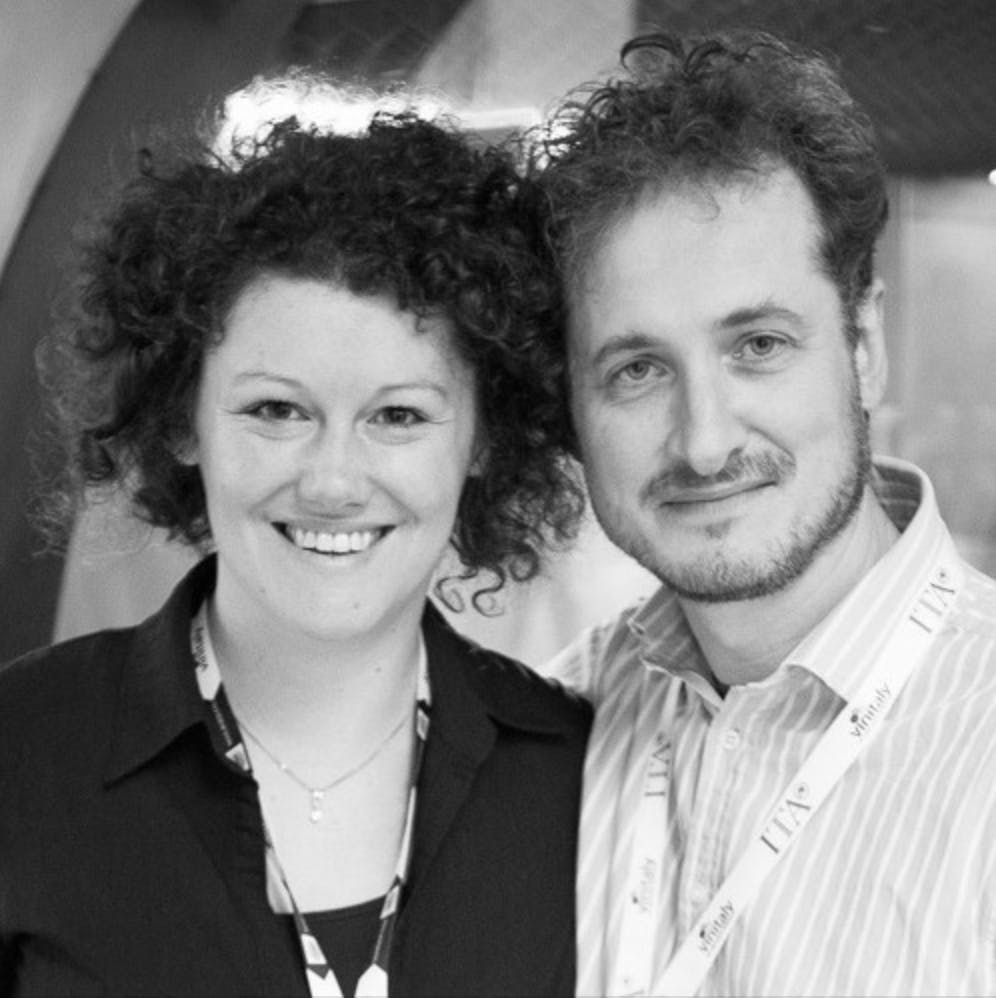
Ep. 170 Monty Waldin interviews Emma Bentley (Vin Natur - La Biancara Angiolino Maule) | Natural Wine
Natural Wine
Episode Summary
Content Analysis Key Themes and Main Ideas 1. The definition, evolution, and distinctions of natural wine. 2. The role and growth of VINatur, an influential association of natural wine producers. 3. Angelino Maule's pioneering contributions to the Italian natural wine movement. 4. The importance of scientific rigor and transparency in natural winemaking, especially regarding pesticide residues. 5. Challenges and the future trajectory of natural wine, including farming practices and market trends. Summary In this episode of the Italian Wine Podcast, host discusses natural wine with Emma Bentley, who works for VINatur, an association of natural wine producers. Bentley explains that VINatur, founded in 2006 by Angelino Maule, supports nearly 200 producers across nine European countries by providing knowledge and assistance. Angelino Maule, a Veneto winemaker, transitioned from conventional winemaking in the late 1980s to natural wine after tasting Josko Gravner's wines. He initially embraced an extremist ""do the least possible"" approach but soon realized the need for scientific rigor to produce ""clean and enjoyable"" natural wines without additives. VINatur distinguishes itself by scientifically analyzing members' wines for pesticide residues, a practice that has led to the expulsion of approximately eighty producers, sometimes due to accidental or unknowing contamination from grape suppliers. This analytical approach provides crucial transparency and rigor to the movement. Bentley highlights that the natural wine movement is largely market-driven, growing due to consumer demand for clean, enjoyable wines, rather than being a manufactured trend. She believes natural wine is here to stay, with a focus on authentic producers and an increasing integration of technology and polycultural farming practices to address challenges like vine diseases and move beyond sole reliance on copper and sulfur. Takeaways * VINatur is a significant association advocating for and supporting natural wine producers, distinguishing itself through scientific analysis of wines for purity. * Angelino Maule, a key figure in Italian natural wine, evolved from an extremist approach to one emphasizing scientific rigor for clean, high-quality natural wines. * The early natural wine movement faced issues with stability and quality due to a lack of understanding regarding non-interventionist winemaking. * Scientific testing for pesticide residues is a crucial and distinctive practice of VINatur, ensuring transparency and quality among its members. * The growth of natural wine is primarily market-driven, reflecting consumer preference for wines made with minimal intervention and without artificial additives. * The future of natural wine involves greater reliance on technology, scientific understanding of viticulture, and a shift towards polycultural farming practices to enhance sustainability and quality. Notable Quotes * ""he wanted to understand how to make a good natural wine without adding the additives, but also which was clean and enjoyable to drink."
About This Episode
The Italian wine industry was created by the French wine industry and was influenced by the French wine industry. The success of the industry is due to the art and crafting of wines made with little or no art left. The use of additives is a fundamental aspect of the craft and is a positive factor going forward. The future of natural wine is still in the market and will continue to grow, with challenges in predicting the future of the industry and the importance of being a biodiversity in making it.
Transcript
Italian wine podcast. Chinching with Italian wine people. Hello. This is the Italian wine podcast, my name is Antulu. I guess today is Emma bentley. Emma bentley works for Vinateur or VINatur. Was I said that right? Yeah. It's fine. VINatur. So what is Vignetna. Vignattva is an association of natural wine producers. It now makes up two hundred producers from nine different countries across Europe mainly Italian, and the idea is to give them knowledge to also to help them with the problems that they experience in the vineyards and in the wine cellar when making natural wine. Right. So it's a natural wine growers group. Yes. And you say you have two hundred producer members? Oh, very nearly two hundred. Yes. Right. And when was it founded and who founded it? So was originally founded in two thousand and three with Angelina Mowi and a few of his friends. They then split in two thousand and six. So the official year for Vinaardo is two thousand and six, but Angelino's been Angelina Mowi who's been doing his wine fairs since two thousand and three. So who is Angelino Mowle? And where's his vineyard? And, what does he do that's been so special? Angelino is based in a town called Gambelarra, which is in the Veneto, which is on a hill right makes a Swave, so they make predominantly gardenager wine, white wines. He started off thirty years ago, making wine from vineyards that his family owned, but that before he'd been working in pizzeria. So he starts off in the very, nineteen eighty eight was his first vintage, making wine, which was rather conventional. Then he has a turning point. He meets, he actually tastes the wine of Yosco gravna Mhmm. Has this amazing moment where he says, this is the one I want to make. This point his wife is still working in the pizzeria and he comes home, that night is like, tomorrow, I'm taking you back to that same wine bar where I dragged the gravener, and I want you to taste it. And that was his turning point where he started wanting to make natural wine. And by that, it was maybe rather extremist rye other, let's say, anarchists in the center, they didn't want to to they wanted to take away as much as possible from the wines. As in takeaway, removal the additives from the age, enzymes, all that stuff. It was maybe the competition almost between Gravnor, La Castellada, other producers in friuli to do the least possible. So whoever couldn't who wasn't filtering or wasn't adding sulfur, so that the less you did was almost like a a It's a bad job. Exactly. Then they realized though this was now fragile, you know, early noughties, early two thousand, you that, his wines were bad. They were defective. They were out of balance. Yeah. Everything. And so he wanted to understand how to make a good natural wine without adding the additives, but also which was clean and enjoyable to drink. So a bit of scientific rigor? Exactly. And that's the thing that he started then getting involved with the scientific community because, I mean, not really I said that his parents had vineyards, but they never really bottled the wine. It wasn't in his heritage or in his tradition. So he needed help from outside, and that outside was the scientific community. So what was the next stage on that on that particular journey? How did fan to a grow? Was it just he was a a ball break, and you got people to sign up, or was it, the market trends in general? What were the driving forces? It was a group of his friends who were experiencing the similar problems who grouped together to ask scientists. Obviously, in the last few years, it's grown because if you think that Vinato officially was founded in two thousand and six, we're now two thousand and eighteen. In these twelve years, we've gone from having ten to fifteen to now to almost two two hundred. And in and in countries outside Italy, which is quite important. I mean, Angelina was at the very beginning when he was starting to understand how to make natural wine was very influenced by the French, especially in the rabbi. He didn't speak French, but he managed to learn it to be able to communicate. Because the natural wine movement in many respects sort of did art in France with particular with particular success. In Paris, the the wine bars and bistros in Paris, where people were looking for wines that had a story partly, but also had a positive story in the sense that these wines were made with very little or no artifice, and they seemed to be a little bit easier to drink, a little bit lighter in terms of alcohol. And obviously, people that didn't really like sulfites, for whatever reason, actually found the very opinions. That's where it kind of started, and, and from there, it's obviously spread, kind of worldwide almost, but Italy's really picked up the baton and Angelina is a very important engineer Marni. It's a very important person in the story of Italian wine, and what I like about this approach is an unlabeled angelina's approach. And what you've just been explaining is the fact that it's not just about what you don't add. It's about what you do do to make sure the wine is is not reliant on on additives, but it actually tastes good. Mhmm. Absolutely. Yeah. So in terms of markets, in terms of your members of the Van Natua movement, you say you have wineries various countries. What are their motivations? Are some of them signing up because Van Nattu is very much on trend? Or are they signing up because they've been inspired by what Angeline Evans and his other colleagues were doing? Or is it because they think, actually, you know, well, this is gonna add a bit of scientific rigor what we're doing, we're gonna be better informed. We're gonna make fewer mistakes in the winery. I think it's a bit of both. There are definitely there's a demand from the market because we have so many requests to join me, Nantor, which are motivated by people who want to sell their wines. They wanted to participate at our wine fairs, and that's all that interests them. No. Just one exposure, basically. Exactly. But there are enough people as well, which fortunately give the the body and the beating heart of our association who want to learn how to make wine. And for that, it's a at the end of the day, we're a formative association. We would much rather help people make wine because it's a positive factor going forwards rather than hitting you overhead because it's not a good wine. Yeah. So the idea is, if some people do make mistakes or, I mean, you do analyze the wines don't you? We do. It's it's one of them really distinctive factors also that ten years ago, we started analyzing our members' wines for the pre the residual pesticides, which is something that's very, very few other associate of this kind do. And unfortunately, the problem is, I mean, we've become a little bit divisive because of this because in the last ten years, we've had to unfortunately throw out of our association, eighty different natural wine producers. Now, part of this is because they were surreptitiously adding pesticides to their vineyards. Other times, though, and I mean, in this case, we found pesticides and maybe we kept them in for other reasons, but they didn't know that for example, they were buying maybe grapes from their little confidino, their little village farmer, and it was actually a lack of knowledge and a lack of transparency on their part that we were able to reveal as a result of doing this scientific testing. Yeah. They were they they weren't trying to pull fast when they just No. They just believe that Some work. Some ones. But, you know, maybe often a family member, you know, your uncle has this little video. I said, well, can you give me your grapes? Did you spray anything? No. No. It's all clean. And they and sometimes these people actually don't they they think they're telling the truth because they don't know that what they're spraying actually not be allowed in organical biodynamics or obviously in the natural natural wine. So I think, this is an absolutely key point there, I'm just talking about that this this idea that there is an external control. It's not just a bunch of happy clappy hippies. There is some some some some rigor there, and you can find, if you send your wine to Canada, for example, as the Canadian monopolies or the Finnish monopolies will analyze wines, and even wines from vineyards that are have been bio organic buyout for twenty years, you can still find residues of stuff popping up, and that's not because they are spraying. It's just because these residues are quite persistent So do you if if I send my wine to you, I wanna become a member of your organization. And I know that I haven't sprayed anything, but I bought the vineyard twenty years ago and a and a residue pops up and I can show you all my spray schedules. Will you say, actually, yeah, we we can see that the previous owner sprayed this, or did you say, look, we're really sorry. We know you didn't spray it. We trust you, Monte, but unfortunately, it has got this residue and we can't let you into the association. In this case, and it's always a very tricky delicate situation, because it's case by case. We check every everybody who submits wine, they fill out a questionnaire. If it looks like a good fit, we'll ask for samples. We'll taste the samples if the taste, if the samples pass the tasting panel, at least one of those wines will be sent off as samples, not just pesticide, analysis, but also alpha. But talking about pesticides, in this last year, for example, I've been working with a guy who passed the tracing panel sent his wine off for the analysis, and it came back with, traces of two forms of pesticides and relatively high quantity of another pesticide. We've said, well, okay, we I'm sorry. We can't let you in. And he said there's news of, knowing that his wines has got pesticides, we've been worse than a stabbing. Right. So we then started talking because what's the problem? And we then decided, okay, we'll wait then a year. We'll analyze the wine coming through on his next year's harvest because, okay, we can't let you win that year, but let's try next year. Turns out though, next year's wine had exactly the same results. Those same two races and a high quality of this. Turns out, and I mean, this is where this is a very delicate situation. We've looked over his spraying schedules. He actually has been using a product that was sold to him as organic and yet the company in this question that sold it. So it's, in this case, it's still in suspense. We still don't know what to do yet because there are pesticides in his wines, but he bought it organically. So he bought it in his. Exactly. Well, I mean, isn't the fair thing to say, listen, mate? You gotta be a little bit more careful next time. And, you know, you're in Italy. Don't trust anybody. Not don't trust anybody, but no going with your eyes open because now what he's done is he's changed his provider and he's gone to somebody that we know sells an organic product which doesn't contain pesticides. So we're hoping that for this next year, his wine won't, which won't contain any, pesticide residues, and in that case, we'll be able to accept him. But fortunately, it's only because we did this analysis that we've got this trans parassee. And it's unfortunately most people make wine because they think, oh, it's easy, grapes, and yeast, and it will turn into this beautiful thing that'll be great to drink, but this is not always the case. So you need to go in with, you need to have knowledge you need to have transparency. And with that knowledge and transparency, you'll have more eventually get wisdom. Where do you see the future of natural wine going in general? Not not just, necessarily van Latour and Angelino? And that where do you see it, where do you see it going? Where are we gonna be in ten years? So is everybody gonna drinking natural wine? Is is everybody gonna stop spraying pesticides and herbicides? I don't know. That's not an easy, but I know it's not It's a really hard question because what I like about the natural wine movement is that it has been market driven. There was nobody in a marketing office somewhere like New York or something saying, oh, I think that is the next trend for this next year's brings Summit election is going to be natural wine. No. If anything, they're trying to suppress this movement, but the fact that as you said before Monty, that the wine are good to drink. They're enjoyable. People like them mean that this was supposed to have been a trend that would have blown over by now, but it's here at least in its growing momentum. Yeah. I see it to stay. You just don't wanna go away. So it's still going to be here in ten years. I definitely feel though that there will be the people that, let's say, the true authentic people who will grow in those ten years, and they will have a lot of success. There will also be the people that the ones that you are making, let's say, natural, why now, because it's trendy, who will realize that it's actually too hard in some cases to really farm organically, and they will go go back to more conventional farming. Although in terms of numbers, I mean, the organics is growing pretty much everywhere, and biodynamics is going pretty much everywhere. So I think I think what kind of helps in a way is we just have a lot more technology than we did in terms of predicting weather and the risk fungal disease striking, when to put the grapes, also in the wine, we've got a lot more, we we know a lot more about yeast and bacteria and fungi, all that sort of stuff. So in a way, I I that's why I think that we've got the backbone now of the technical side. Obviously, there were new things to discover, but I think I just think it really is gonna go. I just partly because, importers and restaurateurs and wine barriers are getting savvy to the fact that people have worked out that wine isn't always clean and green. Mhmm. Definitely. Because we've traded off that for having the wine industry is like it's all clean and the birds are singing and and all the rest but it's really not the case. Mhmm. I think that's definitely true on if you're looking at the consumer perspective. In terms of Viticulture perspective, right now, also, we acknowledge is growing. I mean, we are understanding how to farm, even in wet years, even difficult years, just using copper and sulfur. I think the challenge, and this is gonna be let's hope something we maybe have resolved in ten years' time is to be less dependent on just copper and sulfur in terms of our treatments for vine diseases. Well, that that's the that when the next step will be people using, compost teas, which are full Michaelism, they colonize colonize the leaves, and they occupy the space at the bad fungal, organism such as perinoperate or idiom. So they basically take their space. So that that for me is the next thing and to do those properly then you really need to be biodiversity you can make these sprays out of, animal manure. So cows, for example, for me, this we're moving back towards polycultural wine growing, rather than monoculture. You can't make natural wine well or bad enough granite in a monoculture. I definitely I definitely agree with you on that. Great. Alright, Emma. I just wanna say thanks very much to my guest, Emma Bentney, talking about natural wine and the Van Natura, that organization, which is based in Northern Italy, which was the brainchild of Angelino Mowle of the La Bianca winery. And if you go to Van Natur event, you'll have a lot of fun. You'll taste a lot of wine from the really, weirdy, beardy shit to some really beautifully pristine wines that just radiate health and happiness. You gotta go there and, and taste some of these wines, and you have a great time and, and you'll see what the future of why it looks like. Thanks, Emma. Thank you very much. Follow Italian wine podcast on Facebook and Instagram.
Episode Details
Keywords
Related Episodes

Ep 2339 A Blind Tasting Journey exploring the nature of Natural Wine with Isabelle Legeron MW and Robert Joseph | wine2wine Business Forum 2024
Episode 2339
Ep. 178 Monty Waldin interviews Mark Cuff (The Living Vine) | Natural Wine
Episode 178

Ep. 177 Monty Waldin interviews Adriano Zago (Biodynamic Viticulture Consultant & Enologist) | Natural Wine
Episode 177
Ep. 33 Monty Waldin interviews Master Sommelier and Natural Wine enthusiast Pascaline Lepeltier | Natural Wine
Episode 33

Ep. 32 Monty Waldin interviews Wine Writer Alice Feiring | Natural Wine
Episode 32