
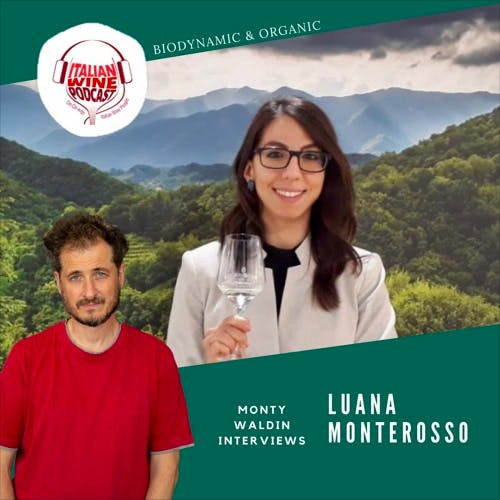
Ep. 640 Luana Monterosso | Biodynamic & Organic
Biodynamic & Organic
Episode Summary
Content Analysis Key Themes and Main Ideas 1. The history and pioneering role of Bartolomeo winery in Valdobbiadene Prosecco production. 2. The distinctiveness and characteristics of different Prosecco styles (Brut, Extra Dry, Rive, Cartizze) from Bartolomeo. 3. The significance of sustainability and organic practices in modern winemaking. 4. Strategies for international market development and brand differentiation for Prosecco. 5. The importance of consumer education regarding Prosecco's diverse categories, terroir, and production methods. 6. The cultural and lifestyle aspects of Prosecco beyond its status as a sparkling wine. Summary In this episode of the Italian Wine Podcast, host Monte Walden interviews Luana Monteroso, the Export Manager at Cantina Bartolomeo. Luana details the rich history of the Bartolomeo winery, founded in 1949 by Giuliano Bartolomeo, a pivotal figure who pioneered the Brut style of Prosecco and dedicated himself to elevating its prestige. She explains how the winery, now managed by Giuliano's wife and four daughters, balances tradition with innovation, particularly in sustainability efforts. Luana describes various Bartolomeo Prosecco offerings, including their flagship single-vineyard Riva, the bestselling Prior Brut, the historic Vanderosa Extra Dry, and their organic Yus Naturra. The discussion then shifts to export markets, where Italy accounts for 70% of sales, while the remaining 30% reaches over 54 countries. Luana highlights the challenges and opportunities in markets like China (due to brand awareness), the USA (requiring state-specific strategies), and emerging regions like Africa and the Middle East, emphasizing the critical role of strong importer relationships. She also stresses the need for consumer education to differentiate between Prosecco DOC and DOCG, its diverse terroirs, and the labor-intensive, hand-harvested nature of Valdobbiadene DOCG. Takeaways - Cantina Bartolomeo is a historical Prosecco producer in Valdobbiadene, renowned for its quality and pioneering spirit. - Giuliano Bartolomeo was instrumental in establishing Prosecco's reputation and was the first to produce a Brut style, which is now popular globally. - The winery, run by Giuliano's female family members, prioritizes both traditional winemaking and modern sustainability practices. - Bartolomeo offers a range of Prosecco styles, including single-vineyard expressions (Rive) and organic options, catering to diverse preferences. - While initial investment in sustainability is high, it leads to long-term economic benefits and reflects a commitment to environmental stewardship. - Export markets, though challenging, are crucial, with a focus on building long-term ""partner"" relationships with importers rather than just client interactions. - China and the USA are complex but high-potential markets requiring tailored communication and brand-building strategies. - Consumer education is vital to help buyers understand the nuances, quality, and diverse categories within Prosecco, especially the difference between DOC and DOCG. - Valdobbiadene DOCG Prosecco production is labor-intensive, often involving manual harvesting on steep slopes, which contributes to its high quality and value. - Prosecco is presented as a versatile, lifestyle-oriented wine with a rich history, diverse terroir, and significant human effort behind its production. Notable Quotes - ""Juliano Bartolomeo was the first producer of the area to reduce the sugar, the sugar level in the Prosecco style. It created the first Brut Prosecco..."
About This Episode
The speakers discuss the history and characteristics of Italian wine wines, including Barcelona wine and River and glera grape. They emphasize the importance of sustainability and investing in new technologies and energy efficiency in their business. They also discuss their plans for brand differentiation in the domestic and international markets, including their use of raw fish and risotto with V hotels. They emphasize the importance of understanding the seasonality of the wine production area and the benefits of Proseco. They also discuss their plans for training people and creating a strong relationship with importer, social media presence, and consumer education. They emphasize the importance of authenticating the production area and the differences between the two types of Prosecco. They also discuss their use of Proseco in the precycle category and how it can be used with other wines.
Transcript
Italian wine podcast. Chinchin with Italian wine people. Hi, everybody. Italian wine podcast celebrates its fourth anniversary this year, and we all love the great content they put out every day. Chinching with Italian wine people has become a big part of our day, and the team in verona needs to feel our love. Reducing the show is not easy folks, hurting all those hosts, getting the interviews, dropping the clubhouse recordings, not to mention editing all the material. Let's give them a tangible fan hug with a contribution to all their costs. Head to Italian wine podcast dot com and click donate to show your love. Hello. This is the Italian wine podcast. My name is Monte Walden. My guest today is Luana Monteroso, who is the export manager at Cantina Boro Have I got that right? Hi. Hello, everybody. Oh, yeah. I've got all my syllables. Anyway, how long have you been export manager there? So, I've been expert manager in for the last three years and a half now. Yeah. So, basically, deal we don't enter international markets. Of course, my main focus is sales, but also promoting the brands all over the world. Okay. Give us the history of the estate first and foremost. Yes. Perfect. So, Bartolomile is one of the historical prosecco producers. We are located in Baldwin, so in Venator region. Virtolomile mainly produce prosecco superior dot u c g. We have different style of prosecco superiority UCG, and also a little part of our production is dedicated to, for seco docitreviso. Just to give you some details about the history, the winery was funded by, Juliano Bartolomeola in nineteen forty nine. Of course Juliano was born into a vine growing family tradition, started in the eighteenth century. I can say that Juliano was a very important personality in Volubyadane. At that time, when he was a young man, the second world war came to an end. And, of course, a lot of vineyards were destroyed by the war. So Juliano's main mission was to help the farmers, in restore, those vineyards. And, his dream was, of course, to elevate prosecco. And the the idea was to make prosecco, a prestigious sparkling wine, a wine known throughout the world. Today, the winery is managed by Juliana's family. So we have his wife, Fortavia, and, their four daughters. All the the birth to the mute women, they play different roles, in the management of the winery. And, this is very important since it's a family company, It's also a female family. And, it's important to say that they always pay attention to to the tradition. So they respect tradition started by Juliano. But on the other side, I can say that they really invest in resources, energy, and also, in order to ensure the product quality and, a lot of investing in sustainability. Just when you talk about, Julano, He was very important in in terms of prosecco, not just in terms of sales, but also on the technical side when he studied, winemaking when he was younger. Why was he so important? So, Julana was very, very important personality, in the production area because Juliano Bartolomeo was the first producer of the area to reduce the sugar, the sugar level in the prosecco style. It created the first brute prosecco, and, the idea was to make prosecco call more, appealing to the international market and, to create a more modern style in the precycle category. Actually, was very right, since today, the most sold category or per se, all over the world is, the root style. So we lower, residual sugar. Okay. I mean, just per what's your personal choice is, you know, if if if if I come around, for dinner, what would you serve me? Which wine would you serve me with food? Okay. So speaking about Barcelona wine, for Schumer, I will introduce, our flagship wine. Our flagship one is this is a river. So it's a river. And the the name of the river is in Baldwin, we have, I mean, in all the area, we have, in total forty three riva, and they I can say the riva is the best expression of the territory. It really identified the one with the land and the place where it come from. And so in terms of, our wines, so, I can say this is, the residual sugar is zero. So it's a bone dry prosecco. So it's a single vineer. It's a glera grape, a hundred percent. We don't do any blend. And only, of course, we take all the glera grape coming from this single vineer. It's a very important wine also in terms of the second fermentation process, I can say it's a very long term act, and we are speaking about ten months in contact with the youth in the tank, of course. Since it's a Sharmouth method. Just in terms of verification process in, in the time of the contact with the yeast, we do one button earlier today. This is done during the first month. And then two button hours per week from the second to the tenth amount. Speaking about the testing notes is very fresh. It has a lot of hints of green apple of spices, spicenet like thyme, oregano, sometimes also bread crust seems, you know, due to the long contact with the yeast. I can say it's a very clean and persistent per septal. And, we can see that on one side, you have all the freshness and the fruitiness of the prosecco style. And on the on the second, on the other side, we have this, yeast tea flavors, very, very delicate. So if I was gonna ask you to describe, say, three or four prosseccos from the from the company. And I'd like one of them for food, one of them is a sort of celebration wine, one is an everyday wine, and then one other one of your choice. Which wines would you choose? Yeah. For Thank you for the patience. So, of course, the grand decoder fund authority, which I just mentioned, I will say, it goes very well with food. So food fairy, it will be ideal. Since you can pair a lot of different dishes from, veggies, but also to more important dish, let's say a risotto, for example, or pasta. It's very delicate, but it's also it has a very good body as well. So it go it it balanced very well all the ingredients of the dish. And speaking about an everyday prosecco, very, very subtle modern style, I can speak about Prior, Prior prosecco Superior ERCG. This is part of our traditional collection. In this collection, we have different prosseco superior, according to the residual sugar. In particular, prior is a a root style with eight grams of residual sugar. Hundred percent glarea and is also vintage for sexual. I can say for you, it's our best seller because it's very versatile. You can, have a block of three or by itself. You can pair with aperitif or also at the restaurant with a lot of different dishes. Just for curiosity about the name, prior in a Italian, language means the first actually is a latin word. And it means the first, since I first mentioned that Zuiano was the first producer of the area to create a group style of prosecco. So that's why we dedicate this point Giano. I'm going to another, wine, which is more historic wine, and I can say more for celebration, Preseco. I can say van derosa. Van derosa is, again, Preseco's superior EBCG, this time is extra dry. So with a little bit more of residual sugar, we are speaking about eighteen graft per liter. This is the traditional style of prossecco. Is a very elegant, very complex, and what best to characterize is the fruity and flower aspect and also the creaminess. So on one side, you have this huge minerality that, of course, comes from the the terroir, but you also have the creaminess, coming from the contact with the gift. Van derosa, again, is an Italian name, And, it has it is a very historic wine for us. Since, van derosa means red band or red line. So I will explain the the meaning of that. So in the past, Juliano used to select the best expression of extra dry presecco, and, in his seller, all these, a beautiful, expression of prosseco. He didn't want to sell, use prosseco. So instead, he wanted to share this beautiful wines with the friends, with closest friends and family. And so from that, reason, he just signed, with a red pencil each bottle just to make sure they were stocked and saved, for, you know, this occasion. So after many years, the family decided to dedicate a level on some selections of Glera Grape. And so, Vanderosta was born by the selection of the best glitter grapes in twenty different vineyards in Baltimore. So the the last wine, if I can choose the wine for myself, you know. For sure, I will go with the organic So, you know, we are a sustainable winery, but we also have a organic certified prosseco superior. This is called Yus Naturra, which is, like, natural law. This is very important for us. It's a brute style, professorco, limited production. So we are speaking above sixteen thousand bottles per year, and I will choose that, because it is the best expression of the traditional flavors of, of the land of Aldubyadine. But it's also very, you know, crispy. It has a lot of minerality and a lot of, you know, tropical fruits sometimes. Yeah. I think it has a great minerality, which goes very well. With, you know, with all the occasions. Do do you think the company will slowly move more of its vineyards to organics or not? So, actually, we have just five vectors of vineyards into which are being converted into organic growing system. And, it was in two thousand and eight. Two of these actors, Sabineert are located in Baldwin inside our park, which is called Parco de la flandette. Maybe I can explain later about that. The idea to be, completely certified organic is not something that is in our project since it's very, very hard to reach. You know, the area in Waldovia Adene or is I mean, there are a lot of little vineyards, little, plot of vineyards, you know, they are all close to each other. So it's almost impossible to convert all the appolation into organic. So before, being certified, organic in the total of our production, the operation I think should be, you know, should reach the the certification for in the total. So that's why. But for sure, we are following our sustainability, projects And, the idea is to, get the one who is certified with other certification into the sustainability management. This is, something that we will do for sure. When you do the the sustainability, when you're going on, along the sustainability track, Are there economic advantages as well of going that way or or not? Does it cost more to be sustainable? So on one side, it costs more in terms of investment. So for sure, the starting point is is expensive in terms of invest in the new technologies, you know, for example, the solar panel system or water purifying machine, all the the technologies that you need in order to convert your winery in a sustainable management. But, of course, after in terms of saving, energy, saving also time and, all the other resources, it will be more convenient for everybody for sure. So this is just the starting point with, you know, more investment to do. But then you will have, you know, more easy way, also to in a kind of lifestyle, you know, be sustainable. It's not just something that you do for for business. It's something that you do for, you know, human health, to be, respectful for the environment around you. And also to respect the land where we come from, which is everything, I think. Okay. You invite me for dinner, your house, and, you have to choose three prosecco wines and three dishes. What would you choose Okay. Good. So I think we'll start with some raw fish because it's by, you know, the ideal way to start for me. So some raw dishes with the the bone dry per second. So as I say before, it doesn't overwhelm, you know, the the dish. So it it does respect the balance of the ingredients. So we'll we'll go for that. Then, for sure, risotto, Resoto is one of the best dishes, for me. I love Resoto in all the variety that you can that you can have. For sure, we can have a risotto with Vasil, So Basilil and Prosecco as well with Sotto. And I will pair that with a use not to re organic, prossecco Cetera UCG from Barcelona. And, I think we will land with a dessert. Why not? In a sweet way, So dessert, maybe something like, you know, just, like, chocolate mousse with some berries, like strawberries, some berries, etcetera, and pair with our you know, it's the a crew area in Baldwin. It's just the one hundred eight hectares of vineyards. It is called, I mean, it's considered a crew area. The top quality for prosecco severity UCG. Here, the land is very steep, and also glare graves are reaching natural sugars. And we produce Cartice in dry style. So it's a kind of sweet per se. But never too much, you know, never too sticky. It has a very good minerality going through. It's, it's very well balanced wine, and I will finish the the meal with Cartice for sure. In terms of sales, how important is the domestic market to you? Well, the domestic market is very, very important. Bartolomeo is one of the historical producers. So, Italy, of course, it's very, very important. I can say that seventy percent of our sales go to Italy, goes to Italy and the thirty percent in the export markets. In terms of the international markets, we are at the moment. We are present in, above fifty four countries, all over the world. So some of these countries are more historical, of course, in terms of a long tradition and, the countries where we start, exporting our wines. They are in Europe, so Germany, Switzerland, and, for sure, Other important countries for us are, Russia, Ukraine and dungary. These three are very important in terms of, volumes for sure. Hey, guys. This is a brief intermission to give a shout out to our new sponsor, Federal Wine, the largest wine store in Italy since nineteen twenty. We are delighted to have them on board and thank them for their generous support and our new t shirts. Find out more on Italian wine podcast dot com. Now back to the show. Which is the which is the hardest, market to, in terms of pricing, which is the most competitive? Well, the, in general, the most, difficult market for us or for Bartolomeo, for sure is a China. I will I will not say in terms of prizes actually, but just in terms of brand awareness, China is very, very difficult, since you need a lot of communication to do, you need to invest in communication in, social media marketing in a different way. You know, China is completely different from all the other countries, but I think there is a huge potential not only for prossecco, but in general for Italian one producer, I think that Italy at the moment is only the six percent in value for the total import in China. So there is a huge potential, you know, to explore. So I think China will be I mean, it's the difficult one, but also the country with more potential for us. So in general, also Asia, Asian countries where we have tried to focusing our communication, but also our, you know, strategies, commercial strategies. And, among, like, the focus, the, at the moment, we are focusing not only in China and Asia countries, but also United States, where we are trying to, you know, promote more of the brands and increase the brand awareness in, in this market. So how do you go about brand differentiation in in America, for example. How what do you have to do to to stand out? I mean, in America, for sure, we work with the, non national importer, but we prefer to go on it, states by itself, you know. So we started from California. We went to Washington State as well in New York. Now Miami. So we are trying to focusing on each state because they are so different, completely different. No. This I mean, the same communication strategy, the same commercial, strategies, you know, it doesn't work for all the states. For sure, you have to improve your visibility. And I think the social media, they really help the winery to communicate more the values, the history, and also the quality of the product. But this is the base for all the markets, you know, just to invest in the communication. And I think that in terms of communication, we need to invest in consumer education. This is very important to raise awareness. I mean, if you want to communicate quality, if you want to communicate values, we need to address to the final consumers. And, I think that also last year, I mean, the pandemic situation with all the bad things that, bring. Of course, gave us the possibility to invest more in our social media presence. And also in the communication with the digital instruments. Interesting. Yeah. Very competitive, the US, obviously. And what about emerging markets for you? I mean, among, among, emerging markets it, I will say Africa. So we start in South Africa, with an import, company there. They are very, very good. They're good doing a very good job. Also, in terms of communication, and in general, Africa is an emerging market for us. So we are trying to, you know, find the best way to enter in other states in Africa, but also the Middle East. So these two big area, I think they are more emerging for us, and, we are focusing for our food for a vision. You know, what is important for us, apart from, you know, which market you choose to enter in, is to establish a very strong relationship with importer. I always say that we don't have clients all over the world, but we do have partners we work with. This is something important. I mean, if you want to build the brand, you have to build the relationship first with your important. The importer is very important for you, not only in terms of sales, but in terms of promoting the wine and also help you identifying the best way, you know, to enter the market and to promote in the wide. So that's also, why we, personally, we are would be personally, you know, we try. To be per present in the market. Not in the last year or for sure, but we usually, try to be personally present there in order to support our partners with market visit. For example, wine tasting, events, but also, staff training, educational activities, which are, of course, fundamental. So what as when you're training people, what are the typical questions that they ask you? What what do they don't understand about prosecco? That they want you to help them, get get clear in their minds exactly what the brand values are and also the technical side. Yeah. Sure. This is a good question. Actually, the first question they asked me is, the production area. They know what is per second general. They know about, sparkling white, white from Italy, but they, don't know exactly the production area. And the category inside Rosecho, wine. So I try I always try to, start by speaking about the production area and the, you know, diversification between the deal see operation, the docG, and all there is inside of usage operation. For example, Cartice or Vive and all the selection. So this is, my starting point, you know, make people aware about a different site inside perseco category. You know? Usually, the general idea is that perseco is a sparkling wine, and, it's from Italy, maybe Veneter region. Good minerality, little bit of sugar, but there is not a lot of knowledge you know, about. So this is important for us in terms of explaining where we come from. And, This is important because also, all our wines reflect the terroir, but also they reflect techniques, verification techniques, and, you, I mean, you have different styles inside, you know, what is important as well are all the elements that characterize for sekou to better the UCG. So that's briefly, it's important to address the, the attention to the location to this area, which is like Hillley region. So it's a mountain Hillley region, and it has a perfect location. You know, it's located between the dolomites on one side, and the adriatic seek on the other. So all these beautiful elements, which creates the the microclimate, which is perfect for, when growing. And, you know, all the soil composition as well, the elevation the exposition to the sun, all the elements that's characterized and give the quality, to from. What what is the question that you most get asked, when you're traveling about the prosseco region, people clear about the grape variety or the topography or the soil types or the the the winemaking aspect? Well, I think they are aware about the authentication process So they know that Sharma method is different from the Champagne method. So they know how about that. What they actually, they asked me, is to explain the difference between perse code you see and perse code ERCG. This is, I mean, the the first question they have been. So just to give you them the the elements of authenticity, So what, what are the, which are the, characteristics of UC, which are the characteristics of UCG. And so in this time, I really stress the importance of all the confirmation of the land, the soil composition, the elevation, and all these, elements, we highlight the, diverse expressions of Conelianna Valduardo vyado as well. And they also are curious about and river. Cartice, of course, is is most known. You know? A lot of people know about Cartice area. They know about the premium quality of this wine, but, speaking about river, this is more, you know, a new operation. And they are very interested in knowing more about the characteristics coverage, why it's so important and why it differs from all the other expression or prosecco. And, in these terms, I always say that, I mean, Rive, I've been selected for, to be the best expression of a single terroir and they are basically single vineyards located on the best, Ziplops of the d o c g area. And, they differ from the combination of soil, from from exposition and, microclimate as well. Yeah. The rive, my idea is, it's a great idea for the region, I think. It's a it's a way of, creating a conversation, I guess. Yeah? Yeah. Yeah. For sure. It gives you something to be different, you know, and to elevate your prosecco style and also to go deeply in knowing more about the quality. You know, sometimes, people, I mean, not a lot of people have been in the place, you know, in the area. So they didn't see all these steeps drops, of these vineyards. And so it is almost, impossible to understand the difficulty of well, of harvest those vineyards. For example, it is also important to say that even they are very, very steep. And, everything is hand, is is made by hand. So no machine. We we kind of bring machine in the vineyards. And this, of course, increase the quality and the value of the preseclity to produce there. Just to give you a takeaway here, it has been calculated to be six hundred hours of work in one year, in the presecco superiority area. Which is very, very much. You know? Yeah. That's what it's gonna be. It's funny that people see prossecco in general. There's a sort of a mass market product, but when you talk about that eBay, as you said, about this sort of handmade, wines people, almost don't believe you. Yeah. Yes. Yes. Correct. I mean, as I said before, the the general idea is that prosaicco is not a sparkling wine, you know. But, I'll, I'll, I mean, prosaic, of course, we all know is a lifestyle is, is also you know, conviviality. It puts different together different cultures together around the same table. We can say. But people have to understand that prosecco includes many, many elements. Include soils, families, people, history, a different and worthwhile, wine grower efforts. So per sekou is very versatile. Of course, it's approachable is a very international feeling style. Everybody knows prosecco. But what is, to do here is to explore what is behind prosecco category, you know, So what is Proseco superiority UCG? Why you find Secco superiority UCG to be expensive, you know, more expensive than Proseco doc. This is something that we stress about. So, I mean, when we describe our wines, we always make sure to start speaking about the territory. This is our identity, is who we are. And, you know, we try to respect our history our tradition. And, by saying that, we use as well Riva and Cartice to let them know that we produce single vineyards, that we produce, selections of prosecco, and that we can speak about authenticity and quality as well in the precycle category. Okay. Final question. You're having dinner this evening with, with a friend or whoever, in a restaurant. What would be your ideal prosecco and your ideal dish. Okay. So, can I say always about prosecco, bertolomeole? C c. C c. Yeah. Okay. Perfect. So, as I said before, a risotto, all the kind of a risotto, with all the ingredients, so it can be as Vargas, it can be, basil as well. So very, very simple, so Yeah? Fungi. Oh, Fungi as well. Why not? In the best season, you know, so, according to this season, we can choose a different resource of style for sure, and I will pair it with the use not to it origami. Mean, it's not off because organic, it's a popular trend, but I really can say that, this is a very is is a wine, it's a prosecco that really express the territory and, give you, you know, the typical freshness of all the other area. But it give you also all the Mediterranean spices. So you really feel Italian style. And so, yeah, result to pair it with a glass use not to do it at Presekou to better the UCG. I did actually. We did actually agree a fee to mention organics for the last part of the interview. I'm joking. Yeah, interesting that you choose the the organic one, but, That wasn't, rehearsed by the way. So, you know, even a great interviewee, by the way, you've explained, the intricacies of, of Prosecco, very, very clearly. And, you, obviously, very, very good at your job, and you you seem to really love your job as well. And, you brought the region to life today, and, it's been really lovely hearing you. And, we'll get you back again. I'm sure at some stage on the podcast. Keep all the good work. Thank you. Thank you very much. This is right. I love my, my job. This is the patient, you know, for me. And I think it's a beautiful work in the wine business. So everybody work in the wine business. I think it's very happy to do. So thank you for the interview, for the introduction, for this, possibility to speak about Bartolomio and prosecco's superior agency in general. Of course, I invite everybody to come to Baldwin to visit us in our in our park with the La Filamette, in, in Aldo. Perfect. Thanks very much. Thank you. Thank you very much. Listen to the Italian wine podcast wherever you get your podcast. We're on SoundCloud, Apple Podcasts, Spotify, HimalIFM, and more. Don't forget to subscribe and rate the show. If you enjoy listening, please consider donating through Italianline podcast dot com. Any amount helps cover equipment, production, and publication costs. Until next time.
Episode Details
Keywords
Related Episodes
Ep. 655 Anna Alessandro | Biodynamic & Organic
Episode 655
Ep. 650 Valentina Cubi | Biodynamic & Organic
Episode 650

Ep. 645 Nicola Lenci | Biodynamic & Organic
Episode 645
Ep. 635 Francesca Coppola | Biodynamic & Organic
Episode 635
Ep. 630 Matteo Acmé | Biodynamic & Organic
Episode 630

Ep. 625 Andrea Di Fabio | Biodynamic & Organic
Episode 625